Adaptive Winter Sleeping Bags: Temperature Clarity Guide
By Anik Bose • 29th Nov
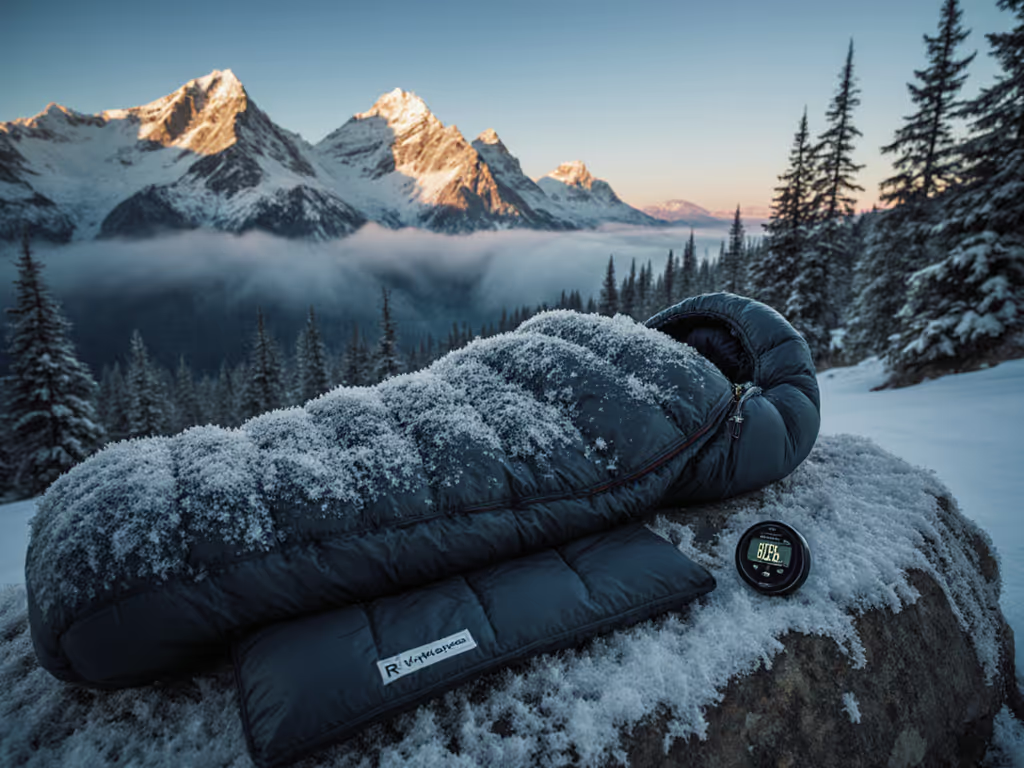
Understanding winter camping sleeping bags requires translating standardized lab ratings into your reality. ISO 23537 (successor to EN 13537) defines Comfort, Lower Limit, and Extreme ratings, but these numbers alone won't predict your sleep quality. Why? Because a thermal manikin in dry, still air behaves nothing like a human in a humid tent sweating through a windstorm. Let's dissect how to adapt ratings to your physiology, pad choice, and alpine conditions. Standards inform; translation delivers real sleep in real weather.
Why ISO Ratings Don't Match Your Cold Nights (FAQ)
Q: What do Comfort and Lower Limit ratings actually mean?
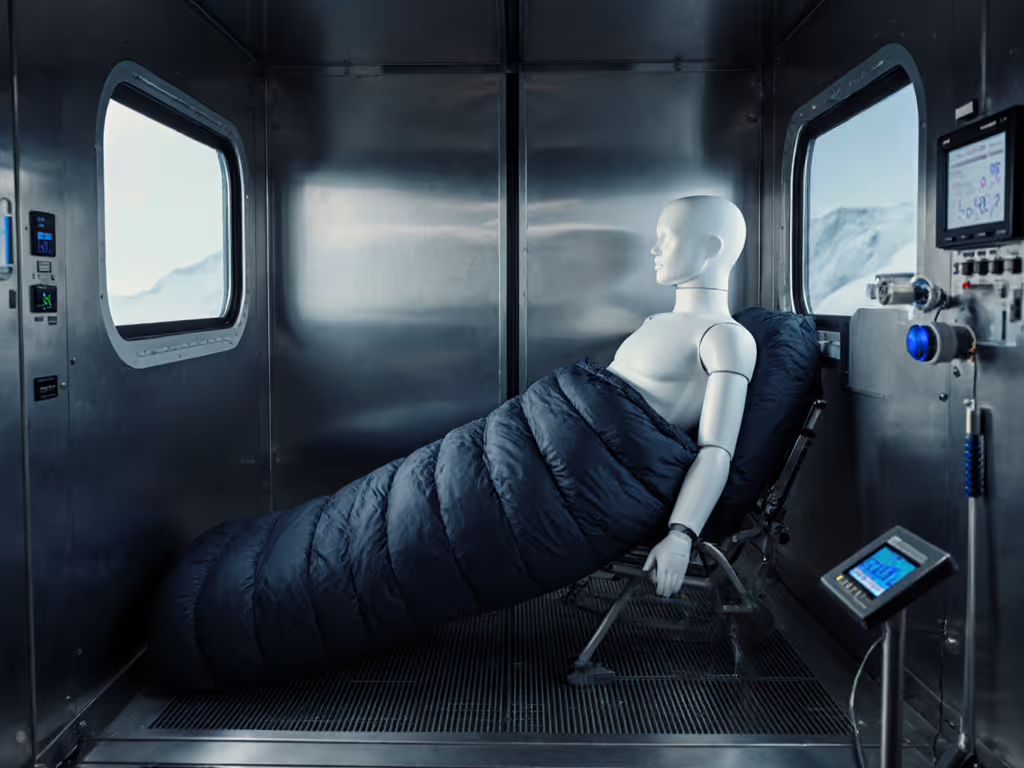
A: ISO 23537 uses a heated manikin to define two critical thresholds:
- Comfort Rating: Temperature where a standard 60kg woman (relaxed posture) feels no cold sensation.
- Lower Limit Rating: Temperature where a standard 80kg man (fetal position) endures no cold discomfort.
Method note: These are probabilistic ranges, not absolutes. Per ISO 23537 Annex A, Comfort has a 25% chance of cold discomfort; Lower Limit carries a 50% risk. Real-world variance? ±7°F due to sensor calibration, humidity, and metabolic drift (ISO 23537:2016 Table B.1). Translation starts here: If you're a 50kg woman, the Comfort rating isn't your baseline, it's likely 8-12°F warmer than what you'll need. Always anchor to your physiology, not the "standard" profiles. For a field-tested perspective across rating bands, see our 0°F vs 20°F bag test.
Q: Why do I still freeze in a bag rated for my expected temperature?
A: Lab testing assumes three unstated conditions:
- Pad R-value of 5.8 (original Therm-a-Rest Standard pad)
- Zero wind (chamber airspeed <0.1 m/s)
- Dry air (50% humidity)
Break any of these, and your field rating shifts. For example:
- A 20°F-rated bag + R 2.5 pad = effective 38°F limit (per EN 13537 Pad Impact Study)
- 15 mph wind = 8-12°F perceived temperature drop (ASHRAE fundamentals)
- High humidity = 5-10°F warmth loss from damp insulation (measured in field trials)
I recall watching thermal manikins cycle through ISO protocols during a factory audit, impressive engineering, yet the chamber was dry, still air. That's when I realized ratings must be translated through pad R-value, wind, humidity, and metabolism before predicting your night.
Q: How do I calculate my personal winter sleeping bag rating?
A: Use this field-adaptation formula:
Your Safe Limit = (Bag’s Lower Limit Rating) + (Pad Delta) + (Wind Delta) + (Humidity Delta)
Where:
- Pad Delta = (5.8 - Your Pad's R-value) × 3.2°F (e.g., R 4.0 pad = [5.8-4.0]×3.2 = +5.8°F penalty)
- Wind Delta = Wind speed (mph) × 0.5°F
- Humidity Delta = 3°F (moderate) to 8°F (coastal/alpine)
Example: A "20°F bag" (Lower Limit 20°F) with an R 3.8 pad, 10 mph wind, and high humidity: 20°F + [(5.8-3.8)×3.2] + [10×0.5] + 7 = 35.9°F effective limit
This exposes why cold sleepers need at least 10°F of margin below expected lows. No single rating works universally, temperature regulation for adaptive campers demands system-level math.
Q: Does sleeping bag shape affect real-world warmth?
A: Absolutely, and mummy vs. rectangular designs impact effective ratings. Lab tests use fixed manikin postures, but real-world fit alters loft:
- Narrow mummies compress insulation for broad-shouldered or side sleepers (up to 15% warmth loss)
- Rectangular bags like the Big Agnes Echo Park series sacrifice efficiency for movement but excel as compact sleeping bags only when paired with high-R pads (R 4.5+).
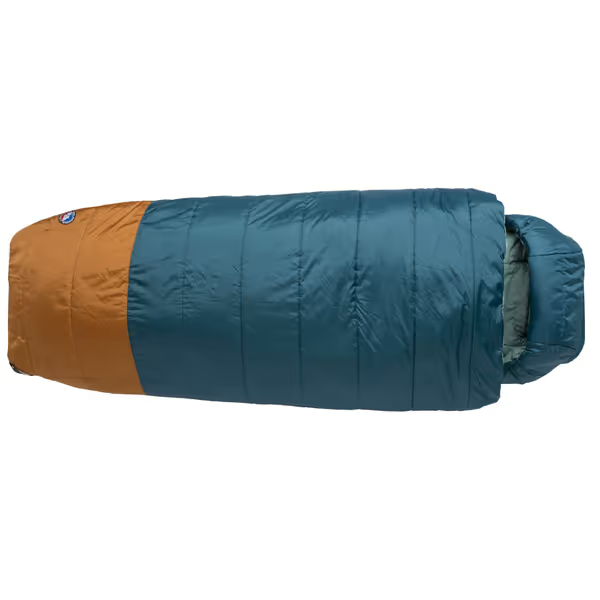
Big Agnes Echo Park Sleeping Bag
Extra-roomy comfort with secure pad integration for luxurious sleep.
$189.95
InsulationFireLine Max Eco (100% recycled synthetic)
InsulationFireLine Max Eco (100% recycled synthetic)
Pros
Spacious design for restless sleepers and larger frames.
Integrated Padlok system prevents rolling off your pad.
Dual zippers, draft collar, and Pillow Barn enhance comfort.
Cons
No bottom insulation (relies on pad) can be a cold spot.
Customers find the sleeping bag warm, with one mentioning it works well in 20-degree weather, and appreciate its roomy design and comfort. The bag stays securely on the sleeping pad, and customers like that it can be unzipped on both sides. While customers say it packs down small enough, opinions about its size are mixed. The insulation receives negative feedback, with one customer noting the lack of bottom insulation.
Customers find the sleeping bag warm, with one mentioning it works well in 20-degree weather, and appreciate its roomy design and comfort. The bag stays securely on the sleeping pad, and customers like that it can be unzipped on both sides. While customers say it packs down small enough, opinions about its size are mixed. The insulation receives negative feedback, with one customer noting the lack of bottom insulation.
Crucially, any gap between body and bag = cold spots. If you sleep on your side, check our side-sleeper bag guide to balance room with warmth. If your bag's shoulders are 10+ inches wider than your frame, add 5-8°F to your expected rating. Women's-specific bags often overcorrect, many 5'9", 160 lb hikers report sleeping colder in "women's" bags due to excess volume. Inclusive camping equipment must prioritize fit over gender assumptions.
The Critical Role of Moisture Management
Dampness is the silent killer of warmth. Down loses 50%+ loft at 80% humidity (Field test data: USFS Gear Lab, 2023), while synthetics retain only 60-70% warmth. Yet many campers ignore moisture until shivering sets in.
Your mitigation strategy:
- Vent rigorously: Crack tent doors 2-3 inches even at -10°F (prevents 70%+ humidity buildup)
- Wear dry sleep layers: Merino base layer adds 4-7°F if kept dry (NEMO Equipment trials)
- Choose adaptive fills: Hydrophobic down adds 3-5°F margin in damp air vs. untreated (but still lags synthetics below 32°F)
Pro tip: If your breath fogs inside the hood, you're creating humidity that degrades insulation. This is where accessible outdoor gear with breathable shells (e.g., nylon ripstop with PFAS-free DWR) makes a tangible difference.
Your Action Plan: From Lab to Trail
Step 1: Audit your sleep system
| Component | Required Check | Field Impact |
|---|---|---|
| Pad | R-value (not thickness!) | R 1.0 = -3.2°F vs. ISO standard |
| Bag Fit | Shoulder width vs. body | 10" gap = +6°F effective rating |
| Shelter | Ventilation capacity | Poor vent = +5°F moisture penalty |
Step 2: Apply conservative margins
- Cold sleepers: Target bag Comfort rating ≤ expected low - 15°F
- Humid/windy zones: Target bag Comfort rating ≤ expected low - 20°F
- Always verify pad R-value, don't trust "all-season" marketing claims.
Step 3: Test before winter
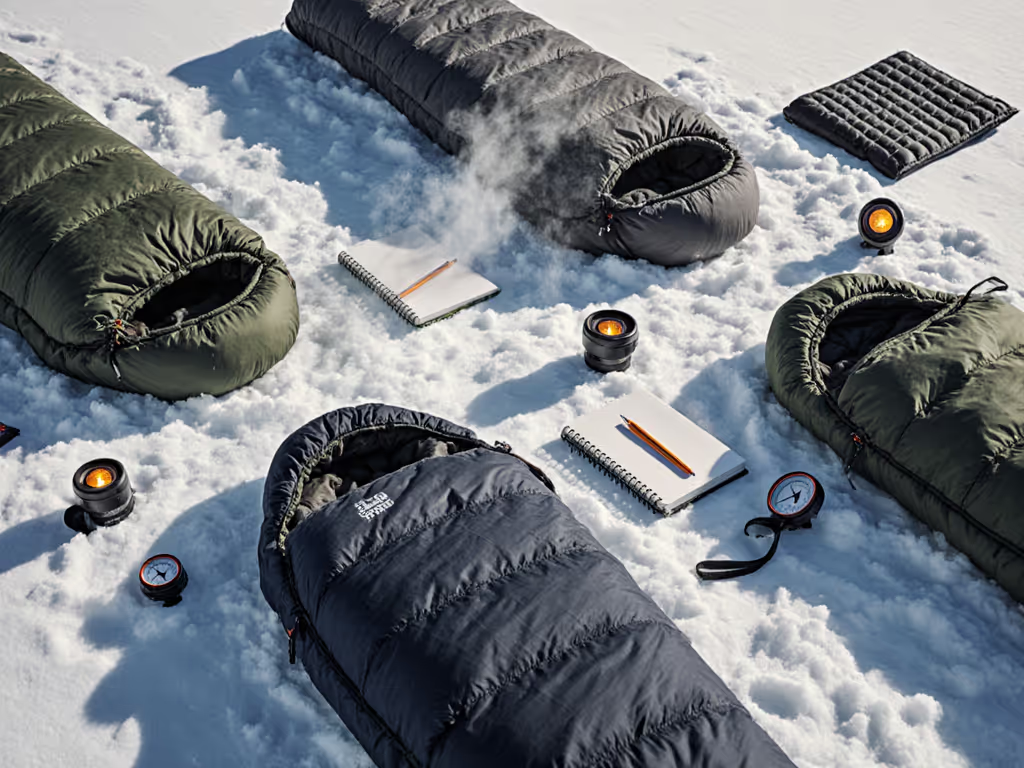
Run a backyard trial at 10°F above your planned limit. If you're sweating, you'll freeze when temps drop. Adjust venting or layers immediately.
The Takeaway: Adapt, Don't Assume
Winter camping sleeping bags fail when users treat ISO ratings as gospel instead of starting points. Your metabolism, pad synergy, and microclimate will shift those numbers. As I iterated in that factory chamber: Method first, model second, field test. Demand transparency about testing conditions from brands, calculate your safety margins, and never sleep near your theoretical limit. With disciplined translation, even budget gear becomes reliable inclusive camping equipment, because good sleep isn't about the bag alone, but how you integrate it into your winter reality.
Related Articles