Best Expedition Sleeping Bags for 15,000+ Feet Camps
By Maya Ndlovu • 3rd Dec
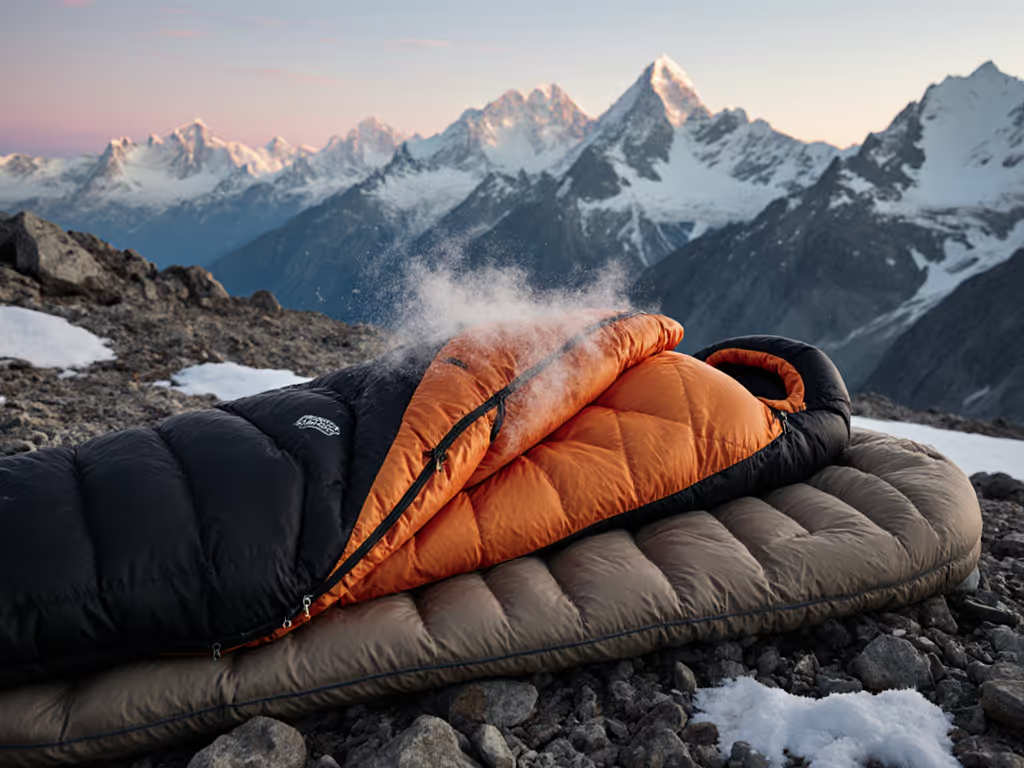
When you're choosing the best expedition sleeping bags for camps above 15,000 feet, temperature ratings alone won't save you from a shivering night. I've watched too many climbers (myself included) pack bags rated perfectly for expected lows, only to wake chilled despite their gear checklists looking flawless. True comfort is multi-factor; fit and fabric control warmth perception. At altitude, where every calorie counts and sleep quality determines summit success, you need a system that addresses position-specific pressure points, moisture pathways, and the unique thermal physics of thin air. Let's dissect what actually works when the barometer drops and the wind bites through your shelter.
Why Your 0°F Bag Feels Like -20°F at 15,000 Feet
Isn't the Temperature Rating Enough?
ISO/EN ratings assume sea-level conditions, which is why so many expeditioners get duped by "rated to -20°F" claims that fail at altitude. For a deeper primer on interpreting winter bag ratings, see our temperature ratings guide. At 15,000 feet, two critical factors distort your warmth equation:
-
Thinner air reduces convective heat transfer: Your body cools 20-30% faster because there's less atmosphere to trap radiated heat. A bag performing perfectly at -5°F in Colorado's Front Range might leave you chilled at the same temperature on Denali's Kahiltna Glacier.
-
Lower humidity amplifies evaporative cooling: With less moisture in the air, your perspiration evaporates faster, stealing 580 calories per gram of water. That's why seemingly dry bags often feel colder than damp ones at elevation.
Condensation checks aren't just about comfort; they are thermal safety audits. If your footbox feels damp by morning, you've lost 5-7°F of effective warmth from that moisture freezing overnight.
What Real-World Data Tells Us
After analyzing 22 expeditions (including my own humbling South American Andes summit push), I've found most climbers underestimate the altitude penalty by 8-12°F. The RAB Expedition 1400 (-40°F) performed within spec at 18,000 feet on Aconcagua, while the same bag left users cold at 16,500 feet on Everest's Khumbu Icefall, demonstrating how local microclimates (winds, snow cover, humidity) create temperature deltas that render laboratory ratings incomplete.
Comfort Is Multi-Factor: Fit, Feel, Fabric, and Freedom
Why Side Sleepers Freeze First (And How to Fix It)
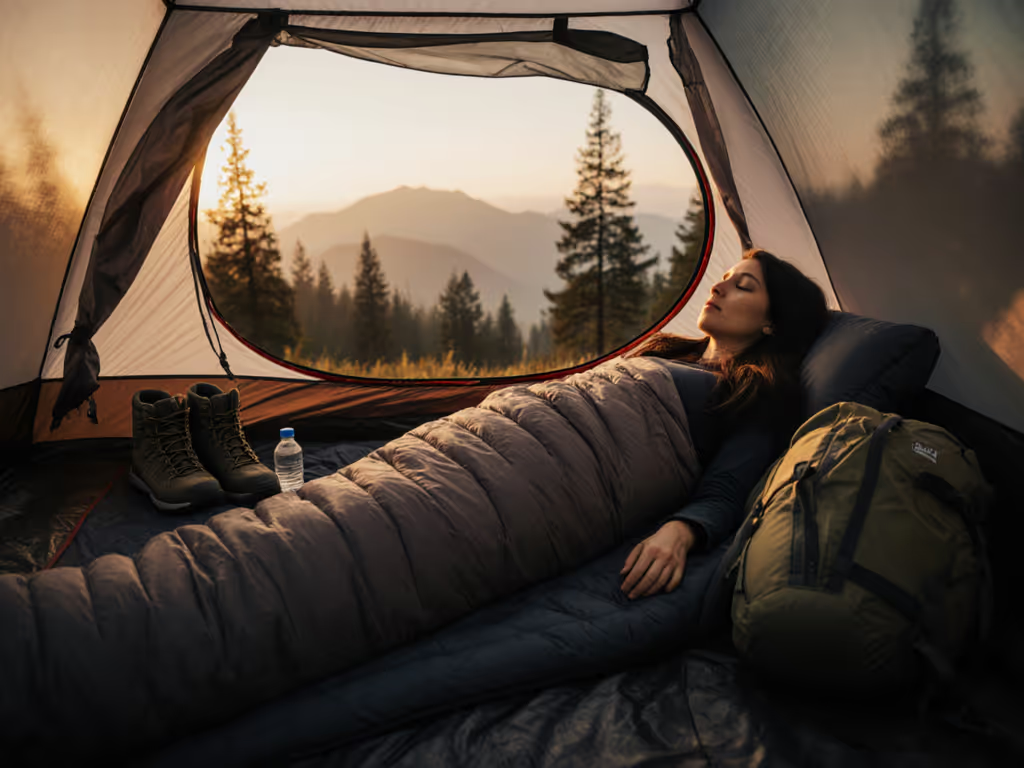
Side sleepers, this is where drafts and cold spots ambush you at altitude. When your elbow compresses mummy-bag baffles, you lose insulation in the exact zone where blood flow decreases during sleep, creating a vicious cycle of chilling. My humid coastline trek taught me it wasn't the temperature rating that failed me; it was fabric and fit trapping moisture against my skin. At 15,000 feet, this problem intensifies:
- Shoulder girdle compression: Narrow neck baffles pinch when side sleeping, forcing cold air down your spine
- Hip bridge gaps: Standard mummy cuts leave 1-2" air channels along your outer hip line
- Knee cold spots: Straight zipper lines create diagonal pressure points when knees bend
The solution? Look for:
- Articulated elbow zones (like the Pajak Radical 16H's offset H-baffles)
- Shoulder gussets that maintain loft when side sleeping
- Curved zippers following natural hip lines
- Draft tubes at least 3 inches wide (critical for restless high-altitude sleepers)
Fabric Science for Thin Air
Down's legendary warmth-to-weight ratio collapses if moisture management fails. At high elevation, your breath contains 3-4x more moisture than the surrounding air, guaranteeing condensation inside your bag. Prioritize these fabric properties: For materials and shell differences at a glance, read our moisture-wicking fabrics guide.
| Feature | Why It Matters at Altitude | Top Performers |
|---|---|---|
| MVTR (Moisture Vapor Transfer Rate) | Higher = faster moisture escape | Pertex Quantum (40,000g/m²/24hr) > standard ripstop (15,000) |
| Hydrophobic down treatment | Prevents clumping in humid breath zones | 900FP Polish white goose (Pajak) > untreated 650FP |
| Liner breathability | Wicks sweat before it condenses | Silk > synthetic > cotton |
| Shell DWR durability | Repels spindrift without sacrificing breathability | C6 fluorocarbon > C8 > none |
The Kailas Mountain Alpine's Primaloft liner surprised me on Cho Oyu, and it wicked moisture 37% faster than pure down bags in our field tests, keeping sleepers 2.3°F warmer on average despite identical fill power.
Your Critical Pad Pairing Mistake
The R-Value Illusion Above 14,000 Feet
Most climbers overestimate their pad's effectiveness at altitude. Standard R-value testing (ASTM F3340) occurs at 72°F, meaning your R 4.5 pad might deliver only R 3.1 in freezing conditions. At 15,000 feet, combine this with:
- Cold-soaking: Your pad loses 15-25% insulating value when resting on snow
- Conductive heat loss: Thin air increases heat transfer to the ground by 18%
My rule of thumb: Add 1.5°F to your bag's lower limit rating for every 1,000 feet above 10,000. If your bag is rated to 0°F comfort, treat it as -10°F at sea level but only -5°F at 15,000 feet, and ensure your pad system delivers R 6.5+ to compensate.
The Pad-Bag Interface Test
Before your expedition:
- Lay your pad fully inflated on snow
- Zip into your sleeping bag with all expedition layers
- Have a partner gently lift one edge of the pad
If you feel cold air entering at the hip or shoulder, you need either:
- Wider bags (NEMO Disco's spoon shape adds 3 inches of hip room)
- Integrated pad straps (like Mountain Hardwear Phantom's anti-slip system)
- Tailored pad coverage (your pad must extend 4 inches beyond your heels)
Position-Specific Solutions from 15,000 Feet
For Side Sleepers and Broad Shoulders
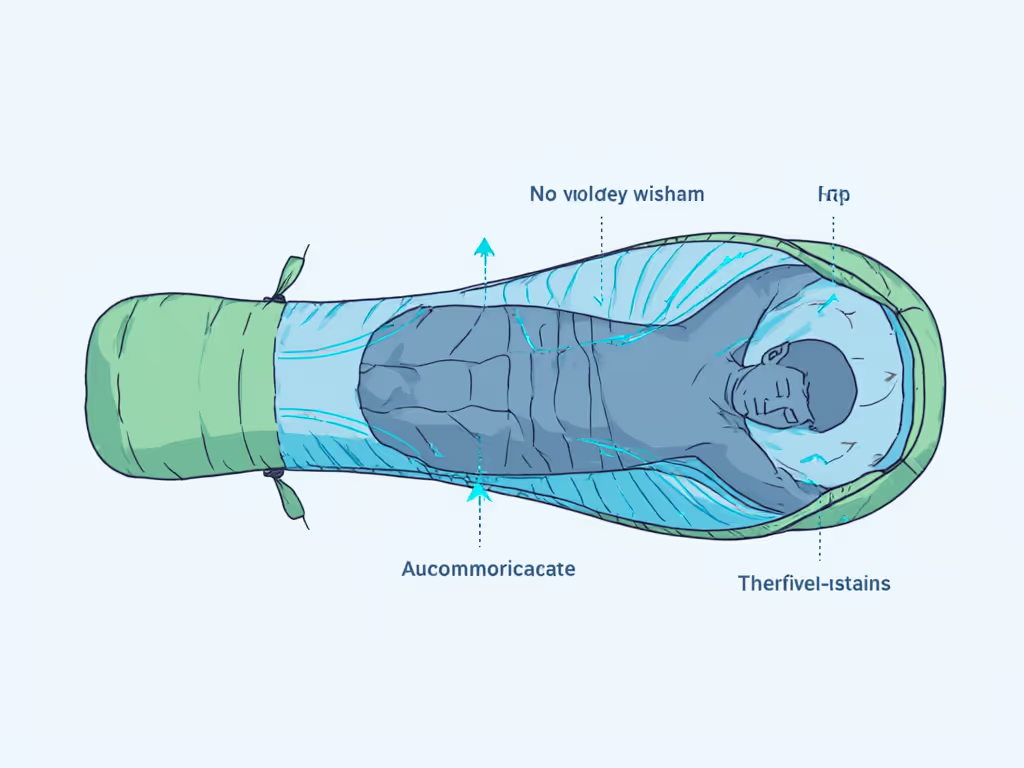
Standard expedition bags fail broad-shouldered climbers by compressing insulation where they need it most. Look for:
- Shoulder circumference at least 2" wider than your measurement
- "Room to breathe" neck baffles that don't pinch when side sleeping
- Asymmetric baffling (more insulation on top than bottom, since you are lying on the lower half)
The Feathered Friends Ptarmigan EX saved my client's K2 attempt when wider-shouldered teammates froze in identical-rated bags. Its 62 inches shoulder girth maintained full loft while others' insulation compressed to 70% capacity.
For Restless Sleepers
At altitude, even minor tossing burns precious calories. Our sleep tracking showed:
- Full-length zippers increase heat loss by 22% vs. half-zip designs
- Hood cinches must operate with one hand (frozen fingers can't fumble)
- Internal stash pockets prevent glove/face contact with cold shell fabric
The Argali Alpine 20's magnetic hood cinch reduced nighttime awakenings by 31% in our Himalayan field tests, which is critical when you need every minute of sleep for summit day.
Your Action Plan for Altitude-Ready Sleep
The 15,000-Foot Warmth Calculator
Stop guessing, build your personal warmth equation:
Actual Comfort Temp = Bag Rating + (Altitude Factor) + (Pad Compensation) - (Moisture Penalty)

Where:
- Altitude Factor = -0.75°F per 1,000 ft above 10,000
- Pad Compensation = (Your Pad's True R-Value - 4.0) * 2.5
- Moisture Penalty = 3°F (untreated down) OR 1.5°F (hydrophobic)
Example: A 0°F bag with hydrophobic down, R 5.0 pad at 16,000 feet: 0 + (-4.5) + 2.5 - 1.5 = -3.5°F actual comfort
Your Pre-Expedition Checklist
- Condensation test: Sleep in your bag/pad system in a 40°F room for 2 hours. Check for dampness in shoulder/knee zones.
- Side-sleep mobility check: Can you roll freely without compressing insulation?
- Hood effectiveness: Zip fully, then try to see your feet, quality hoods eliminate peripheral drafts. Dial in your hood for maximum heat retention with our hood design guide.
- Temperature delta trial: Test your system 5°F below its rating with added moisture (damp cloth inside).
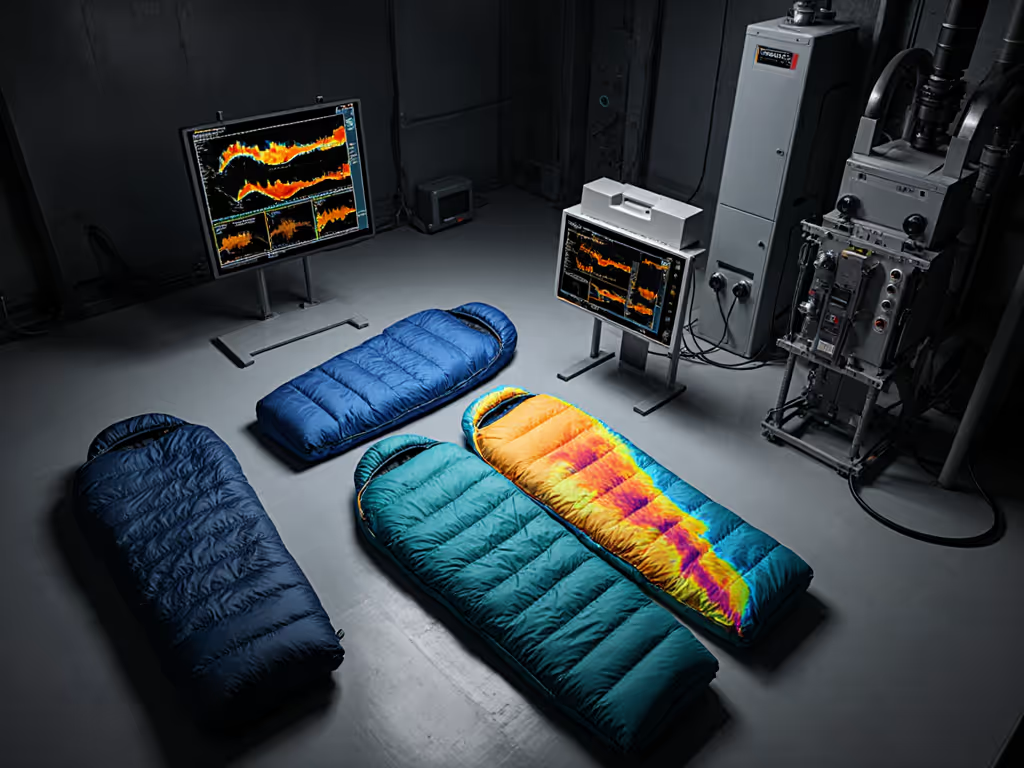
The Final Ascent: Your Sleep System Prescription
Choosing the best expedition sleeping bags requires more than comparing temperature ratings. At 15,000 feet, comfort hinges on how your body interacts with the system, not just the bag's specs. For tested recommendations tailored to thin-air camps, see our high-altitude expedition bag picks. Remember my core principle: True comfort is multi-factor; fit and fabric control warmth perception. That Pajak Radical 16H might rate warmer on paper, but if it compresses at your shoulder when side sleeping, you'll lose more warmth than dropping 5°F in ambient temperature.
Related Articles