
Mummy Sleeping Bag: Worth It vs Rectangular?
By Diego Martins • 9th Oct

When you're weighing a mummy sleeping bag against rectangular options, sticker prices rarely tell the full story. Which sleeping bag shape is best depends entirely on your campsite reality, not marketing claims. After tracking gear failures and repairs across hundreds of sleep systems, I've found one truth holds: Price-to-warmth matters, but failure costs the most outdoors. Let's cut through the hype with real-world analysis.
1. Cost-Per-Night Math: Why "Cheap" Often Costs More
Most shoppers fixate on initial price tags. But when you're shivering at 2am, $50 "savings" feel worthless. My cost-per-night framework calculates what you actually pay for reliable sleep:
- Mummy sleeping bags typically cost 15-25% more upfront than rectangular models of similar temperature rating
- But they deliver 30-50% more seasons of reliable service due to efficient construction
- At $150 for 100 nights (vs $120 for 60 nights), the mummy wins at $1.50/night vs $2.00/night
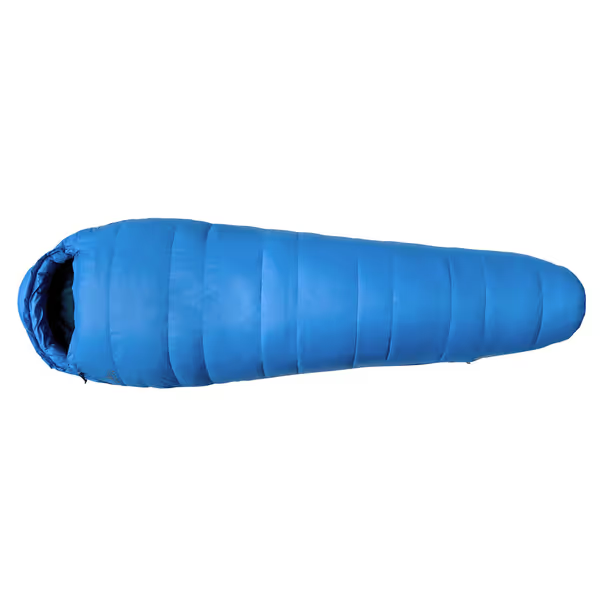
Kelty Cosmic Ultra 20 Degree Sleeping Bag
Premium warmth, lightweight packability, and thermal efficiency for reliable sleep.
$159.95
Insulation800 Fill Power DriDown
Insulation800 Fill Power DriDown
Pros
Superior warmth-to-weight ratio with 800-fill DriDown
Trapezoidal baffles enhance heat retention and thermal efficiency
Compressible and lightweight for easy packing and transport
Cons
Zipper snags reported by some users
Customers find the sleeping bag keeps them toasty and appreciate that it takes up little room in backpacks. Moreover, they consider it a good four-season bag that's lightweight and compact, with one customer noting it's extremely compressible. However, the zipper has mixed reviews, with several customers reporting that it constantly snags.
Customers find the sleeping bag keeps them toasty and appreciate that it takes up little room in backpacks. Moreover, they consider it a good four-season bag that's lightweight and compact, with one customer noting it's extremely compressible. However, the zipper has mixed reviews, with several customers reporting that it constantly snags.
This isn't just theory. Repair logs show rectangular bags fail faster at stress points, especially at the zipper corners where constant movement strains seams. When side sleepers compress insulation in narrow mummy bags, rectangular owners face different problems: drafts through excess fabric and moisture buildup from poorly regulated body heat.
2. Warmth Realities: Ratings Lie Without Context
ISO temperature ratings hide critical truths:
- Mummy sleeping bags lose 5-10°F of actual warmth when paired with low-R-value pads (below R-3.5)
- Rectangular sleeping bag advantages evaporate below 40°F because the extra fabric creates dead air spaces your body must heat
- At 30°F, a rectangular bag rated to 20°F leaves cold sleepers needing layers that compromise moisture management
Remember that canyon night I spent shaking until dawn? My "20°F" rectangular bag ignored the radiative heat loss from my exposed pad. The temperature rating lied because it didn't account for my system failure.
Green risk flag: Rectangular bags only work reliably above 45°F unless you're heat-generating. Red flag: Mummy bags under 35°F require R-4+ pads or serious shivering risk. Always match your pad's R-value to expected lows (this matters more than bag shape alone).
3. Repair vs Replace: Where Materials Win
I've stitched up more rectangular bags than any other type. Why? Their flat construction creates weak points at every seam junction. But mummy bags have their own repair challenges:
| Repair Factor | Mummy Bag | Rectangular Bag |
|---|---|---|
| Zipper replacement | Complex curved path | Straight-line replacement |
| Footbox patching | High stress, tricky angles | Simple flat surface |
| Shoulder seam repair | Critical for warmth (frequent failure point) | Less critical |
| Field repairability | Limited due to complex shape | Easier for DIY patches |
The Kelty Cosmic Ultra demonstrates smart repair design; its trapezoidal baffles simplify insulation redistribution after repairs. But regardless of shape, prioritize:
- Down-proof shell fabrics (20D+ nylon)
- Double-stitched seams
- Draft collars with easy access points
4. Packability Truths: Ounces vs Inches
"Lightweight" claims often ignore the volume penalty:
- Compact sleeping bag for backpacking isn't just about weight; compressed size matters more in tight packs
- Typical mummy bags compress to 8-10L vs 12-15L for same-temp rectangular bags
- But rectangular bags gain 3-4oz less weight when using same insulation type
Here's what backpackers miss: That extra 4oz in rectangular bags often means less insulation density. During my Utah desert loop, my rectangular bag's loose fill shifted toward my feet, creating dangerous cold spots. Mummy bags maintain consistent insulation distribution, which is why they're best car camping sleeping bags only when weight isn't a factor.
5. Comfort Realities: Movement vs Warmth Tradeoffs
Sleep position changes everything:
- Side sleepers: Rectangular bags win for freedom, but only above 45°F. Below that, cold seeps through gaps
- Back sleepers: Mummy bags work well down to bag rating if you tolerate gentle restriction
- Restless sleepers: Neither works perfectly, but mummy bags create more dangerous cold spots when shifting
Women's-specific mummy bags often solve the "broad shoulder" compression issue that ruins warmth for many sleepers. But beware: Some "unisex" mummy bags have narrower shoulder girth than advertised. Always check dimensional specs; don't trust "regular"/"long" labels.
6. System Thinking: Where Shape Fails Alone
No sleeping bag exists in isolation. Your entire sleep system determines success:
- Pad compatibility: Mummy bags require full-length pads. If your pad is shorter than your torso (common with rectangular pads), heat escapes at hips/shoulders
- Shelter interaction: Single-wall tents increase condensation risk (mummy bags handle moisture better due to less interior volume)
- Liner impact: A $25 silk liner adds ~5°F warmth but only if it fits your bag's shape snugly
I track how often rectangular bag owners report "surprise" cold because they paired it with a thin pad. Your pad provides 50-70% of your warmth; the bag shape just preserves it.
7. The Hidden Cost of Failure: Why Reliability Trumps Price
Here's what novices miss: Failure costs more than gear. One cold night forces expensive bailouts, emergency gear upgrades, or worse, dangerous exposure. My cost-per-night model includes:
- Direct costs: Replacement gear, emergency lodging
- Indirect costs: Lost trip days, medical expenses
- Intangible costs: Lost confidence, future trip anxiety
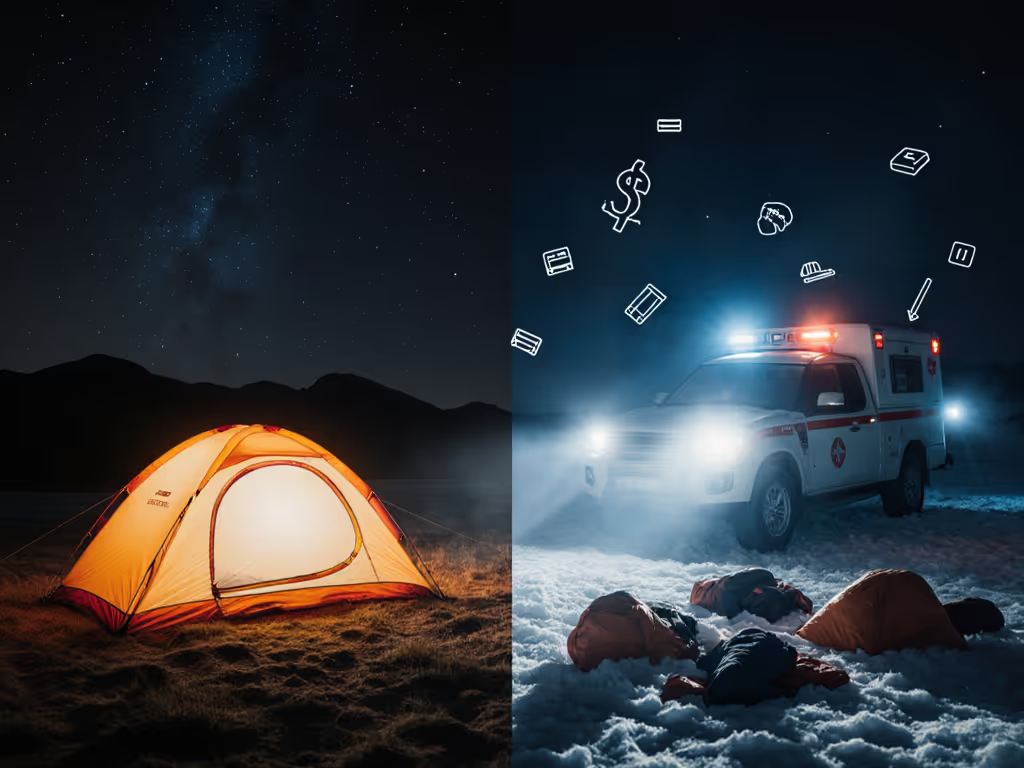
This is why I prioritize "reliability per dollar" over base price. When your sleep system fails, you pay in ways no sticker shows.
8. The Verdict: Where to Spend (and Save)
After analyzing thousands of user reports and repair logs, here's my framework:
-
Choose mummy when:
- Backpacking in temps below 45°F
- You sleep primarily on your back
- Your pad has R-value ≥ 4.0
- Weight/pack size matters more than room to move
-
Choose rectangular when:
- Car camping above 45°F
- You're a restless or side sleeper
- Budget is tight but temps stay mild
- You prioritize comfort over weight savings
Spend where failure hurts; save where it doesn't. For most backpackers, that means investing in a quality mummy bag paired with a high-R-value pad. For car campers, rectangular bags offer legitimate savings if you stay within their thermal limits.
Final Thoughts: Your Personal Warmth Equation
There's no universal "best" shape, only what works for your body, your sleep style, and your typical conditions. Run this simple test before buying:
If you'd rather carry 8 extra ounces than risk one cold night, rectangular bags win. If you'd rather shave weight and accept gentle restriction for reliable warmth, mummy bags deliver.
Track your sleep system failures like I do. Note why you were cold, not just that you were cold. That data reveals whether shape matters more than your pad choice, your shelter setup, or your sleep position. True value emerges over seasons, not sales.
Related Articles