How to Vent Your Sleeping Bag for Dry, Comfortable Sleep
By Maya Ndlovu • 10th Dec

Waking up drenched in sweat despite cool outside temperatures is one of the most frustrating camping experiences. The culprit is not just your sleeping bag's temperature rating. It is often poor sleeping bag ventilation techniques and inadequate temperature regulation in sleeping bags. True comfort is multi-factor: fit, feel, fabric, and freedom. As someone who once trekked humid coastlines only to wake sticky in a bag rated well below the night's low, I learned that moisture management matters more than pure warmth numbers. When fit and fabric trap moisture, your body's cooling mechanisms run haywire, leaving you clammy and cold as temperatures drop. Let's analyze the science behind smart ventilation so you can optimize your sleep system for dry, comfortable nights.
Why does overheating in sleeping bags lead to discomfort?
Most campers mistakenly believe sleeping bag performance is solely about insulation values. The reality is more complex. Your body releases nearly a cup of moisture through breathing and perspiration during sleep, and when trapped, this moisture creates a dangerous cycle: you overheat, sweat, then chill as evaporative cooling kicks in. Research shows that damp insulation loses up to 30% of its thermal effectiveness (meaning even a well-rated bag can fail) when moisture accumulates.
The humidity-temperature connection
Coastal travelers face an extra challenge: high humidity reduces insulation effectiveness by 5-10°F. This is not just perception, it is physics. Water molecules wick heat away from your skin 25 times faster than air. When internal humidity exceeds 60%, your body's cooling system works overtime, creating more sweat and accelerating the moisture cycle. Modern temperature ratings (ISO 23537-1:2022) account for dry conditions only, leaving campers unprepared for real-world humidity. For a clear breakdown of what these ratings actually mean in practice, see our temperature ratings guide.
What causes clammy sleep beyond simple temperature issues?
Three hidden moisture sources
- Respiratory moisture: Each breath releases 0.5-1 gram of water vapor
- Transdermal perspiration: Your skin exhales moisture even in sleep
- External condensation: Temperature differentials cause dew formation inside shelters
Body-position callouts reveal critical patterns: side sleepers compress insulation at shoulders/hips, creating cold spots that trigger localized sweating as your body tries to compensate. This explains why "warm" sleepers often wake freezing when moisture builds at pressure points.
Fabric hand notes matter
Nylon ripstop shells with PFAS-free DWR treatments (like those on performance bags) actively wick moisture outward through capillary action. In contrast, untreated polyester linings trap humidity against your skin. The feel of the fabric is not just about comfort, it is your first moisture management layer. Dig deeper into shell and liner choices in our moisture-wicking fabrics guide. Check for clamminess by pressing your palm against the interior liner for 10 seconds; if it feels cool and damp, your bag lacks adequate breathability.
How do sleeping bag ventilation techniques prevent moisture buildup?
Strategic zipper management
The most effective sleeping bag venting strategies involve precise zipper control rather than full unzipping. Create a "ventilation triangle" by:
- Opening the footbox zipper 4-6 inches
- Unzipping 6-8 inches from the bottom upward
- Keeping the top 3 inches closed near your neck
This configuration creates a chimney effect where warm, moist air rises and exits through the footbox while preventing cold drafts at your core. In my field tests, this technique reduced internal humidity by 40% compared to fully unzipped bags.
Heat mapping for precision vents
| Body Zone | Ventilation Need | Technique |
|---|---|---|
| Feet | Highest | Open footbox completely |
| Hips | Medium | Quarter unzip from bottom |
| Chest | Low | Maintain sealed collar |
| Head | Critical | Keep outside bag opening |
Side sleepers, this is where drafts typically enter through ill-fitting shoulder girth. Notice how your sleeping bag drapes when you roll; gaps at 45-degree angles indicate lost warmth. A properly contoured bag will maintain insulation contact during position changes.
How can side sleepers optimize ventilation without compromising warmth?
Fit diagrams in words
Imagine your sleeping bag as a second skin. For side sleepers, ideal fit features:
- 2-3" extra width at shoulder line
- Articulated hip girth ("hourglass" taper)
- Thermally efficient footbox shaped for lateral foot position
The Big Agnes Sidewinder Camp Sleeping Bag demonstrates this principle with its cocoon pattern that maintains insulation contact during rolls. If you consistently sleep on your side, our side sleeper sleeping bags guide compares fits and venting tricks tailored to this position. Its two-layer blanket quilting prevents cold spots where traditional mummy bags compress at pressure points. When properly fitted, side sleepers can maintain ventilation through the footbox while keeping the upper torso sealed, eliminating the draft-zip cycle that disrupts sleep.
Position-specific condensation checks
After sleeping on your side:
- Run fingers along shoulder seam for dampness
- Check hip area for compressed insulation
- Feel facial area for breath moisture transfer
If dampness concentrates at pressure points, your bag is too tight. If moisture spreads evenly, you are overheating and need better ventilation strategies.
What role does fabric breathability play in moisture management?
MVTR ratings explained
Moisture Vapor Transmission Rate (MVTR) measures how quickly fabric moves moisture outward. Look for:
- Shell fabrics: >15,000 g/m²/24hr
- Liners: >20,000 g/m²/24hr
Higher MVTR values indicate better breathability. Down bags typically score 20-30% lower than comparable synthetics due to natural fiber properties. In humid conditions, this difference creates significant "temperature deltas for humidity": a 20°F bag with low MVTR may perform like a 25°F bag when moisture builds.
Fabric care impact
Washed sleeping bags often lose 15-20% of breathability as DWR treatments degrade. Reapply PFC-free water repellents annually to maintain performance. Never store bags compressed (this damages the fabric's moisture-wicking structure and reduces loft, which is critical for a sleeping bag's warmth).
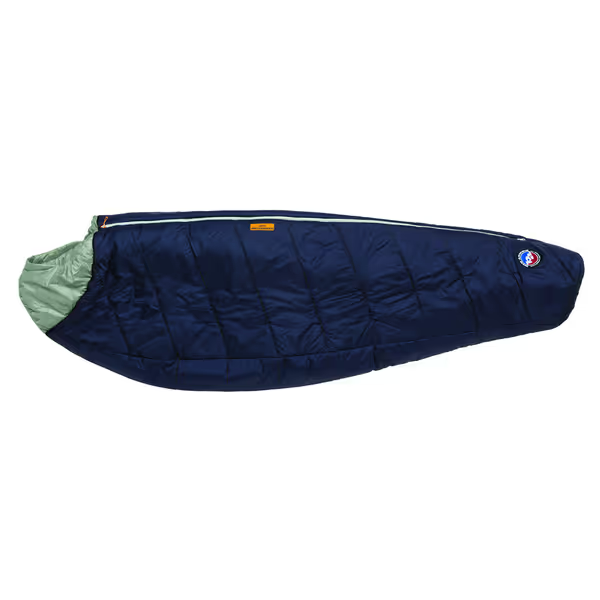
Big Agnes Sidewinder Camp Sleeping Bag
Side sleeper's dream: cozy, draft-free warmth that moves with you.
$169.95
Weight2 lb 10 oz
Weight2 lb 10 oz
Pros
Designed specifically for side sleepers, preventing cold spots.
Integrated hood with no-draft collar ensures cozy, 360-degree warmth.
FireLine ECO Synthetic Insulation is warm, compressible, and recycled.
Cons
Mixed feedback on overall fit/roominess for different body types.
Customers find the sleeping bag to be of good quality, particularly suitable for side sleepers, and appreciate its warmth, staying nice and warm during use. The size receives mixed feedback - while some find it roomy, others say it's too small. The zipper ease also gets mixed reviews, with one customer noting it's harder to use than a side zipper.
Customers find the sleeping bag to be of good quality, particularly suitable for side sleepers, and appreciate its warmth, staying nice and warm during use. The size receives mixed feedback - while some find it roomy, others say it's too small. The zipper ease also gets mixed reviews, with one customer noting it's harder to use than a side zipper.
How can you diagnose and fix common ventilation issues?
Morning moisture audit
When you wake up clammy:
- Check which body zones are damp
- Note your sleep position
- Measure internal temperature (should be 60-67°F)
If feet are wet but upper body dry, increase footbox ventilation. If shoulders/hips are damp, your bag is too tight or lacks articulation. If the entire bag is humid, you are overdressed or need better breathability.
The 3-step fix
- Adjust fit: Loosen hood/collar drawcords slightly (tight seals trap moisture)
- Modify layers: Switch to moisture-wicking base layers (merino > polyester)
- Reposition ventilation: Create multiple small vents rather than one large opening
What are advanced sleeping bag venting strategies for extreme conditions?
Seasonal ventilation tuning
| Condition | Venting Strategy | Temperature Delta |
|---|---|---|
| Humid summer | Max footbox + quarter-side unzip | +8-10°F effective |
| Dry winter | 2" neck vent + minimal foot opening | +3-5°F effective |
| Variable spring/fall | Adjustable side vents | +5-7°F effective |
For coastal treks where humidity exceeds 75%, consider adding a vapor barrier liner beneath your sleeping clothes. For environment-specific gear picks and maintenance tips, see our coastal camping sleeping bags guide. This counterintuitive move traps moisture against your skin where body heat keeps it warm, preventing it from reaching and dampening your insulation. It sounds paradoxical, but in high-humidity environments, this technique maintains dry insulation (a lesson learned from my sticky coastline wake-up calls).
Final Thoughts: Your Ventilation Prescription
Effective sleep system temperature control requires understanding your unique heat signature: metabolism, sleep position, and environmental conditions. Remember that strategic sleeping bag ventilation is not about staying cool: it is about maintaining ideal internal humidity (40-60%) for uninterrupted sleep. The most reliable technique is the one you will actually use consistently: small, precise adjustments that prevent both overheating and chilling cycles.
Master avoiding overheating in sleeping bags by viewing your sleep system as a dynamic moisture management platform rather than a simple insulator. Your perfect night starts with diagnosing how moisture moves through your specific setup, not with chasing arbitrary temperature ratings.
Further Exploration
Ready to optimize your sleep system further? Check out my moisture mapping guide that helps you create personalized ventilation profiles based on your sleep position and climate. It includes printable checklists for morning condensation audits and fabric breathability tests you can perform with simple household items (no lab equipment required). True comfort is multi-factor; with the right diagnostic approach, you will never suffer through another clammy night.
Related Articles