Best Year-Round Sleeping Bags: One Bag for All Seasons
By Anik Bose • 15th Feb
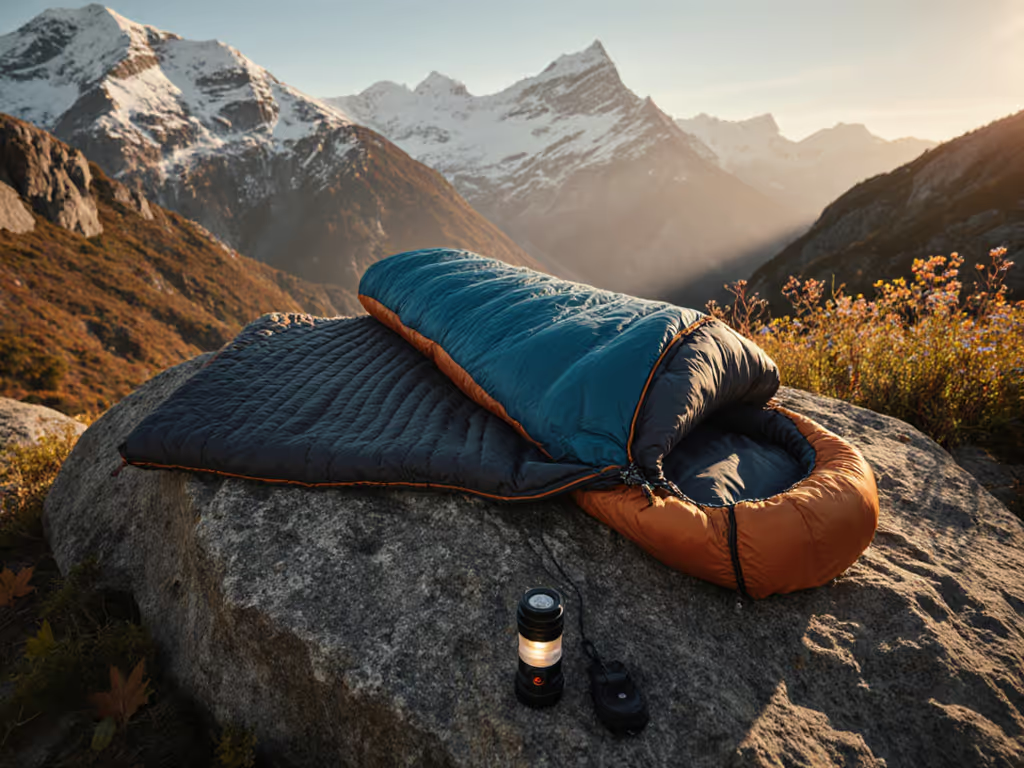
Finding great sleeping bags that perform across spring camps, summer backpacking trips, fall shoulder seasons, and winter expeditions is the gear equivalent of solving a puzzle with conflicting clues. You want warmth, but not so much you wake clammy. You need packability, but can't sacrifice the insulation that keeps you safe when the thermometer drops. A true year-round camping sleep system balances temperature adaptability, fit, weight, and durability - without requiring you to own five different bags or endure trial-and-error nights in the cold.
This guide cuts through the noise. Rather than reciting marketing specs or chasing the lightest gram, I'll translate ISO/EN temperature ratings into field reality, show you how pad R-value and shelter type reshape what a 20°F rating actually means for you, and walk through the gear combinations that let one primary bag do genuine work across all seasons. Ratings predict; systems deliver. For a deeper dive into how lab ratings map to real nights out, see our temperature ratings explained guide.
FAQ: Year-Round Sleeping Bag Strategy
What Does "Year-Round" Really Mean, and Why Doesn't One Bag Sound Realistic?
Year-round sleep doesn't mean sleeping in the same bag under identical conditions every night. It means a single primary bag capable of comfortable use in multiple seasons when paired with complementary gear (pad, shelter, clothing layers).
Here's the technical frame: sleeping bag temperature ratings are standardized in North America via ASTM F3140 and in Europe via EN 13537. Both define three key thresholds - comfort limit, lower limit, and extreme limit - that describe different thermal scenarios.[1][2] The comfort limit is where a standard sleeper (assumed 1.3 m², ~5'4", ~130 lbs, in full sleep clothing) stops sweating but remains comfortable; the lower limit is where a standard cold sleeper begins shivering. For a "year-round" bag, you're targeting one with a comfort limit around 20°F to 0°F (-7°C to -18°C) and a lower limit approaching -20°F (-29°C) or lower. This gives you a 20-30°F margin to work with across seasons.
The catch: standards assume a specific testing environment. The ISO/EN manikin tests in dry, still air inside a controlled chamber - no wind, no moisture, no contact with a subpar sleeping pad. During a factory tour years ago, I watched a thermal manikin cycle through ISO protocols while technicians checked sensor drift and chamber stability. Impressive, yet it was dry, still air. That clarity showed me why a bag rated 20°F needs translation: your actual 20°F night will include variables - maybe an R 2.5 pad instead of an R 4.5, maybe a single-wall shelter, maybe 40% humidity that dampens loft. That's why systems thinking matters more than a single number.
How Do ISO/EN Ratings Translate to My Real Sleeping Setup?
A bag's temperature rating applies to an idealized sleeper on an R 3.5 pad in a double-wall shelter.[2] You don't have that? Apply the delta.
Pad R-value impact: Each 1-unit drop in pad R-value (e.g., from R 3.5 to R 2.5) reduces effective warmth by roughly 5-10°F. Why? Ground-to-sleeper contact accounts for 40-60% of heat loss. A 20°F-rated bag on an R 2.5 pad realistically feels like a 15°F bag on an R 3.5 pad.
Shelter type impact: Single-wall tents and bivvy sacks offer minimal insulation and trap moisture. A double-wall shelter reduces radiative and wind-driven heat loss by ~10-15% compared to single-wall. Hammocks (exposed underside) negate most shelter benefit, requiring an active under-insulation layer (underblanket or pad) to prevent catastrophic cold spots.[3]
Sleep clothing and mass: Wearing full base layers, insulating mid-layer, and sleep socks adds roughly 5-10°F of warmth. Sleeping naked or in minimal clothing on a 20°F bag in a cold tent is not recommended.
Standards inform; translation delivers real sleep in real weather.
What Temperature Rating Should I Target for "Year-Round" Use?
For shoulder seasons (spring, early fall) and summer car camping, a 20°F-rated bag is oversized. For reliably comfortable winter backpacking and alpine camps, a 20°F or warmer rating is the floor; many experienced mountaineers choose -10°F or lower for expeditions. For a true year-round single bag:
- Target comfort limit: 0°F to 20°F (-18°C to -7°C). This covers winter in temperate zones and spring/fall in northern regions. If you live in a mild climate or focus on summer-only camping, a 20°F bag with a quilt option or lining system lets you shed insulation in warm months.
- Lower limit: -15°F to -25°F (-26°C to -32°C). This gives you a 15-30°F safety buffer for windy nights, high altitude, or pessimistic forecasts. Uncertainty is currency in the backcountry; don't skimp it.
If your seasons are extreme (deep winter mountaineering in the Rockies), accept that one bag compromises on summer packability. A secondary lightweight quilt (summer-rating 40°F+) is cheaper and lighter than chasing a single all-rounder that excels in neither season.
Which Bag Insulation Type Handles Variability and Moisture Best?
Down (800FP+): Premium down (800 fill power and higher) offers the best warmth-to-weight ratio and compresses smaller than synthetic.[1][2] Downside: wet down loses insulation and dries slowly. Best for: dry climates, well-sealed shelters, users confident in moisture management (DWR treatment, ventilation, VBLs if needed).
Synthetic: Retains warmth when damp and dries faster than down.[2] Heavier and bulkier for the same temperature rating, but more forgiving for humid coastal regions, humid tropical mountain camps, or users prone to sweating. Best for: variable humidity, restless sleepers who thrash inside bags, budget-conscious buyers.
Hydrophobic-treated down: A growing middle ground. Brands like Western Mountaineering and Feathered Friends apply hydrophobic treatments to down clusters, allowing the loft to resist moisture longer while keeping the warmth-to-weight advantage. Trade-off: more expensive than standard down, sometimes slightly less compressible.
For year-round use in North America, premium down (800FP+) with hydrophobic treatment is the sweet spot if you manage moisture and gear maintenance. Synthetic is the pragmatic choice if your budget is tighter or your climate is persistently humid. Not sure which insulation is right for you? See our down vs synthetic guide with hydrophobic down testing.
How Do I Assess Fit, Draft Management, and Comfort for My Body?
Mummy bags (snug, tapered) are standard for cold-weather efficiency. Horizontal baffles prevent down from sliding to the foot, and a good hood and draft collar trap warm air near your face and torso. But a narrow mummy compresses insulation if you sleep on your side, especially if you have broad shoulders or are a woman (smaller average frame means a "regular" unisex bag can be loose and drafty in the shoulders and chest). To dial in dimensions and avoid cold spots, use our sleeping bag size guide.
Check for:
- Hood design: Must cinch snugly without pressing on your face. A good hood leaves a face-sized void to avoid re-breathing and moisture buildup.
- Shoulder and hip girth: Your torso must fit without shoulder seams rolling inward or hips pressing tight against walls.
- Footbox depth: Tall or large-footed sleepers often find standard bags cramped; custom or oversized length options matter here.
- Zipper-free quilts or semi-rectangular bags: These suit restless sleepers, couples sharing warmth, and folks who dislike being fully zipped. Trade-off: less draft containment, requiring careful pad and clothing strategy.
Therm-a-Rest Parsec 0F (-18°C) and Nemo Sonic 0F both receive praise for comfort in field tests: the Parsec balances loft with a wide, generous cut, while the Sonic (upgraded in 2023) improved temperature regulation and hood design.[1][2] If you struggle with overheating or side sleeping, these are better choices than a tightly optimized mummy.
What's the Right Pad R-Value to Pair with a 20°F Bag?
Assuming a double-wall tent and insulating sleep clothing, here's a practical heuristic:
| Temperature Range | Recommended Pad R-Value | Example Pads |
|---|---|---|
| 20°F to 32°F (-7°C to 0°C) | R 2.5–3.5 | REI Co-op Camp Pad 25, Exped SynMat UL |
| 0°F to 20°F (-18°C to -7°C) | R 3.5–4.5 | Thermarest NeoAir XLite, Exped Ultra |
| Below 0°F (-18°C) | R 5.0+ (or dual pads) | Thermarest XTherm, stacked R 3.5 + R 2.5 |
A 20°F bag demands at minimum an R 3.5 pad in winter; ideally R 4.0+. If you own an older pad (R 2.5) or plan to car-camp with bulk, a lower-limit bag (0°F or colder) compensates for pad shortfall, though this is expensive insurance for a gear limitation.[2]
Which Specific Bags Deliver Year-Round Capability?
Feathered Friends Widgeon ES (-10°F / -23°C)
Weight: ~2 lb 3 oz (990 grams) Insulation: 950+ fill power goose down Design: Mummy, vertical baffle construction
This is the reference point for warm yet packable. The -10°F lower limit gives genuine winter margin without sacrificing ounces, and 950+ FP down compresses smaller than any synthetic competitor. Field testing shows solid draft management and loft retention over 100+ camp nights.[1][2] Fit is snug; side sleepers and broad-shouldered users should test before committing. Best for: ultralight mountaineers, weight-conscious backpackers who sleep cold, and anyone unwilling to carry two bags.
Western Mountaineering UltraLite 20 (20°F / -7°C)
Weight: ~1 lb 10 oz to 1 lb 13 oz (740-823 grams, varies by size) Insulation: Premium 850+ fill power down Design: Mummy, continuous baffle, low bulk
Designed for users who want the lightest practical bag without dropping to extreme temperatures. The 20°F rating is genuinely conservative - reviewers consistently report comfortable sleep to 10°F with an R 4.0 pad and standard sleep clothing.[3] Excellent for spring through early winter camping and shoulder-season backpacking. The UltraLite 20 sacrifices some lower-limit buffer compared to a -10°F or 0°F bag, so reserve it for predictable, moderate-cold conditions or pair it with a summer quilt for extreme cold (accepting more pack weight in two-bag systems).
Mountain Hardwear Phantom 0 (0°F / -18°C)
Weight: ~2 lb 12 oz (1.24 kg) Insulation: 800 fill power down Design: Mummy, draft tube, insulated hood
Mountain Hardwear engineered the Phantom 0 for high-altitude and expedition use. The 0°F comfort limit and generous draft management make it reliable in hard conditions; the 800 FP down is robust (not as premium as 950+ FP, but more durable and less prone to loft loss with age).[3] At 2.75 lbs, it's heavier than the Widgeon ES or UltraLite 20, but the extra insulation mass trades weight for warmth, the right call if you're winter camping in predictable cold above 5,000 feet or testing in truly variable conditions. Reviewers note the fit suits a range of body shapes better than many narrow mummies.
Mountain Hardwear Phantom 15 (15°F / -9°C)
Weight: ~2 lb 2 oz (963 grams) Insulation: 800 fill power down Design: Mummy, draft tube
A middle-ground choice: warmer than the UltraLite 20 (more safety margin in winter), lighter than the Phantom 0 (better for shoulder seasons and car camping). If your budget is $600–$750 and you're hedging between a spring-through-autumn bag and a genuine winter workhorse, the Phantom 15 splits the difference. Reviewers report confident sleep to 5°F on an R 4.0 pad, making it practical from September through April in temperate North America.[2]
Therm-a-Rest Parsec 0F (-18°C)
Weight: ~2 lb 7 oz (1.1 kg) Insulation: Premium down (FP not specified in public data, but reported as high-quality) Design: Mummy, smooth zippers, sleeping pad straps
Therm-a-Rest prioritized comfort and ease-of-use: smooth-running zips, pad attachment loops to prevent rolling, and a wider cut than tactical mummies mean less hassle during cold nights and better sleep quality despite the weight penalty.[1] Price is notably high ($1,200+), but field testers slept comfortably in Scottish Cairngorms conditions (16°F / -9°C) with minimal base layers, suggesting the design is genuinely thoughtful. Best for: car campers and weekend backpackers willing to trade weight for comfort, and users who've had poor sleep from draft or design in past bags.
REI Magma 15 (15°F / -9°C)
Weight: ~2 lb (907 grams) Insulation: 850 fill power down Design: Mummy, draft collar, insulated hood
REI's in-house line often delivers best-value warmth-to-price performance. The Magma 15 is no exception: 850 FP down in a well-designed draft system at $399 undercuts most competitors by $200–$400 and still earns field-tester approval for reliable winter use.[3] The trade-off is slightly lower durability and cosmetic finish compared to boutique brands, but REI's return policy and repair service mitigate regret. Best for: budget-conscious buyers, car campers, and anyone testing whether they'll genuinely use a winter bag before investing in premium gear.
Cumulus Teneqa 1000 (-2°F / -19°C)
Weight: 3 lb 5 oz (1.5 kg) Insulation: 1000 fill power down (exceptionally high) Design: Mummy, customizable zipper side, roomy fit
European cottage brand Cumulus maximizes fill power (1000 FP is rare) to achieve cold-weather performance despite a relatively light weight. Reviewers note a roomy fit and quick-drying properties, though a sticky zipper has been reported on some units.[2] The -2°F lower limit gives true winter buffer, and the 1000 FP down compresses impressively small. Downside: longer delivery times (international shipping) and limited U.S. support. Best for: gear nerds chasing ultra-premium down, European-based users, and those willing to tolerate quirks for the performance gain.
Lab-to-Field Translation Box: How to Convert a Bag Rating to Your Scenario
Assumptions:
- Double-wall shelter (e.g., free-standing 3-season tent)
- R 3.5 sleeping pad
- Full thermal sleep clothing (base layer, insulating layer, wool socks)
- Metabolism 1.3–1.5 met (normal sleeper, not running on fumes)
- Humidity: low to moderate (not coastal sea fog)
Predicted real-world comfort (add 5-10°F to rated comfort limit):
- Rated 20°F -> comfortable to 25-30°F
- Rated 0°F -> comfortable to 5-10°F
- Rated -10°F -> comfortable to 0-5°F
If your pad is R 2.5 instead of R 3.5: Subtract 5-7°F from predicted comfort.
If your shelter is single-wall or hammock: Subtract additional 10-15°F.
If you sleep cold (naturally low metabolism, small frame, poor circulation): Subtract 5-10°F more.
Example: You own a -10°F bag (Widgeon ES), an R 3.5 pad, a double-wall tent, and full sleep clothing. Predicted comfort: 0-5°F (conservative). A windy night at 0°F with moderate humidity: you're in the lower-limit zone but not endangered. Windy night at -5°F: lower limit is pushing boundaries; add a liner or extra clothing. For a quick warmth boost across seasons, check our sleeping bag liners guide for realistic temperature gains. Windy night at -15°F: outside the bag's envelope; reconsider the trip or upgrade the pad to R 5.0.
Should I Buy One Bag or Multiple Specialist Bags?
One high-performance bag (0°F to 20°F, 800+ FP down, ~2-2.5 lbs) costs $600–$1,200 and covers 90% of seasons with gear pairing. Two specialist bags (summer quilt at 40°F, winter bag at 0°F) costs $800-$1,500 and optimizes each season but adds pack weight and storage burden.
Choose one year-round bag if:
- Your camping is geographically varied or your seasons mix (e.g., desert spring trips, alpine summer peaks, Midwest fall car camping).
- You hike multiday trips where weight matters month-to-month.
- You travel for work and want a single default system.
- Your budget is $600-$900 (one excellent bag) vs. $1,000+ (two good bags).
Choose two specialist bags if:
- You camp in extreme cold regularly (winter mountaineering).
- You do summer ultralight bikepacking or three-season backpacking in hot climates.
- You own a truck or can afford weight and volume.
- Your budget is $1,200+ and you want to optimize each season.
For most readers - busy professionals camping 20-40 nights per year across multiple seasons - a single 0°F to 20°F bag with system flexibility (pad upgrade, shelter choice, sleep clothing) is the pragmatic answer.
Summary and Final Verdict
A true year-round sleeping bag isn't a unicorn; it's a 0°F to 20°F-rated down bag (800 FP minimum, 950+ FP ideal) that weighs 2-2.75 lbs, fits your body without compression or gaps, and pairs with an R 3.5+ pad and thoughtful sleep clothing. The best options today include the Feathered Friends Widgeon ES (-10°F) for weight obsessives, the Western Mountaineering UltraLite 20 (20°F) for shoulder-season flexibility, the Mountain Hardwear Phantom 0 (0°F) for genuine winter margin and comfort across body types, and the REI Magma 15 (15°F) for budget-conscious buyers who won't sacrifice field performance.[1][2][3]
Your actionable checklist:
-
Identify your coldest camping scenario (solo alpine camp, winter backpacking, or car camping in predictable mild cold?). Choose a bag whose lower limit is 10-15°F colder than your forecast minimum.
-
Assess your sleep pad R-value. If you own R 2.5 or lower, either upgrade the pad or choose a warmer-rated bag. Pad R-value often yields more warmth-per-dollar than bag upgrades.
-
Test fit in-person or exploit liberal return policies. Hood cinch, shoulder fit, and footbox length are personal; no amount of reviews override your body's feedback.
-
Plan your sleep system, not just your bag. Pad + shelter + sleep clothing + bag work as a synergy. A premium bag on a cheap pad wastes insulation; a modest bag on an R 5.0 pad punches above its rating.
-
Prioritize durability and repairability. Boutique brands (Feathered Friends, Western Mountaineering) and REI offer repair services and multi-decade track records. Cottage brands (Cumulus, Exped) innovate on fill power and weight but require patience with international logistics.
-
If budget is tight, start with the pad and shelter. These shift the entire warmth envelope more efficiently than chasing a lighter bag.
Standards are tools; field translation with stated assumptions is essential. Ratings predict; systems deliver. A year-round sleeping bag - paired with your actual body, your shelter, your climbing schedule, and your willingness to layer and manage moisture - is the foundation of every good night and every safe trip.
Related Articles