Mid-Range Sleeping Bags: The $150-$250 Value Guide
By Diego Martins • 31st Mar
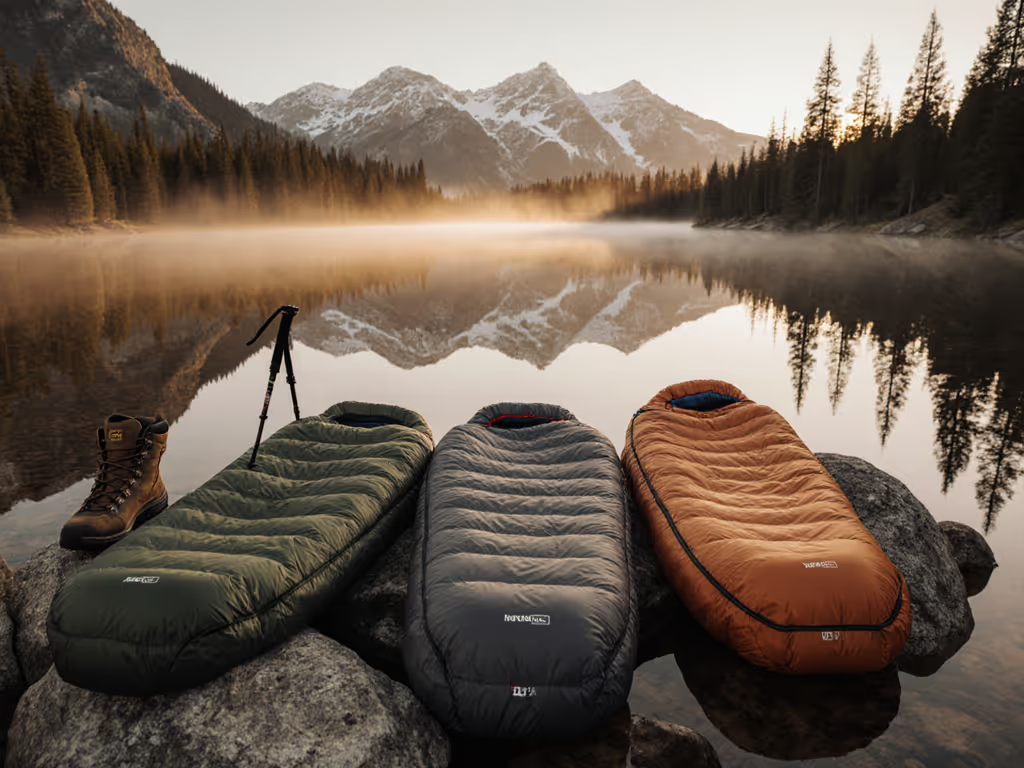
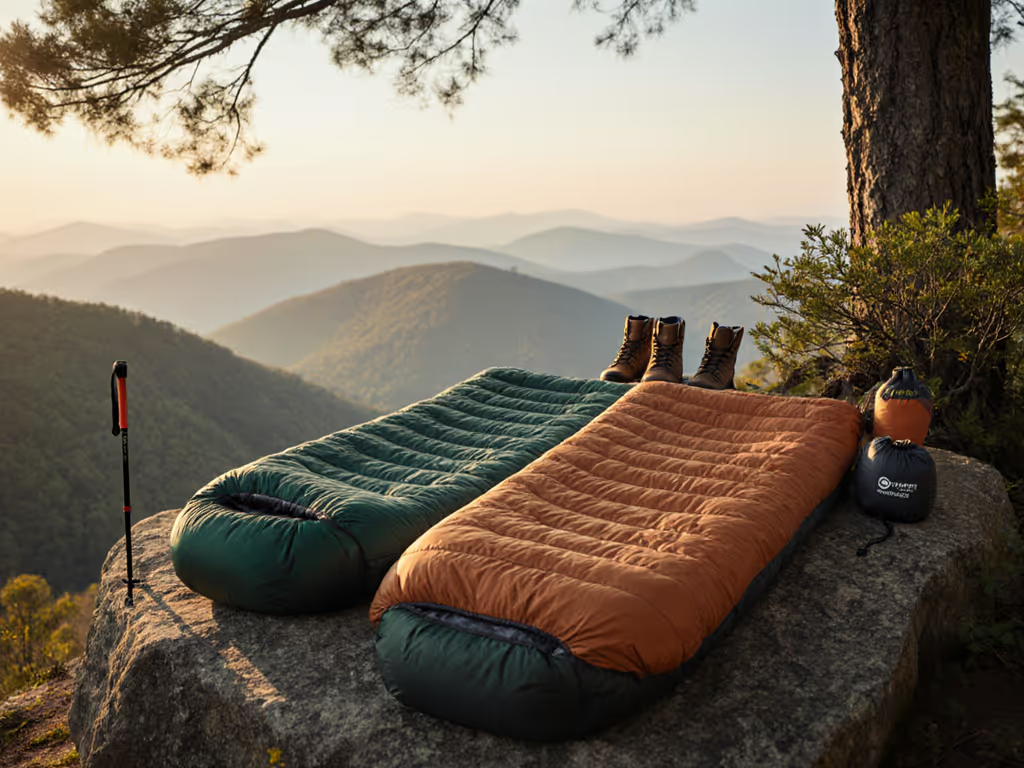
You're standing in front of the sleeping bag wall (again), caught between the impulse-buy $80 Coleman and the aspirational $400 ultralight. The mid-range sleeping bag value sweet spot sits right between them. But sweetness isn't automatic at this price tier. For $150-$250, you're paying enough to expect real performance and durability, yet cheap enough that one poor choice ripples across your entire sleep system. This guide cuts through the marketing and walks you through the five most credible contenders in this bracket, alongside a framework for spotting genuine bargains versus expensive compromises.
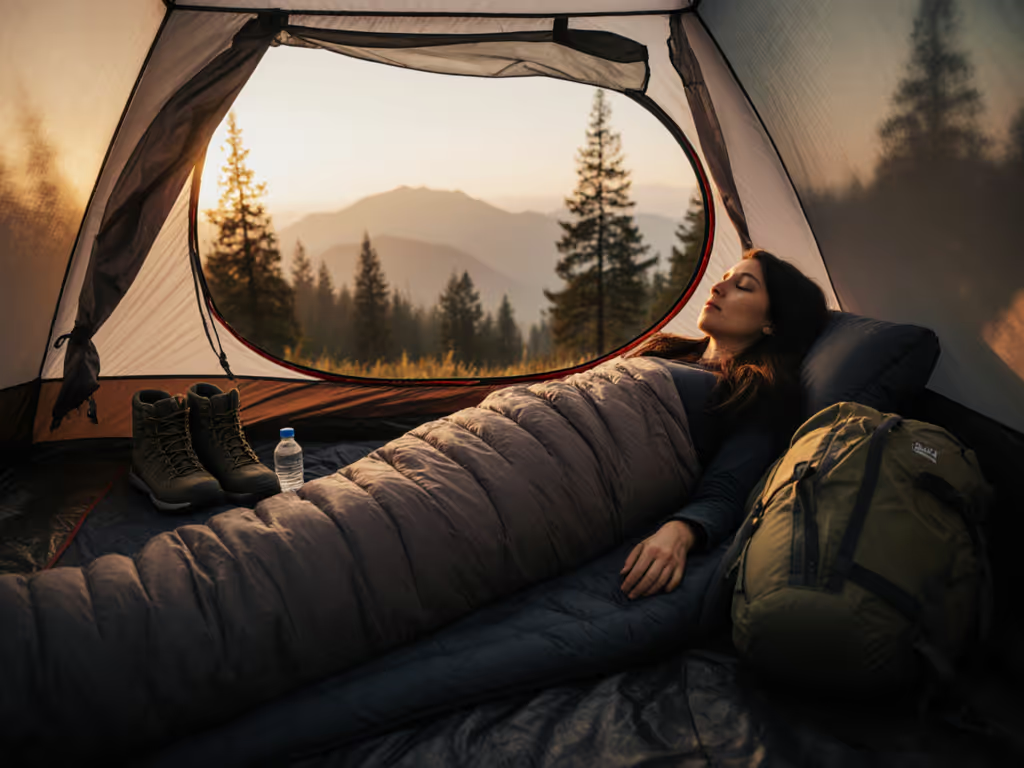
Here's what I've learned from years of chasing value outdoors: cold nights happen not because you picked the wrong bag temperature, but because nobody explained that your $80 sleeping pad loses twice as much heat as the bag itself. The finest mummy bag goes limp and drafty when you shiver against bare earth or an underinsulated mat. That's why this guide treats mid-range bags as one leg of a three-legged stool (insulation on top, insulation below, and airflow management inside), and why I'll spend time on pad R-value and fit before touching brand names. For practical techniques to maximize in-bag warmth and pre-sleep routines, see our staying warm in your sleeping bag guide.
Why Mid-Range Matters (And Why It Fails)
The Price-to-Warmth Trap
Mid-range bags occupy a dangerous middle: too expensive to be a throwaway starter kit, yet not premium enough to justify the engineering and materials that separate reliable cold-night performance from manufacturer optimism. Testing data confirms that many inexpensive bags don't live up to their manufacturer's stated warmth ratings. To understand how EN/ISO ratings translate to real nights, read our temperature ratings explained. The budget Coleman Brazos and similar models have surprised reviewers with genuine performance, but that's exception, not rule. The real risk in the $150-$250 band isn't that the bag will shred; it's that you'll wake at 3 a.m., shaking, because the temperature rating was calibrated for a lab-perfect sleeping platform, not your actual kit.
The Pad Problem Nobody Talks About
Here's the cost-per-night math that changes the calculus: a $200 bag sleeping on a $40 pad is worse than a $150 bag sleeping on a $130 pad. ISO testing assumes an R-value pad beneath you; skip that and your effective warmth rating drops by 15-25°F in cold conditions. I once chased a bargain bag on a shoulder-season desert loop, dismissing warnings about my low-R pad and a windy site. The sticker price ignored what my body already knew (radiative sky loss and a calorie deficit will catch you). Rebalancing that budget toward pad and fit, then buying used where smart, turned cheap into reliable sleep. The lesson: spend where failure hurts; save where redundancy exists. Insulation above your body is redundant if insulation below your body fails.
Red and Green Flags at First Glance
Green flags in the mid-range:
- Synthetic insulation with a proven track record (often Primaloft or 3M Thinsulate) in the $150-$200 window
- Bags rated conservatively (a 20°F synthetic bag that performs as advertised)
- A zipper baffle and draft collar as standard, not premium add-ons
- Clear weight and packed size, tested by third-party reviewers
- Accessible warranty and repair paths
Red flags:
- Suspiciously cheap down ($160 "850-fill-power down" bags often use lower-grade mix or synthetic blend)
- No tested weight or packed volume published
- Temperature ratings without ISO context (comfort, lower limit, extreme)
- Zipper snags, plastic sliders, and no repair parts readily available
- Moisture management unclear (hydrophobic down treatments often absent; synthetic may not dry fast)
Five Contenders in the $150-$250 Band
1. REI Co-op Trailmade 20 - The Backpacker's Standard
Price point: ~$180-$200 | Temperature rating: 20°F ISO Comfort / ~5°F Lower Limit | Weight: ~2 lb 9 oz | Insulation: Synthetic
The Trailmade is REI's unsung workhorse: not flashy, not ultralight, not full-featured, but engineered for the actual user it serves (the weekend backpacker who cares about weight-per-warmth trade-offs and resale/repair confidence). Synthetic insulation means damp mornings won't crater performance like down; a zippered draft collar and footbox design reduce drafts for side sleepers. The tapered cut sacrifices interior space for weight, which is the tradeoff baked into this bag's DNA.
Cost-per-night math: If you use this 40 times a season for three seasons, that's ~$120 sleep-nights over a year. Repair parts (replacement zippers, patches) are available through REI; the bag is rebuildable. That matters. A bag that costs $60 per season to own because you can fix the zipper is cheaper than a $100 bag that becomes trash when the slider fails.
Watch for: The narrow footbox can compress loft for side sleepers; test fit in-store or rely on REI's return window. Synthetic is slower to dry than treated down, so expect dampness to linger if you're car camping in humidity.
2. Kelty Cosmic Down 20 - Mid-Range Down Done Right
Price point: ~$200-$240 | Temperature rating: 20°F ISO Comfort | Weight: ~2 lb 1 oz (Short) | Insulation: 650-fill down
Kelty sits at the intersection of down quality and price discipline. At 650 fill power, this isn't premium, but it's genuine, and reviewers have confirmed the warmth actually matches the rating. The Cosmic is roomy enough for side sleepers and larger shoulders; the differential construction (more insulation where you need it, less where you don't) reduces weight without sacrificing heat retention. Down also means pack volume shrinks to roughly a liter (critical if you're backpacking, less so for car camping).
Cost-per-night math: Down bags last longer if cared for (regular airing, hydrophobic DWR treatment). A $220 bag used 60 times per season for five years is $73 per season, cheaper than the Trailmade over time, if you're disciplined about maintenance. The catch: if you live in humid coastal areas or camp in shoulder seasons where condensation pools, down becomes a liability. The bag loses 30-50% of insulating power when wet; recovery takes days.
Watch for: Hydrophobic down treatment is essential for three-season use; confirm the spec sheet. Check for baffle design (differential construction should be explicit). Return policies on down bags are often restrictive, so fit-testing matters more here than with synthetics.
3. Nemo Disco 15 - Comfort Over Convention
Price point: ~$230-$260 (slightly above the ceiling, but worth noting) | Temperature rating: 15°F ISO Comfort | Weight: ~2 lb 5 oz | Insulation: Synthetic (850-fill equivalent)
Nemo's Disco breaks the mummy-bag mold; it's shaped more like a quilt with a full-length zipper and hood, offering flexibility that matters for restless sleepers and variable conditions. The semi-rectangular cut means you're not wasting insulation in the thigh zone; the zipper lets you vent on warm nights or cinch down when needed. Testing data confirms this bag is feature-rich without bloat.
Cost-per-night math: More versatile bags reduce the need to buy multiple seasonal bags. If the Disco replaces both a summer and shoulder-season bag in your kit, the per-night cost drops sharply. You're also paying for design innovation; Nemo's quilt-hybrid approach is licensed by other brands now, so resale value holds better.
Watch for: Full-length zippers are noisier and heavier; side sleepers report cold drafts at the zipper if hood placement isn't dialed. The bag requires more discipline to cinch properly, it's a feature, but also a failure point if you're drowsy at 11 p.m. and just zip it half-mast.
4. Coleman Heritage Big and Tall 10 - The Outlier That Worked
Price point: ~$150-$180 | Temperature rating: 10°F (real-world confirmed) | Weight: 8.1 lb | Insulation: Synthetic
This is the budget anomaly that tested warmer than advertised, a fact confirmed by third-party reviewers who noted genuine performance in Sierra Nevada cold. It's spacious, durable, and unapologetic about weight, making it ideal for car camping, family trips, and people with large frames who refuse to be compressed into a mummy bag. The baffle design is simple, but the insulation amount (more than many $250 bags) compensates.
Cost-per-night math: At $165 and 10 lbs, this bag isn't for backpacking, so cost-per-night assumes car camping or 1-2 night trips within driving distance. For families, the math shifts: one Coleman costs less than two REI Trailmades, and durability is proven. This bag will outlast three synthetics of lighter weight because the insulation quantity is excessive (redundancy as reliability).
Watch for: The weight kills this for backcountry use. The cheap drawstrings for rolling are confirmed as a frustration; replace them immediately. Synthetic degrades faster than down under UV (store in a closet, not a stuff sack), and the seam tape is basic, so plan for field repair tape in your kit.
5. Alpkit Cloud Peak 200 - The Lightweight Outlier
Price point: ~$200-$220 | Temperature rating: Not explicitly stated; 200 implies warmth for spring/summer or ultralight 3-season | Weight: ~1 lb 5 oz | Insulation: Synthetic ultralight (proprietary)
Alpkit specializes in cottage-industry gear, and the Cloud Peak is their answer to the ultralight backpacking crowd that won't pay $400 for down. It's the lightest realistic option in this price band, which matters for section hikers and weight-conscious weekend warriors. The tradeoff is simplicity: narrow mummy cut, minimal features, synthetic material you can't repair yourself.
Cost-per-night math: At 1 lb 5 oz and $210, you're paying roughly $0.10 per ounce saved, premium pricing for weight reduction. This makes sense only if every ounce of pack weight costs you real pain or if you're hiking 20+ days per season (where cumulative weight adds up to days of fatigue). For weekend trips, the ROI is weak.
Watch for: Cottage brands have thinner repair pipelines; replacement parts are harder to source. Temperature ratings are vague, so you'll need to cross-reference user forums and YouTube testing. The ultralight synthetic may not have hydrophobic treatment; expect condensation in cold-humid conditions. Resale value is lower because the brand has limited retail footprint.
The Pad Question: Why It Overshadows the Bag
Before you commit to any mid-range bag, calculate your total sleep system R-value. The formula is simple:
Your effective warmth = Bag temperature rating + Pad insulation + Shelter loss factor
A 20°F bag over a 2.0 R-value pad in a single-wall tent performs like a 5-10°F system in the real world. Reverse the equation: if you want genuine 20°F comfort, you need an R-4.5+ pad underneath. That might push your pad budget to $120-$150, shrinking the bag budget to $100-$150 (which explains why mid-range bags exist). They're the compromise you make after realizing the pad matters more.
Green flag: REI Co-op Trailmade ($180) + REI Co-op Foam Pad R-4.0 ($80) = $260 for a 1500-foot-elevation shoulder-season system. That's a real allocation.
Red flag: REI Co-op Trailmade ($180) + random $30 pad = $210 bag sitting on insulation that fails in any cold night. The bag becomes an expensive blanket.
Repair, Warranty, and Buy-Once Economics
Mid-range bags are where repair paths diverge sharply. For brand policies, repair timelines, and when to fix versus replace, see our sleeping bag warranty and repair guide. REI and Kelty offer parts; Alpkit and Nemo less so. If your zipper fails at mile 50, that matters.
Warranty and repair benchmarks:
- REI Co-op Trailmade: Lifetime warranty, replacement parts available online, zippers under $15
- Kelty Cosmic Down: 1-year defects warranty; parts limited, but local outdoor shops often source them
- Nemo Disco 15: 1-year warranty, parts scarce; often replaced rather than repaired
- Coleman Heritage: 1-year warranty; replacement parts cheap and ubiquitous (Home Depot stocks them)
- Alpkit Cloud Peak: 2-year warranty; parts must be sourced from Alpkit directly (3-4 week wait)
If you camp 40+ nights per year, the repair-able bag wins every time. A $30 zipper fix means 10 more years of use; a $200 replacement kills ROI.
Fit, Gender, and Body Shape
The "one size fits all" sleeping bag is a myth. Mid-range bags are where gender-specific and tall/large cuts become important.
- Women's cuts: Narrower shoulders, shorter length, more foot-box insulation (women lose heat in extremities faster). Kelty and REI offer these; cost premium is $20-$30.
- Tall cuts: Coleman Heritage is generous; Alpkit is constrictive. Check length in the spec sheet (75"+).
- Side sleepers: Nemo Disco's width and Kelty's roominess win; narrow mummies compress insulation under shoulders.
Red flag: Buying a "unisex" mummy bag as a woman with broad shoulders will cost you cold spots and restless sleep. The $20 upcharge for a women's cut pays for itself in one cold night.
Moisture Management: Down vs. Synthetic in Real Conditions
This is where the pitch matters. Marketers say down breathes; budget synthetic lofts up when damp. Reality is murkier. If you're still choosing insulation, compare pros and cons in our down vs synthetic guide.
Down (Kelty Cosmic):
- Performs well in dry alpine conditions (low humidity, high elevation)
- Fails fast if wet; recovery slow (24-48 hours drying)
- Hydrophobic DWR treatment essential for shoulder seasons (adds $10-$20 to cost)
- Packable to the size of a loaf; matters for backpacking
- Best for: 15+ days, dry climates, high elevation
Synthetic (REI Trailmade, Alpkit Cloud Peak):
- Retains 60-80% loft when damp; recovers in 4-8 hours
- Bulkier; packed size 1.5-2x down equivalent
- Lower cost, faster replacement if damaged
- Best for: Coastal areas, humidity, car camping, frequent use
Your pick: If you're in the Pacific Northwest, coastal California, or summer-to-fall humid zones, synthetic wins. Alpine or desert backpacking? Down + hydrophobic treatment is worth the extra upfront cost.
Temperature Ratings: Comfort, Lower Limit, and Real-World Translation
ISO 23537 testing is standardized, but context matters. A 20°F "comfort" rating means a 25th-percentile female (small, cold-prone) sleeping on a full R-4.5 pad in a calm, dry shelter. If you're a warm sleeper with a synthetic pad at R-3.0 or a restless mover, your real comfort floor is 10-15°F warmer.
Rule of thumb:
- ISO Comfort rating = realistic three-season use for average sleepers with proper pad
- Lower Limit = survival rating; not comfortable
- Extreme = irrelevant for backpacking (don't use this number)
For shoulder-season camping (May, September-October), subtract 10°F from the night's forecast low and match your bag to that number. If the forecast is 32°F, buy a 20°F bag. If it's 45°F, a 30-35°F bag suffices.
The Used Market: Where Real Value Lives
Mid-range bags have a thriving secondary market (REI Trailmades, Kelty Cosmics, and older Nemos populate local marketplaces) at 30-50% off retail. A $180 Trailmade selling for $100 with no obvious damage is often a genuine bargain. Red flags: dog hair, water stains, zipper damage, smell. Green flag: recent photos, original stuff sack, owner's explanation ("Too narrow for me" = honest, not damaged).
Cost-per-night calculus: A used $100 bag, used 50 times before you buy it, then used 50 times by you, costs you $1 per use. New bags at the $180 price point cost $3.60 per use (50 nights to break even). The used route is mathematically sound if you can verify condition.
Scenario Playbooks: Which Bag for Which Trip
Scenario 1: Spring Backpacking (April-May, 4000-6000 ft)
Forecasted low: 32-40°F
Pick: REI Co-op Trailmade 20 + R-4.0 pad + lightweight baselayer
Why: Conservative rating, proven performance, lightweight (fits in a 40L pack with food), repair parts available
Cost: $260 total sleep system
Scenario 2: Summer Car Camping (July-August, sea level, coastal area)
Forecasted low: 55-62°F, high humidity
Pick: Nemo Disco 15 or Kelty Tru.Comfort 20 (pair if couples)
Why: Roominess, venting, synthetic resilience in humid air, no weight penalty (car camping)
Cost: $230 (single) or $400 (pair)
Scenario 3: Shoulder-Season Alpine (September, 8000-10000 ft, windy)
Forecasted low: 18-25°F
Pick: Kelty Cosmic Down 20 + R-5.0 pad (mandatory) + double-wall shelter
Why: Compact, down's insulation density handles alpine wind better, R-5 pad non-negotiable at elevation
Cost: $320 sleep system; don't skimp on the pad
Scenario 4: Family Car Camping (3+ kids, mixed comfort needs)
Forecasted low: 35-50°F
Pick: Coleman Heritage Big and Tall 10 (adults) + REI Trailmade (kids or second adult)
Why: Coleman's roominess allows kid in oversized bag; weight not an issue; proven durability
Cost: $320 for two bags
Red and Green Flags in Purchase Decisions
Green Flags (Buy)
- Warmth rating confirmed by third-party testers, not just marketing claims
- Repair parts available; brand offers zippers, patches, tape for $10-$30
- Tested weight and packed volume published ("claimed" specs don't count)
- User reviews span 20+ nights, not just first impressions
- Warranty covers zippers, seams, and baffles (not just insulation clumping)
Red Flags (Wait or Skip)
- Temperature ratings with no ISO context or "tested" language
- Suspiciously cheap down ($140 bag with "900-fill power")
- No published weight or packed volume
- Zipper snags noted by multiple reviewers
- Synthetic with no hydrophobic treatment in the spec sheet
- Brand with no clear repair path (parts unavailable, no warranty repair program)
- All-night comfort based on one reviewer's photo, not temperature-controlled testing
Summary and Final Verdict
The mid-range sleeping bag market is crowded and confusing because it sits at a price inflection point: cheap enough to feel urgent, expensive enough to sting if wrong. The five bags reviewed here represent genuine options, each strong in different scenarios. But the bag is only one-third of the sleep system equation.
Your roadmap:
- Define your climate and trip tempo. Dry alpine? Down wins. Humid coastal? Synthetic wins. Mixed? Synthetic + easy maintenance.
- Start with the pad. Calculate your target R-value (elevation + season + your sleep-cold tendency), then allocate 40-50% of your sleep budget to the pad. A $130 pad under a $150 bag beats a $200 bag on a $40 pad every cold night.
- Fit-test in person or buy from retailers with liberal returns. A "perfect" bag that compresses your shoulders costs you sleep; no amount of warmth fixes that.
- Prioritize repair over features. A bag with a $15 zipper repair costs less than a fancy bag that becomes trash when the slider fails.
- Use the temperature rating as a floor, not a promise. Subtract 10°F for side sleepers, thin pads, and restless sleep. Add 5°F if you're a warm sleeper or in a double-wall shelter.
Best overall value in the $150-$250 band: REI Co-op Trailmade 20. It's not innovative, but it's repair-able, backed by a brand with accessible support, performs as advertised, and resells easily if your needs change. Pair it with an R-4+ pad and a baselayer system, and you've built a reliable three-season kit for $260. Spend where failure hurts; you've done it here.
For down advocates: Kelty Cosmic Down 20 is the conservative choice, assuming you'll maintain hydrophobic treatment and use it in dry enough conditions. For car campers: Coleman Heritage Big and Tall 10 or Nemo Disco 15, depending on whether you want durability (Coleman) or versatility (Nemo).
The expensive mistake isn't buying mid-range. It's buying mid-range without understanding your pad, your body, and your climate, and then blaming the bag for cold nights it never promised to prevent.
Related Articles