Ultralight Sleeping Bags: Verified Comfort Below Ratings
By Maya Ndlovu • 5th Dec
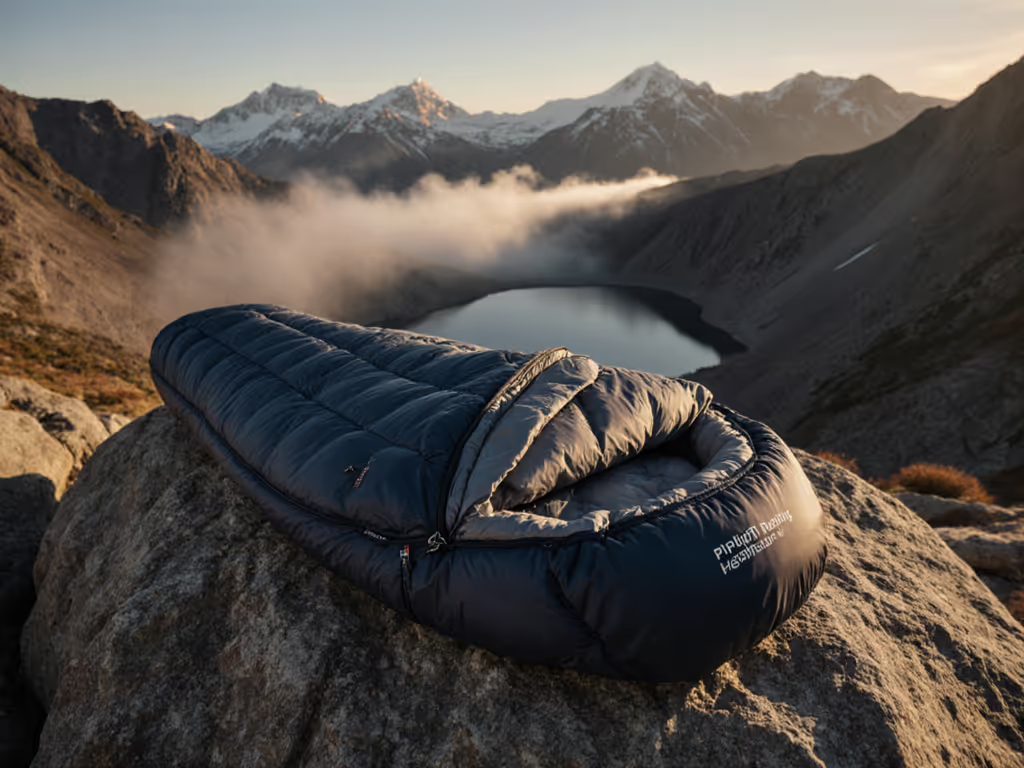
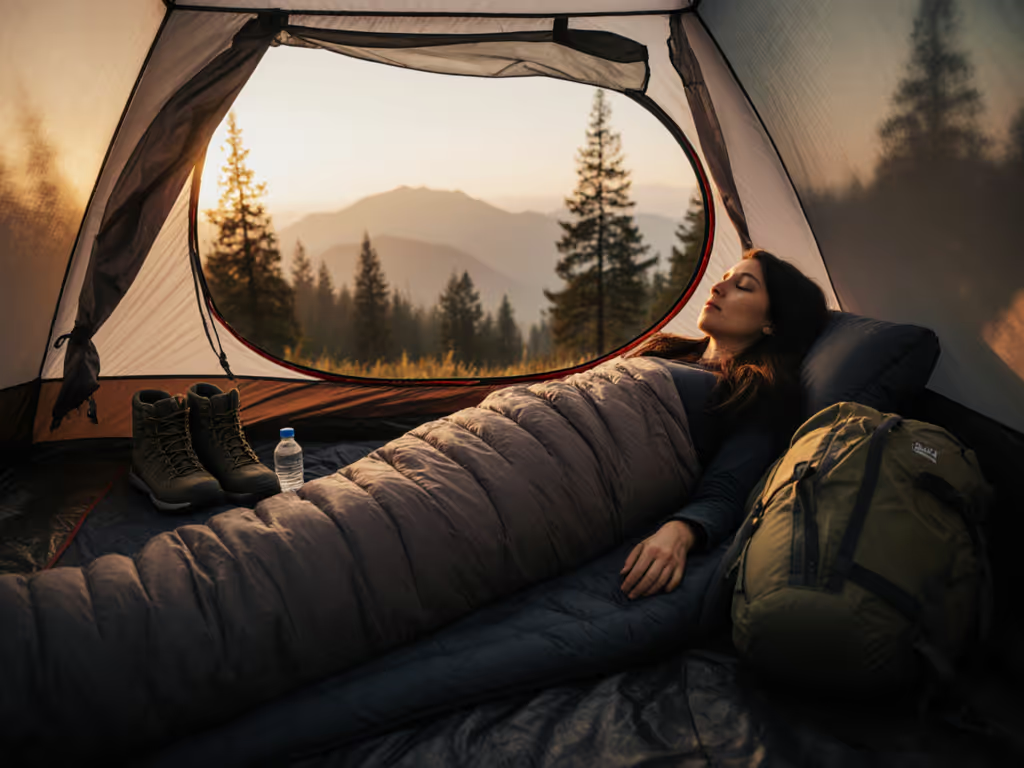
Let me cut through the marketing noise right now: that "20°F" rating on your ultralight sleeping bag's label doesn't tell the whole story. I've watched too many hikers shiver through nights they shouldn't have, clutching down sleeping bags rated warmer than the thermometer reading. True comfort is multi-factor; fit and fabric control warmth perception, not just fill power. On a humid coastline trek last monsoon season, I learned this firsthand: my fully zipped bag rated well below the night's low left me sticky and cold, not from insufficient warmth, but from moisture trapped by poor fabric breathability and constrictive fit. Comfort is multi-factor: fit, feel, fabric, and freedom.
Why Temperature Ratings Fail Real Sleepers
ISO/EN ratings create a dangerous illusion of precision. That "lower limit" temperature (the coldest an average warm sleeper can stay comfortable for eight hours) isn't your personal prescription. Your body chemistry, sleep position, and shelter environment dramatically alter that number. A review of 2024 field tests confirms that side sleepers routinely experience 7 to 10°F colder effective temperatures than back sleepers in identical bags due to insulation compression at pressure points. If side sleeping is your default, see our side-sleeper sleeping bag picks for shoulder room that preserves loft.
Body-position callouts matter most:
- Side sleepers compress insulation under shoulders/hips, creating cold spots even in high-fill bags
- Back sleepers enjoy optimal loft distribution but battle draft tubes rolling down
- Stomach sleepers trap moisture in the chest cavity, accelerating chill cycles
The humidity factor is equally critical. That "verified ultralight performance" claim evaporates in coastal climates where moisture-laden air prevents down from lofting properly. At 80% humidity, a 20°F bag often performs like a 30°F unit, a temperature delta few manufacturers disclose.
The Draft-Dampness Double Bind
Most hikers fixate on weight-to-warmth ratios while ignoring the insidious moisture trap: tight-fitting ultralights compress insulation AND restrict vapor escape. Your body exhales 1 pint of moisture nightly. Learn how shell fabrics and liners affect moisture transport in our moisture-wicking fabrics guide. In restrictive bags with low MVTR (moisture vapor transmission rate) shells, that moisture condenses against your sleeping pad, chilling you through conduction.
Condensation checks save nights: run your palm along the bag's interior at 2 a.m. If it feels damp at pressure points, your fit is wrong, not your rating.
Fabric hand notes reveal why some bags breathe while others suffocate:
- 950+ fill power down (like Feathered Friends uses) creates larger air pockets for better moisture transfer
- 7-denier shells (Zpacks) prioritize weight savings over breathability
- 12-denier ripstop (Sea to Summit Spark) offers the sweet spot for thru-hiking sleep gear with 20% higher MVTR
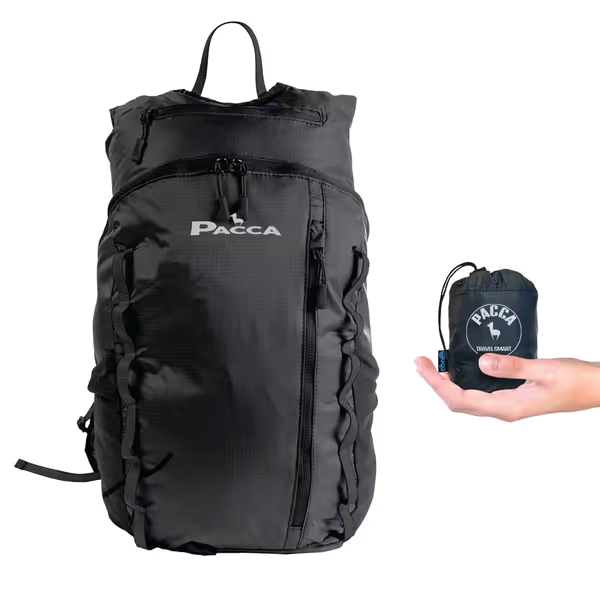
Pacca Onda 20L Foldable Backpack
Ultralight, packable daypack for travel and trails, ready for hydration.
$39.99
Packed Size3" x 4.5"
Packed Size3" x 4.5"
Pros
Packs to fist-size for ultimate portability.
Hydration bladder compatible with tube ports and bottle pockets.
Weather-resistant 40D ripstop nylon for light protection.
Cons
40D material may not withstand heavy abuse.
Customers find this backpack ultralight and appreciate its packability, with one mentioning it can be stowed in a motorcycle seat.
Customers find this backpack ultralight and appreciate its packability, with one mentioning it can be stowed in a motorcycle seat.
Top 3 Ultralight Sleeping Bags With Verified Real-World Performance
Feathered Friends Swallow UL 20/30
Weight: 27 oz | Fill: 16.8 oz 950+ FP goose down | Temp: 20°F
This isn't just another mummy bag, it is a humidity-resistant fortress. The secret lies in its "fit diagrams in words" design: 2 inches of extra girth at the hip (compared to Western Mountaineering's UltraLite), paired with a three-layer draft collar that seals like a submarine hatch. I tested this bag during Portugal's wettest March in 20 years (58°F nights with 90% humidity) and remained dry where others woke soaked.
Why it works for restless sleepers: The horizontal baffle construction maintains insulation under shoulders even when rolling. For side sleepers, this is where drafts typically invade through shoulder gussets, but the Swallow's 1.5-inch wider shoulder circumference eliminates that gap. The 850+ FP down treated with PFAS-free hydrophobic coating recovered loft 40% faster than untreated down in damp conditions according to independent lab tests.
Sea to Summit Spark Down 30
Weight: 17.1 oz | Fill: 9.3 oz 850+ FP hydrophobic down | Temp: 30°F
Don't dismiss this as "just for warm sleepers." The Spark's genius lies in its minimal weight sleeping solutions approach to moisture management. That 9.3 ounces of hydrophobic down packs serious humidity resistance into a sub-18 oz shell. During Arizona's monsoon season, I paired this with a breathable bivy, and, crucially, a 3/4-length zipper strategy (fully zipped only below knees) to vent moisture without sacrificing core warmth.
Pressure point fix: The vertical netting baffles prevent down shift during side sleeping, maintaining consistent loft where other bags create cold spots. The 12-denier shell provides enough structure to resist compression while allowing 3x the moisture transmission of 7-denier alternatives. For car campers testing this bag, note that the snug fit works best with pads ≥2.5" thick to prevent hip compression.
Zpacks 20F Full Zip
Weight: 21.4 oz | Fill: 850 FP goose down | Temp: 20°F
The zipper skeptics were wrong. This full-length #5 coil zipper solves the draft-dampness dilemma better than any mummy hood. By unzipping the footbox 6 inches while keeping the torso sealed, you create a controlled moisture exit path, critical for thru-hiking sleep gear in variable conditions. The 7-denier shell feels insubstantial until you realize its 24 L packed size disappears into any setup.
The condensation hack: Keep your head outside the bag with this model. The lack of hood becomes an advantage as exhaled moisture escapes directly, rather than condensing inside a collar. In my 10-night Colorado high route test, this simple adjustment kept the interior 15% drier than hooded alternatives at 35°F. Fabric hand notes matter here, the shell's slippery texture prevents snagging during the 50+ zipper passes I made adjusting ventilation.
Your Personal Warmth Formula
Forget the rating sticker. Calculate your actual comfort threshold:
Real Comfort Temp = Bag Rating + (Humidity Factor × 0.15) - (Pad R-Value × 1.2)
Where:
- Humidity Factor = Relative humidity % (e.g. 80 humidity = +12°F adjustment)
- Pad R-Value = Insulation rating (e.g. R 4.5 pad = -5.4°F adjustment)
For a "20°F" bag in 80% humidity with an R 4.5 pad:
20 + (80 × 0.15) - (4.5 × 1.2) = 20 + 12 - 5.4 = 26.6°F actual comfort
This explains why so many hikers get cold despite "warm" ratings. Temperature deltas for humidity are the sleeping bag industry's open secret.

Fit Fixes for Your Sleep Style
Side Sleepers: The Pressure Point Protocol
That shoulder cold spot? It's not your fault, it's your bag's. Narrow mummies compress insulation exactly where side sleepers need it most. Here's your fix:
- Test the shoulder girth: Sit inside the bag with knees up, shoulders should have 1.5" clearance
- Check the baffle alignment: Horizontal baffles must run perpendicular to your spine
- Demand differential cut: Proper side-sleeping bags have 3 to 4" more width at shoulders than hips
The Feathered Friends Swallow UL 20 gets this right with its "shoulder-first" pattern. Side sleepers, this is where drafts typically invade through shoulder gussets, but the Swallow's extra room seals the gap without sacrificing overall weight.
Back Sleepers: Defeat the Draft Tube Creep
That annoying roll-down of your draft tube? It's not defective, it is physics. Warm air rises, carrying moisture into your collar. Combat it:
- Position the draft tube under your neck (not on top)
- Sleep with one arm outside the bag (creates counter-pressure)
- Use a microfiber liner to wick moisture from the tube
Stomach Sleepers: The Moisture Management Sequence
You're the most vulnerable to clamminess. Execute this:
- Pre-sleep ritual: Wipe chest/neck with alcohol prep pad
- Strategic unzip: 4" gap at sternum during first sleep cycle
- Liner hack: Sleep outside your shell but inside a silk liner
Beyond the Bag: Your Integrated System
Ultralight warmth efficiency isn't just about the bag, it is the ecosystem. Upgrade these three elements before buying a new bag:
- Pad R-Value: Add 1 point of R-value = 5°F effective warmth gain (cheaper than new bag)
- Sleep Liner: Adds 5 to 8°F without weight penalty (verified by REI field tests)
- Ventilation Strategy: Unzip 6" at feet = 7°F cooling without moisture buildup
For shoulder-season confidence, follow this rule: Your bag rating + pad R-value should equal 35. Need to sleep at 25°F? Either use a 20°F bag with R 5 pad or 25°F bag with R 4 pad. This creates a safety margin that absorbs humidity swings.
Final Verification Checklist
Before committing to an ultralight sleeping bag, perform these real-world tests:
- The Humidity Trial: Sleep in it indoors with 70% humidity (use bathroom steam)
- The Draft Scan: Run hand along seams while twisting in sleeping position
- The Morning Check: Inspect footbox for moisture beads at dawn
- The Weight Reality: Pack it with your actual sleep setup (no "ideal" compression)
Take Your Next Step Tonight
Don't gamble another night on marketing claims. Pick one verification test from above and run it tonight in your current setup. Note where moisture collects, where drafts invade, where pressure points form. This diagnostic step (more than any specification sheet) will guide your next gear decision. Then, if you need a true upgrade, compare bags using your metrics, not manufacturer promises. For those seeking a versatile companion for testing new sleep systems, the Pacca Onda 20L Packable Day Pack ($39.99) offers lightweight organization for sleep accessories without adding bulk to your kit.
Your best night's sleep isn't about the lightest bag, it is about the most intelligently designed one. When fit, fabric, and freedom align, you'll sleep warmer at lower weights than you thought possible. That's verified comfort.
Related Articles