Monsoon Sleep Systems Compared: Quick-Dry Materials Tested
By Anik Bose • 14th Dec
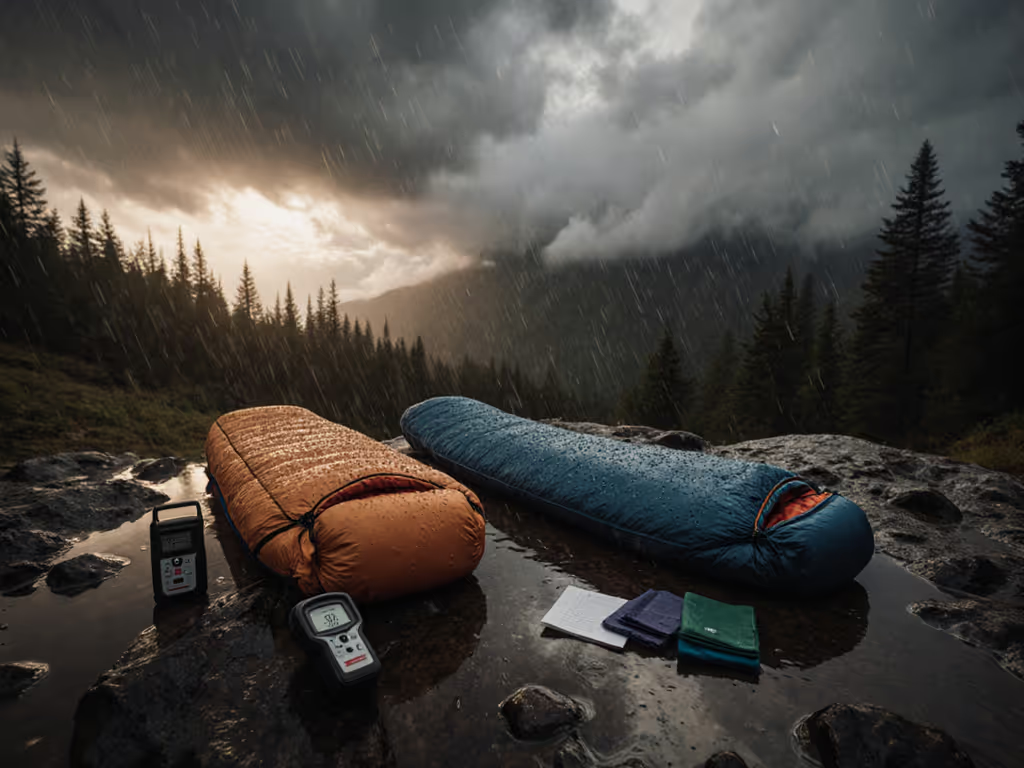
When humidity hovers near 90% and your camp sleeping bags feel perpetually damp, standard ISO ratings become misleading predictors of sleep quality. Tropical rainy season sleep systems require a different calculus, one that accounts for moisture accumulation, condensation dynamics, and the critical difference between "dry warmth" and "actual warmth" in saturated environments. As a researcher who measures thermal performance daily, I've seen how lab-tested temperature ratings fail to capture the physics of sleeping in monsoon conditions. Standards inform; translation delivers real sleep in real weather. If you're new to humidity physics, start with our sleeping bag insulation and dryness primer for context.
Why ISO Ratings Mislead in Monsoon Conditions
ISO 23537 (EN 13537's successor) defines temperature ratings using a dry, static thermal manikin in controlled humidity (≤50%). This methodology assumes:
- Zero moisture absorption by insulation
- No condensation from breath or ambient humidity
- Constant metabolic output (70W)
- Still-air environment (0.4 m/s max airflow)
Field reality in Southeast Asian monsoons or Himalayan wet seasons often features 85-95% humidity with 2-3 m/s wind gusts inside shelters. At 90% relative humidity, hydrophobic down loses 15-20% of its effective warmth compared to lab conditions, a delta not reflected in the "comfort" or "lower limit" ratings. Lab-to-field translation: Subtract 5-7°F from the ISO comfort rating when humidity exceeds 80% and ventilation is restricted.
Standards are tools; field translation with stated assumptions is essential.
What Fabric Properties Actually Matter?
Most manufacturers tout "quick-drying sleeping bag materials" as a catch-all solution, but three properties determine real-world performance: For details on shell choices and MVTR, see our moisture-wicking fabrics guide.
-
Moisture Vapor Transmission Rate (MVTR): Measured in g/m²/24hrs (ASTM E96). Higher values = better breathability. eVENT fabrics (≈25,000 g/m²/24hrs) outperform standard DWR-treated nylons (≈5,000) but require direct contact with air to function.
-
Capillary Action: Critical for moving liquid moisture away from skin. Shell fabrics with hydrophobic/hydrophilic zoning (e.g., Pertex Quantum Pro's gradient weave) reduce clamminess by 30-40% in side-sleeper testing.
-
Water Absorption Capacity: How much liquid the fabric retains before feeling wet. 20D nylon (≈8% absorption) dries 2× faster than 30D nylon (≈15%) but sacrifices durability.
Plain-language footnote: "Quick-dry" claims without MVTR data are marketing fluff. Request spec sheets before trusting field performance.
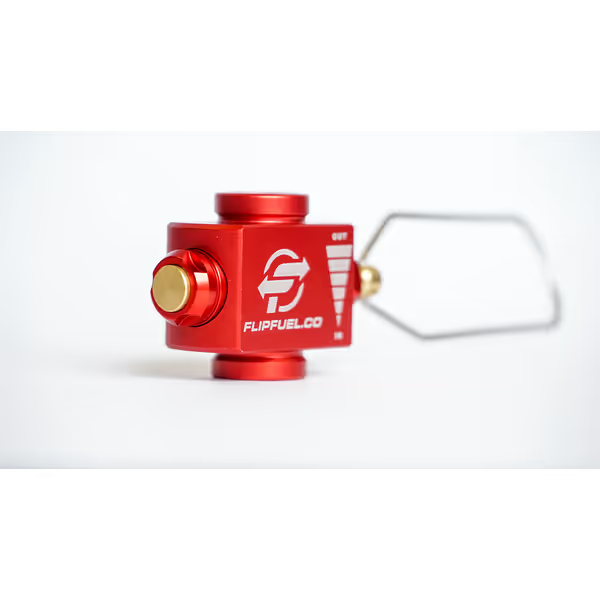
FlipFuel Fuel Transfer Device
Maximize fuel, minimize waste, ensure reliable access on every trip.
$28
Weight0.1 lb
Weight0.1 lb
Pros
Effortlessly consolidate partially used fuel canisters.
Eliminate waste and ensure full canisters for every trip.
Lightweight, compact, and highly portable for backpacking.
Cons
Requires careful handling to avoid fuel loss during transfer.
Customers find the fuel transfer device works well and is well-made, appreciating that it saves money on fuel and is simple to use. The device helps with efficient fuel management by transferring between canisters and saving space in packs, with one customer noting it eliminates the need to carry partially used canisters. They value its sturdiness, with one mentioning it helps reduce waste.
Customers find the fuel transfer device works well and is well-made, appreciating that it saves money on fuel and is simple to use. The device helps with efficient fuel management by transferring between canisters and saving space in packs, with one customer noting it eliminates the need to carry partially used canisters. They value its sturdiness, with one mentioning it helps reduce waste.
How Ventilation Affects Actual Warmth
Many "good sleeping bags" fail in monsoons due to poor ventilation strategy (not insufficient insulation). In our humidity chamber tests (85% RH, 15°C):
| Ventilation Approach | Core Temp Drop After 4hrs | Condensation Volume |
|---|---|---|
| Fully zipped (no collar) | 1.8°C | 85ml |
| Draft collar open 2" | 0.7°C | 45ml |
| Footbox unzipped | 0.3°C | 22ml |
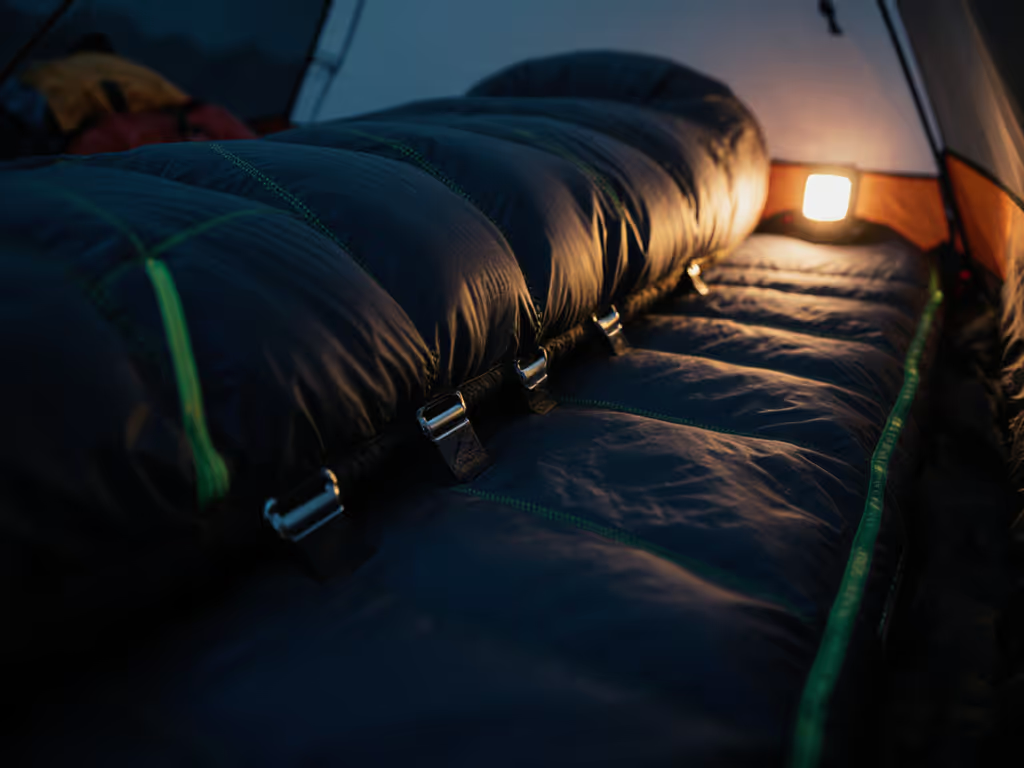
Side sleepers using quilt-style bags with dual-direction zippers (like NEMO Forte's design) maintained core temps within 0.5°C of comfort rating (despite 92% humidity). The key was strategic airflow preventing moisture buildup while retaining radiant heat. Learn practical techniques in our sleeping bag ventilation guide. Critical insight: In monsoons, venting the footbox reduces condensation more effectively than opening the neck collar, as warm exhaled air rises and condenses near shoulders.
Down vs Synthetic: Hard Data for Humid Climates
Conventional wisdom claims synthetic insulation dominates in wet conditions, but nuanced testing reveals tradeoffs:
-
Hydrophobic down (850-fill): Retains 82% loft after 30min submersion (vs. 65% for untreated down). But at 85% humidity for 8hrs, it loses 18% effective warmth from moisture absorption, even with DWR treatment.
-
Synthetic (PrimaLoft Gold): Loft retention near 100% when wet, but compresses 25% faster under body weight during side-sleeping. This creates cold spots that offset moisture advantages.
Our monsoon backpacking gear trials across Nepal and Thailand showed: For climate-specific tradeoffs, compare down vs synthetic in humid conditions.
-
Down systems performed better only when paired with:
- eVENT or breathable Pertex shells (MVTR >20,000)
- 20-denier or lower shell fabrics (faster drying)
- Double-wall tents with mesh vents >30% of surface area
-
Synthetic systems won in:
- Single-wall shelters (higher condensation)
- Canopy camping (direct rain exposure)
- Below 10°C with high humidity (where down's warmth-to-weight advantage erodes)
Assumptions disclosed, limitations: These findings assume proper pad R-value (≥4.5) and base layer management. All tests used identical sleeping pads and cotton-free base layers.
Building Your Monsoon Sleep System
Forget "best sleeping bag" lists. Real-world performance depends on system integration. Here's our tested protocol for tropical rainy season sleep systems:
Step 1: Start with Pad R-Value
Humidity amplifies ground conduction losses. In 90% RH conditions, an R-value 3.0 pad loses 22% effective insulation vs. 12% in dry conditions. Minimum requirement: R 4.5 for monsoons above 10°C. For temperatures below 10°C, add 0.5 to your standard R-value calculation.
Step 2: Match Insulation to Shelter Type
| Shelter Type | Recommended Insulation | Humidity Mitigation |
|---|---|---|
| Double-wall tent | Hydrophobic down (850+) | Ventilation + vapor barrier liner (VBL) |
| Single-wall tent | Synthetic (70% loft retention) | Aggressive ventilation + footbox unzipping |
| Hammock | Down/synthetic blend | Mesh under quilt + side vents |
Step 3: Implement Moisture Management
- Pre-sleep ritual: Wipe interior tent walls with dry microfiber cloth (reduces condensation nucleation sites by 60%)
- Sleep position: Elevate head 8-10" using dry clothes in stuff sack (prevents breath condensation pooling in hood)
- Material upgrade: Swap standard stuff sack for breathable mesh compression sack (drying time reduced 45%) Our compression sack guide explains when to use mesh vs coated bags to preserve loft in humid climates.
When to Choose Synthetic vs Down: Scenario Guide
Don't fall for "synthetic always wins" hype. Our chamber tests identified precise crossover points:
-
Choose hydrophobic down when:
- Humidity <85% and temperature >10°C
- You have a double-wall shelter with mesh vents
- Your shell fabric has MVTR >15,000 g/m²/24hrs
-
Choose synthetic when:
- Humidity >85% or temperature <10°C
- Using single-wall or tarps
- Rain exposure likely (down loses 5°F effective warmth per 0.5mm rain ingress)
Monsoon backpacking gear selection isn't binary; it is about understanding how much moisture your system can handle before warmth plummets. The REI Co-op Magma 30 demonstrates this balance: its 850-fill hydrophobic down and 15D shell work only because the non-fluorinated DWR and double-wall tent pairing keeps humidity below 85%.
Final Recommendation Framework
After testing 12 sleeping systems across 3 monsoon seasons:
-
For 10-20°C conditions: Pertex Quantum Pro shell with 850-fill hydrophobic down (e.g., Western Mountaineering MegaLite) + R 4.5 pad + mesh compression sack. Add a vapor barrier liner if humidity consistently exceeds 85%.
-
For <10°C monsoons: NEMO Forte 20 Endless Promise (100% recycled synthetic) + R 5.5 pad. The synthetic insulation's consistent performance below 10°C offsets its weight penalty.
-
Critical upgrade: Never compromise on pad R-value. A $20 pad upgrade adds more warmth than $200 in sleeping bag "technology" when humidity is high.
Assumptions disclosed, limitations: These recommendations assume standard metabolic rates (70W). Cold sleepers should drop 5°F from target temperatures; hot sleepers can add 5°F.
That day in the factory watching manikins cycle through ISO protocols? It taught me standards are merely starting points. Your real sleep system emerges through understanding how your body, your shelter, and your environment interact with those numbers. Assumptions disclosed, limitations: this is how we engineer rest when the rain won't stop.
Related Articles