Sleeping Bag Warmth Ratings: EN vs ISO Tested
By Diego Martins • 3rd Jan
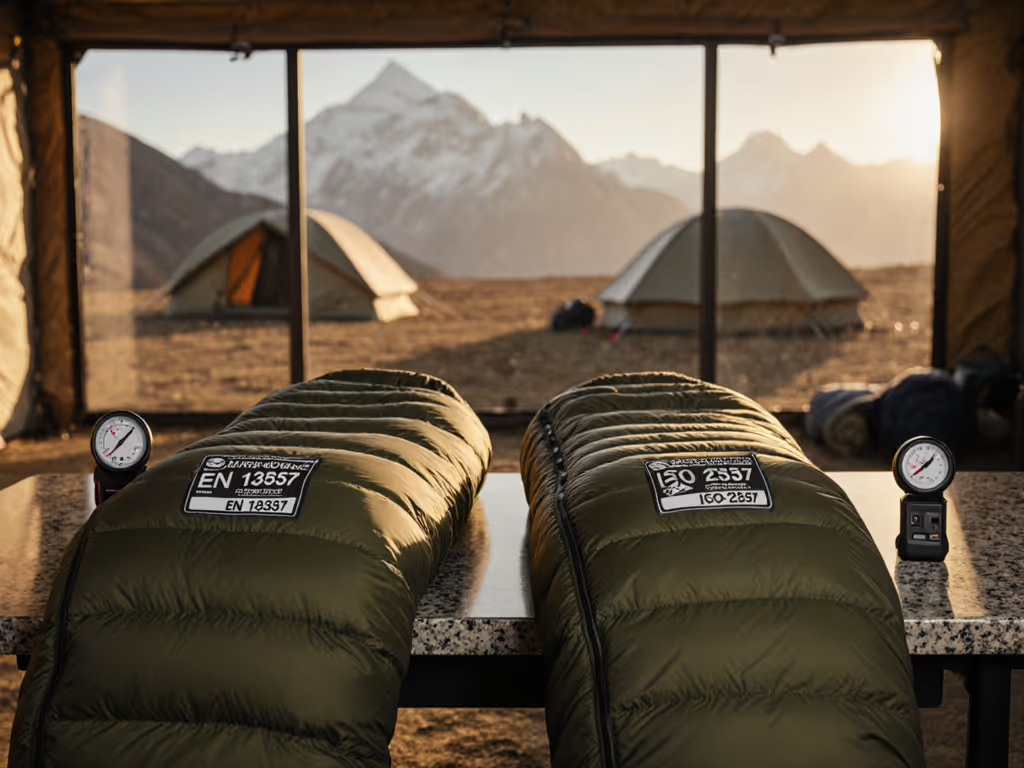
If you're puzzling over sleeping bag temperature testing comparison labels or trying to decipher EN vs ISO vs brand-specific ratings before your next trip, you're not alone. That desert loop I took years ago taught me a brutal truth: chasing the lowest sticker price while ignoring pad compatibility and my personal warmth threshold meant a long, shaking dawn. Price-to-warmth matters, but failure costs the most outdoors. Today's standardized ratings promised clarity, but translating lab numbers to real-world warmth requires understanding where the system works, where it fails, and how you fit into the equation. Let's cut through the noise with plain-language analysis of what these ratings actually mean for your sleep system's reliability. For a deeper primer on labels and test methods, see our guide to ISO sleeping bag ratings.
How the Tests Actually Work: More Than Just a Number
The current ISO 23537 standard (which replaced the earlier EN 13537) isn't arbitrary; it is a rigorously controlled process. Picture this: a sensor-laden manikin wearing standard thermals, zipped inside your bag, placed on a foam pad with R-value ≥5 in a climate chamber. As temperatures drop, engineers measure exactly how much energy the manikin needs to maintain core warmth. This generates three critical data points:
- Comfort Rating: The temperature where an "average female" (5'5", 143 lbs) sleeps relaxed all night
- Lower Limit: Where an "average male" (5'10", 176 lbs) can sleep curled up for 8 hours
- Extreme Rating: Survival-only threshold (don't plan trips around this)
This isn't guesswork. It is physics. But physics ignores your metabolism, your damp tent walls, or that time you skipped dinner to save weight.
Why Brand-Specific Ratings Still Exist (and Why They're Risky)
Not all bags carry ISO labels. Backpacking quilts, extreme-cold bags (<0°F), and kids' models often skip testing. If you're considering a quilt, read our sleeping bags vs quilts comparison to understand how ratings translate. Some brands still use internal estimates like "Rated to 20°F" (marketing code for "we guessed"). Here's how to spot the red flags:
- 🟥 Single temperature claim ("20°F bag") with no comfort/limit breakdown
- 🟥 No mention of test standard (EN/ISO) in specs
- 🟥 Claims exceeding ISO ranges (e.g., "comfortable to -10°F" on untested bag)
Green flags? Look for the ISO logo with all three ratings clearly displayed. Brands like Therm-a-Rest and Big Agnes publish full test reports. Transparency is their warranty.
Why Real-World Performance Diverges: The Pad Factor You're Ignoring
That ISO test? It assumes a pad with R-value ≥5. Most backpackers use R 2.5-4.0 pads. This single oversight explains why so many campers shiver despite "correct" bag ratings. To squeeze more warmth from the same bag, evaluate pad integration systems that improve thermal efficiency. Let's run the numbers:
| Pad R-Value | Effective Bag Rating Drop | Real-World Impact |
|---|---|---|
| R 5.0 (ISO standard) | Baseline | Lab-accurate performance |
| R 3.0 (common backpacking pad) | 7-10°F warmer bag needed | "20°F bag" feels like 30°F bag |
| R 2.0 (ultralight solo) | 12-15°F warmer bag needed | "20°F bag" = 35°F comfort |
This isn't theoretical. Sea to Summit's field tests confirm: 85% of cold-sleep reports trace back to pad mismatch, not faulty bags. Combine this with wind penetrating single-wall shelters or sleeping in damp coastal air (which saps 5-8°F of effective warmth), and suddenly your "20°F" bag needs to perform like a 10°F model.
Your Body Isn't a Manikin: Cold-Sleeper Reality Check
The ISO "average female" reference is helpful, but if you're a 120lb cold sleeper like my partner Sarah, those comfort ratings overpromise by 8-12°F. Conversely, heavyset hot sleepers might find lower limit ratings too conservative. Match your biology to the right specs with our cold vs warm sleeper guide. Track your personal warmth threshold with this quick audit:
- ✅ Green flag: Sleep consistently warm in double-wall tents with R 4.0+ pad
- ✅ Green flag: Hands/feet stay warm with base layers (no VBLs needed)
- 🟥 Red flag: Wake shivering despite bag rating matching forecast
- 🟥 Red flag: Need fleece jacket + beanie inside bag below 45°F
My desert epiphany came realizing my body needed 15°F warmer ratings than ISO comfort suggested (but only when paired with my ultralight pad). Stop comparing bags; start comparing your system.
Decoding Your Personal Warmth Threshold
Forget sticker shock. Run this cost-per-night math on your current sleep system:
- Total system cost (bag + pad + pillow) ÷ nights used = real cost per trip
- Effective warmth gap = (Bag comfort rating) - (Lowest temp you stayed warm)
- Failure cost = $ value of ruined trip (motel stay, emergency gear, lost adventure)
When I calculated my "bargain" bag's cost-per-night after three failed trips, it totaled $47/night, while my repaired EN-rated bag now costs $1.80/night after 127 adventures. Spend where failure hurts; save where it won't. That usually means: Curious about premium fills? Here's fill power explained so you know when higher numbers stop mattering.
- 💰 INVEST: Pad R-value (warmer pad = lighter bag needed)
- 💰 INVEST: Repairable zippers (e.g., #8 YKK sliders)
- 💸 SAVE: Down fill power above 850 (diminishing returns)
- 💸 SAVE: "Women's specific" bags if you sleep hot (unisex often fits better)
The Repair-vs-Replace Threshold
ISO ratings assume new, fluffy bags. But after 50 nights, even premium down loses 15-20% loft. Instead of chasing "new" ratings, run this repair checklist:
- 🟩 Fixable: Draft tubes with minor tears (use McNett seam grip)
- 🟩 Fixable: Zipper snag (lube with Gear Aid zipper wax)
- 🟥 Replace: Compressed insulation in footbox (loft won't recover)
- 🟥 Replace: Moisture-wicked shell (down clumps permanently)
Building Your Failure-Proof System (Without Breaking Budget)
The Kelty Cosmic 20 Down Mummy exemplifies smart system design within budget constraints. Its ISO lower limit of 21°F (comfort 32°F) aligns perfectly with R 4.5+ pads for 35-40°F shoulder season use. But here's why it earns my repair-first endorsement:
- Warranty foresight: Kelty's lifetime warranty covers zipper/slider failures, a common failure point others ignore
- Ethical redundancy: RDS-certified down means traceable repairs if fill clumps
- PFAS-free DWR: Hydrophobic treatment resists moisture without toxics (critical for damp coastal sleep)
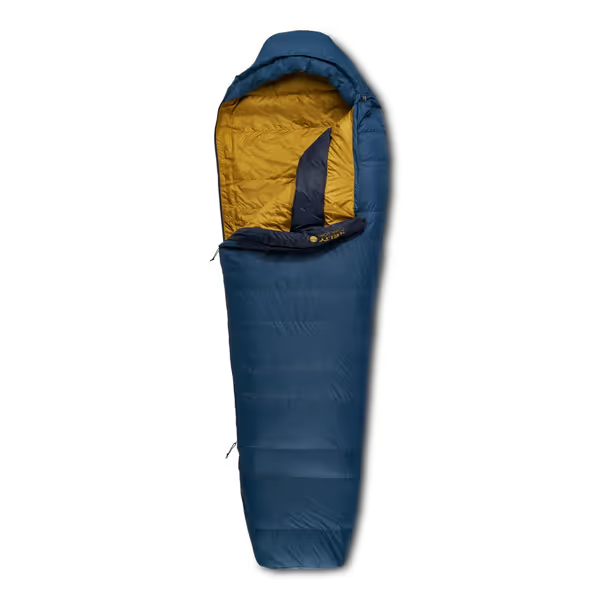
Kelty Cosmic 20 Down Mummy Sleeping Bag
Reliable 20°F comfort with ethical down and recycled materials.
$179.95
ISO Limit Rating21°F
ISO Limit Rating21°F
Pros
Warm down to 30°F (user verified).
Lightweight and packs small for backpacking.
Eco-friendly: PFAS-free, recycled fabrics, traceable down.
Cons
Mummy fit can be tight for broad shoulders.
Customers find the sleeping bag warm and comfortable, with one mentioning it maintains temperatures down to 30 degrees at night. They describe it as a high-quality product that's relatively light, packs small, and works well for backpacking. The fit receives mixed feedback - while some customers say they can fit in it without problems, others note it's tight for those with broad shoulders.
Customers find the sleeping bag warm and comfortable, with one mentioning it maintains temperatures down to 30 degrees at night. They describe it as a high-quality product that's relatively light, packs small, and works well for backpacking. The fit receives mixed feedback - while some customers say they can fit in it without problems, others note it's tight for those with broad shoulders.
Notice how Kelty publishes both comfort and limit ratings? That transparency lets you calculate your safety margin. For cold sleepers like me, I'd pair this with an R 5.5 pad (not its assumed R 5.0) for reliable 30°F use, adding 5°F buffer for desert radiative cooling like my infamous failure.
Your Action Plan: From Confusion to Confidence
- Map your actual lowest-comfort temp using last season's trip log
- Add 10°F buffer for wind/dampness (e.g., 30°F comfort → 40°F bag rating)
- Match pad R-value using the formula: (Bag comfort rating - Target temp) ÷ 2.5
- Planning 25°F trips? You need (32°F - 25°F) ÷ 2.5 = R 2.8 minimum
- Verify repair paths before buying, check warranty coverage for slider/zipper issues
The Verdict: Ratings Are Starting Points, Not Promises
ISO 23537 revolutionized sleeping bag warmth verification, but it's just one piece of your sleep puzzle. Temperature rating accuracy depends entirely on your pad, shelter, and body chemistry (factors the lab can't replicate). Stop comparing bags in isolation. Start evaluating systems where pad R-value meets your personal warmth threshold with 5-10°F margin.
Grab your oldest sleeping bag receipt tonight. Run the cost-per-night math. If it's over $3/night, you've either underused reliable gear or gambled on sleep failures. True value isn't in the lowest price tag. It is in reliability per dollar across seasons. Spend where failure hurts; save where it won't. Your warmest dawn awaits.
Related Articles