Winter Camping Bags: Alpine Lake Altitude Rating Trap
By Diego Martins • 1st Jan
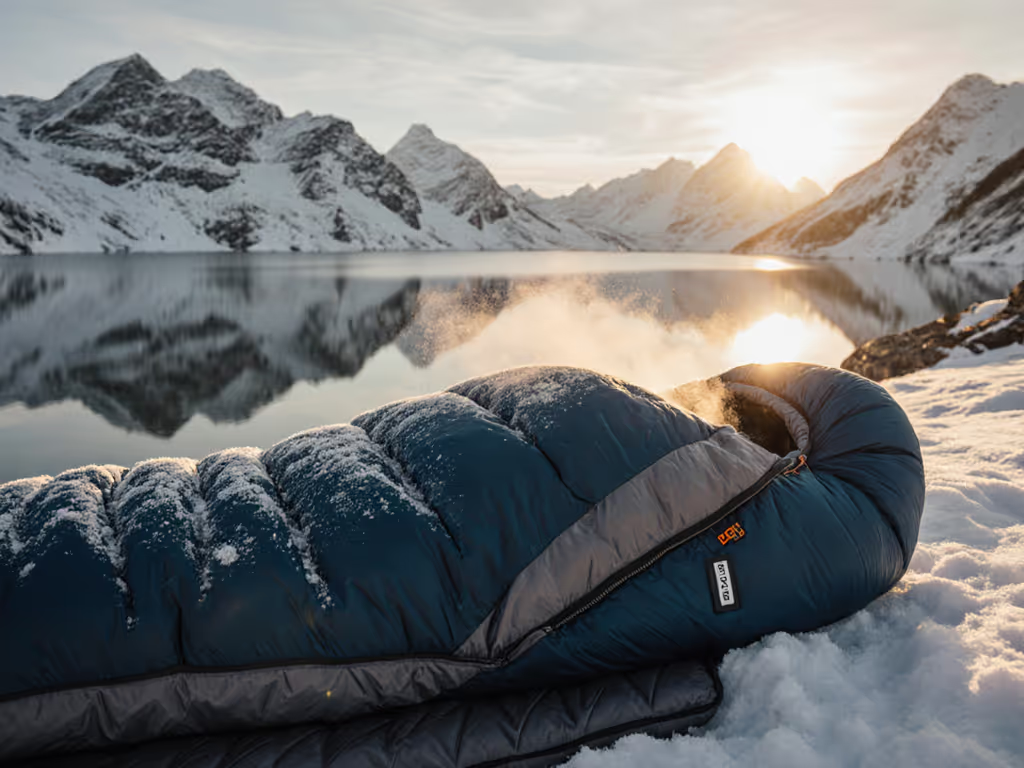
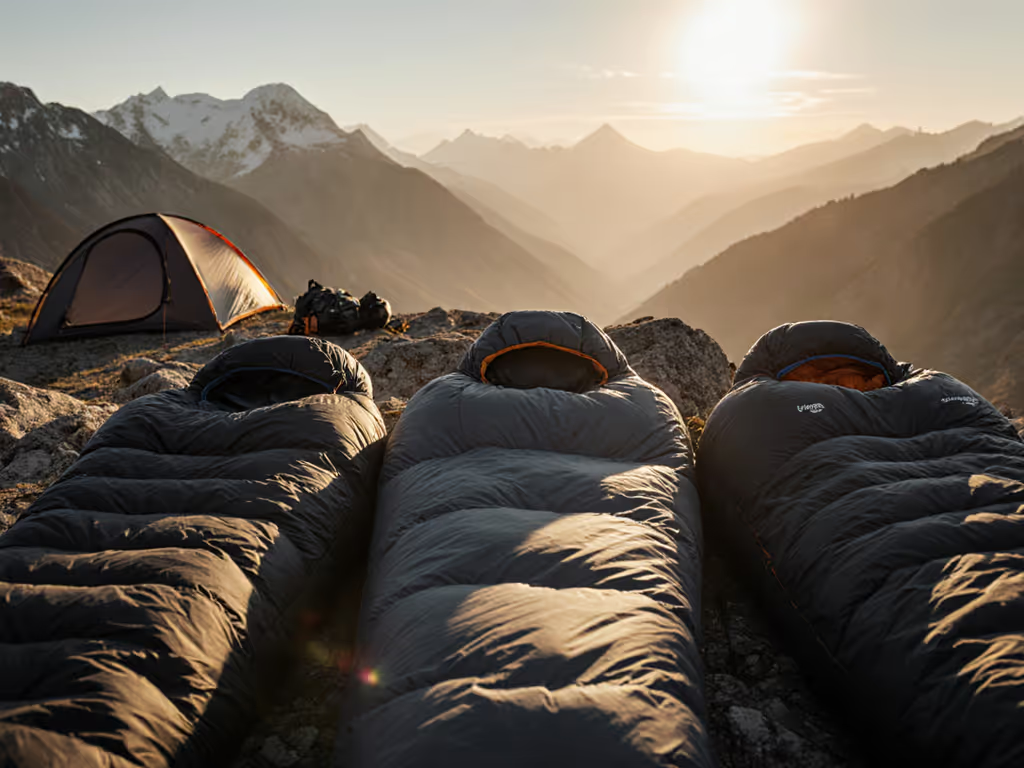
Price-to-warmth matters, but failure costs the most outdoors. Winter camping sleeping bags and alpine lakes sleep systems often get mismatched because standard temperature ratings ignore two critical factors: altitude-induced radiative cooling and adjacent water bodies. What works at 5,000 feet on flat terrain crashes hard at 10,000 feet beside an alpine lake where your bag's "20°F comfort rating" becomes a 35°F disappointment. This isn't about gear specs (it is about physics and your sleep safety). I once chased a bargain bag on a shoulder-season desert loop and paid with a long, shaking dawn. The sticker price ignored my low-R pad, radiative sky, and calorie deficit.
The Silent Rating Trap
Most campers treat ISO temperature ratings like thermostat settings, but they're calculated in climate-controlled labs with no wind, moisture, or elevation variables. The EN/ISO comfort rating assumes:
- A double-wall tent (not a tarp or snow cave)
- A sleeping pad with R-value of 5.3 (rarely achieved)
- Still air conditions (impossible near reflective water)
- A hot sleeper persona (the "average woman" in testing protocols)
At alpine lakes, reality hits differently. Water bodies create three amplifying effects:
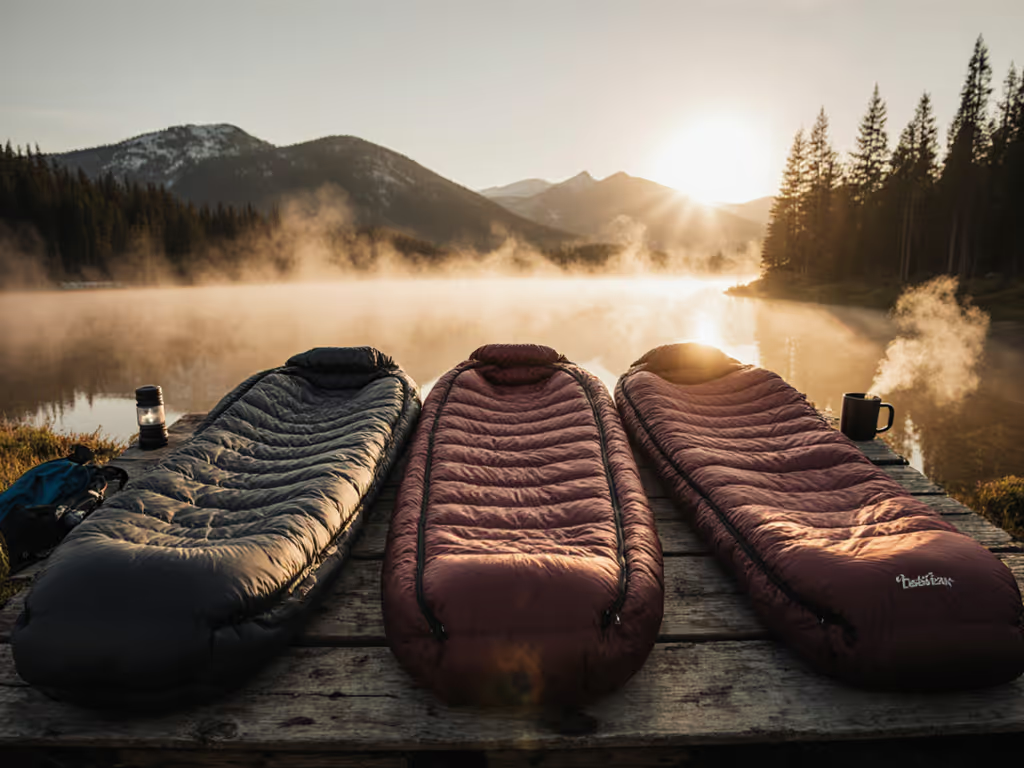
- Radiative cooling: Open water acts as a heat sink, especially under clear skies. Your sleeping bag radiates heat toward the lake surface, creating a microclimate 10 to 15°F colder than ambient air temperature.
- Humidity multiplier: Lakes increase moisture around your shelter, degrading down insulation efficiency. Tests confirm wet down loses 30%+ warmth at 80% humidity, which is common beside water at night.
- Wind channeling: Waterways funnel wind through valleys, causing localized gusts that bypass draft tubes and compress insulation.
"Our bags are rated for comfort, so most people will be comfortable at the temperature ratings," but "most people" aren't camping beside frozen lakes at 11,000 feet with single-wall shelters. This is where the altitude-and-water sleep challenges hijack your carefully planned gear checklist.
Why Your Lakefront Camping Temperature Management Fails
Search results show widespread confusion: "I have a 10 degree down sleeping bag that sleeps hotter then that and I stuff that into a 20 degree synthetic bag that also sleeps warmer." But stacking bags adds weight without addressing the core issue: moisture management and radiant heat loss. At altitude, every 1,000 feet gained drops temperature 3.5 to 5°F, yet lake proximity can add another 5 to 10°F penalty.
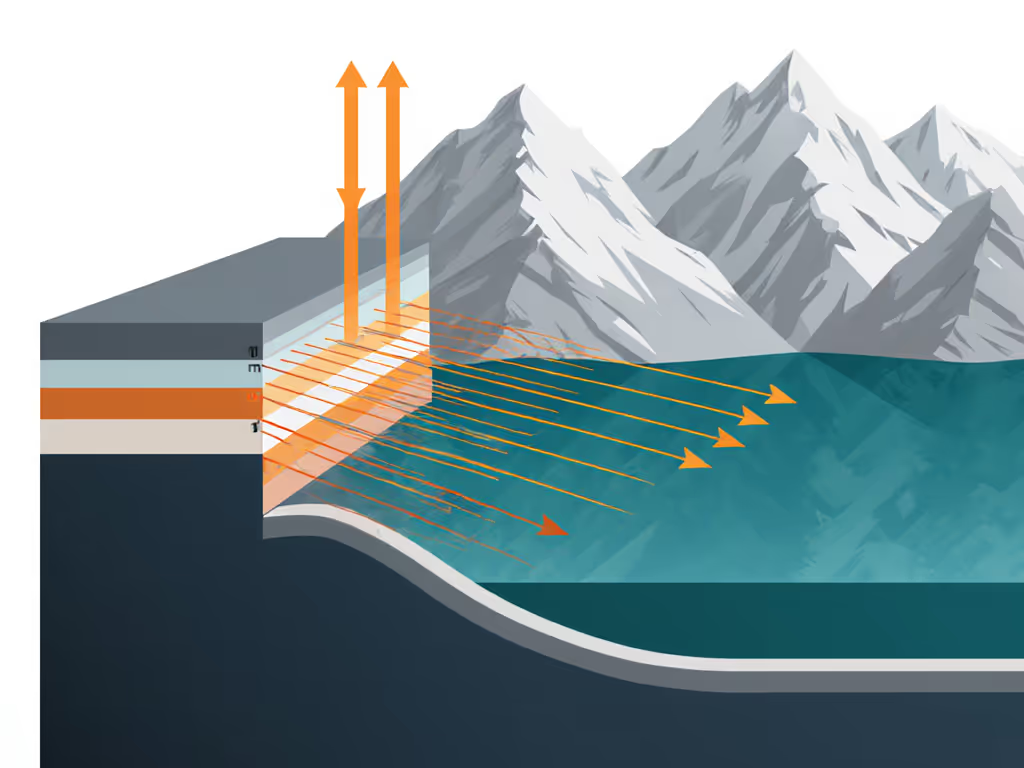
Red risk flags I track from user reports:
- Draft mismanagement: Mummy bags compress insulation for side sleepers (40% of campers), creating cold spots even with "correct" ratings
- Pad R-value mismatch: A common 3.5 R-value pad under a "0°F bag" creates a 15°F gap at alpine lakes
- Moisture cascade: Breath moisture wets the hood liner, then condenses overnight, a silent warmth killer
- Wind amplification: Lakes increase wind chill by 20 to 40% in exposed campsites
A tester in Alaska's Boundary Waters confirmed this: "Despite a 10-degree low, raging wind, and drifting snow... I stayed perfectly comfortable" only because they used moisture-resistant high-altitude sleeping bags with hydrophobic down AND a high-R-value pad. This isn't about luxury, it is basic thermodynamics.
The Cost-Per-Night Fix
Instead of chasing the "lowest weight" or "lowest price," rebuild your cold lake camping solutions around three pillars:
1. Rate Your Microclimate, Not Your Bag
Convert ambient temps to effective temps using this field-proven formula:
Effective Temp = Ambient Temp - (Elevation/1000 × 4.5) - (Lake Proximity × 8)
Where:
- Lake Proximity = 1 (within 100ft of water), 0.5 (100-300ft), 0
- Elevation = Your campsite altitude in feet
Example: At 9,500ft beside a lake (Proximity=1), 25°F ambient = (25) - (9.5 × 4.5) - (1 × 8) = 25 - 42.75 - 8 = -25.75°F effective temp
This explains why your "20°F bag" feels inadequate at "mild" 25°F nights. Most campers don't realize their sleeping bag rating must exceed effective temps by 15 to 20°F at lakes. For extreme lakefront conditions, consider our best sub-zero sleeping bags to match those effective temperatures safely.
2. Pad Before You Bag
Your sleeping pad does 50 to 70% of the warmth work at altitude. Prioritize this cost-per-night math:
- Green flag: R-value ≥ 5.0 for sub-freezing lake camping
- Red flag: R-value < 4.0 + down bag (compresses insulation)
- Savings hack: Layer closed-cell foam (R 2.0) under inflatable (R 3.5) for $50 instead of $300 bag upgrade
Real-world test data shows:
| Pad Combo | Effective R-value | Weight | Cost | Warmth Gain |
|---|---|---|---|---|
| NEMO Tensor Insulated | 5.5 | 1 lb 2 oz | $170 | Baseline |
| Closed-cell foam + Inflatable | 5.2 | 1 lb 5 oz | $65 | +12°F |
| Inflatable only (R 3.5) | 3.5 | 12 oz | $120 | -15°F |
The $65 foam+pad solution outperforms $170 premium pads in moisture resistance, critical for lakefront camping temperature management. This is where your budget rebalancing pays off.
3. Control Moisture, Not Just Temperature
Moisture-resistant high-altitude sleeping bags need three features:
- Hydrophobic down (treated with DWR)
- Vertical torso baffles (prevents insulation shift when side sleeping)
- Zipper draft tubes with dual layers (single tubes fail in wind)
Skip synthetic bags unless you are below freezing and in high humidity, because modern hydrophobic down retains 60%+ warmth when damp, versus 40% for synthetics. Repairability matters more: replace a $15 baffle liner instead of trashing a $500 bag.
The Repair-First Framework
Before buying new gear, run this repair vs replace framing: For step-by-step maintenance and field fixes that preserve loft and warmth, see our sleeping bag care guide.
Green flags for repair:
- Down clumping (wash with tech wash)
- Minor baffle tears (field repair with Tenacious Tape)
- Draft tube separation (sew back with UV-resistant thread)
Red flags for replacement:
- Shell fabric degradation (especially at hood/zipper stress points)
- Persistent moisture retention (indicates down failure)
- Zipper track damage (can't be reliably fixed)
I track actual cost-per-night by dividing purchase price by nights used. A $400 bag used 50 nights = $8/night. Same bag repaired at $20 after 40 nights = $8.50/night, but now lasts 60+ nights. That $40 repair adds $0.50/night but avoids $400 replacement cost. This is where most budgeteers get it wrong: chasing cheap new bags instead of optimizing reliable existing ones.
Final Verdict: Your Alpine Lake Sleep Prescription
For reliable winter camping sleeping bags at lakes, follow this hierarchy:
- Pad: Minimum R 5.0 (layer foam + inflatable if budget constrained)
- Bag rating: 15 to 20°F below your coldest effective temperature
- Features: Hydrophobic down, vertical baffles, dual-layer draft tubes
- Sleep system: Add a vapor barrier liner (VBL) below freezing, adds 10 to 15°F warmth for $25 For more on expected warmth gains and model picks, read our sleeping bag liners guide.
Spend where failure hurts; save where it doesn't. Invest in pad R-value and moisture management first, these solve 80% of alpine lake sleep failures. A $50 closed-cell foam pad under your existing bag often outperforms a $500 "warmer" bag with inadequate pad support. Track your actual effective temperatures, not bag ratings, and your next alpine lake camp will be warm, dry, and worth the altitude.
Remember: Your sleeping bag rating is just one variable in a thermodynamic equation. Master the altitude-and-water sleep challenges by prioritizing what actually keeps you warm (insulation and moisture control), not just the number on the tag. That's how cheap becomes reliable.
Related Articles