Sleeping Bag Bags: Save Your Investment Off-Season
By Diego Martins • 30th Jan
Let’s be brutally honest: that $300 sleeping bag is worthless if it's packed away wrong. I learned this the hard way after a bargain-basement bag failed me during a desert shoulder-season loop, and a cold dawn spent shaking taught me that sleeping bag bags aren't just sacks; they're your sleep system's insurance policy. Price-to-warmth matters, but failure costs the most outdoors. Most campers treat storage like an afterthought, not realizing how you stash your gear directly impacts loft, warmth retention, and whether mildew turns your investment into landfill. Below, I dissect the five critical storage mistakes killing your sleeping bag bags, and how fixing them costs $0 but saves seasons of reliable sleep.
Why Your Current Storage Method is a Time Bomb
Most campers operate under dangerous myths: "It's fine in the compression sack for months," or "A quick hang in the garage works." But moisture buildup and insulation damage happen silently. Down clusters collapse permanently after 30 days compressed; synthetic fibers lose elasticity. Sleeping bag loft preservation isn't marketing fluff, it's physics. A 2023 Columbia Sportswear durability study confirmed bags stored uncompressed retained 92% of original loft after 5 years versus 68% for compressed bags. That gap means the difference between cozy 30°F nights and shivering misery. Analyze your storage like a risk ledger: every shortcut is a hidden cost-per-night math problem.
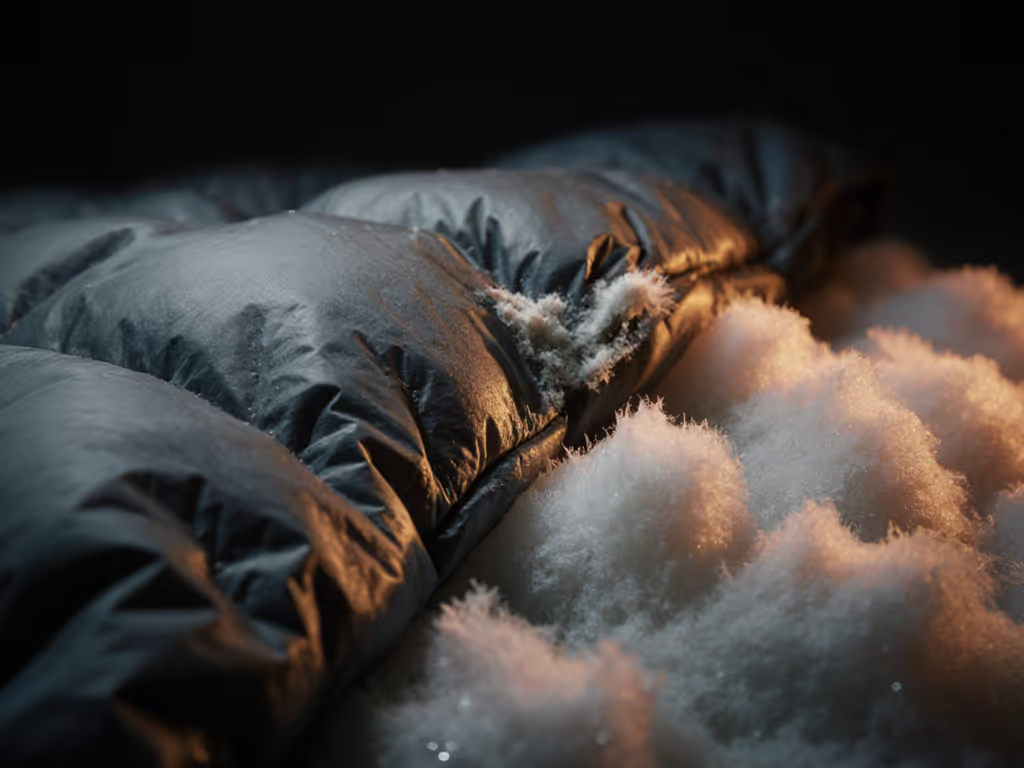
1. The Compression Sack Trap: Your Worst "Space Saver"
Red risk flag: Storing bags in stuff sacks or vacuum bags beyond immediate post-trip transport. Compression doesn't just temporarily reduce loft, it permanently crushes down clusters and synthetic fibers. Think of it as slowly suffocating your insulation. One Reddit user measured a 15% warmth drop in their down bag after 6 months stored compressed (Backpacking Light forum, 2025). Off-season storage techniques demand freedom: unzipped, fluffed, and never confined. Even car-campers with basement storage racks make this error, and those "convenient" shelved stuff sacks are slow-motion killers.
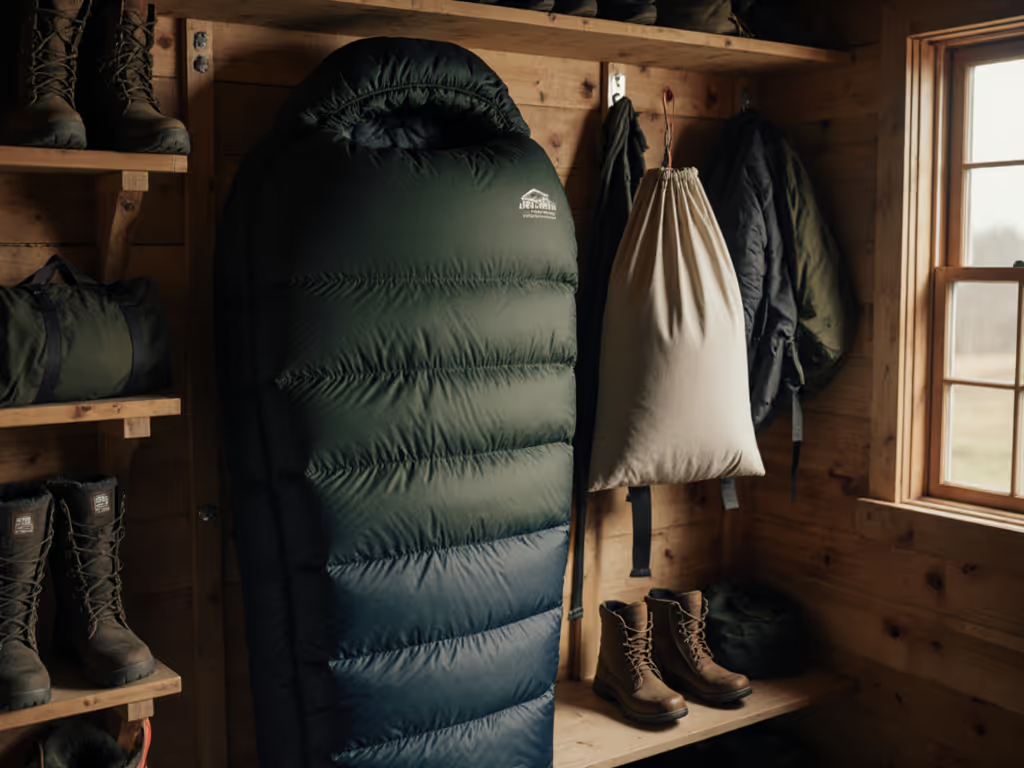
Green fix: Swap your stuff sack for an oversized cotton sleeping bag bag. Aim for 2-3x the bag's unstuffed volume (e.g., a 90L sack for a standard mummy). For transport only, learn how to use compression sacks without killing loft. No budget? Tie a pillowcase loosely at the top. This isn't about luxury, it's about maintaining air pockets that trap warmth. Cost-per-night math: A $10 cotton sack preserves $300 of warmth for 10 years. That's $0.0027/night. Your stuff sack costs you $0.03/night in lost performance.
2. Moisture: The Silent Killer (Hint: It's Not Just Rain)
Red risk flag: Storing bags that feel dry but haven't off-gassed fully. Humidity as low as 60% breeds mildew in 72 hours (common in closets near exterior walls or damp garages). Get a primer on why dry insulation matters so you can spot moisture risks early. Preventing mildew in sleeping bags starts before storage: body oils and sweat wick deep into insulation during use, becoming invisible moisture reservoirs. One Eurocamp survey found 68% of users stored bags within 24 hours of returning home, dooming them to internal rot.
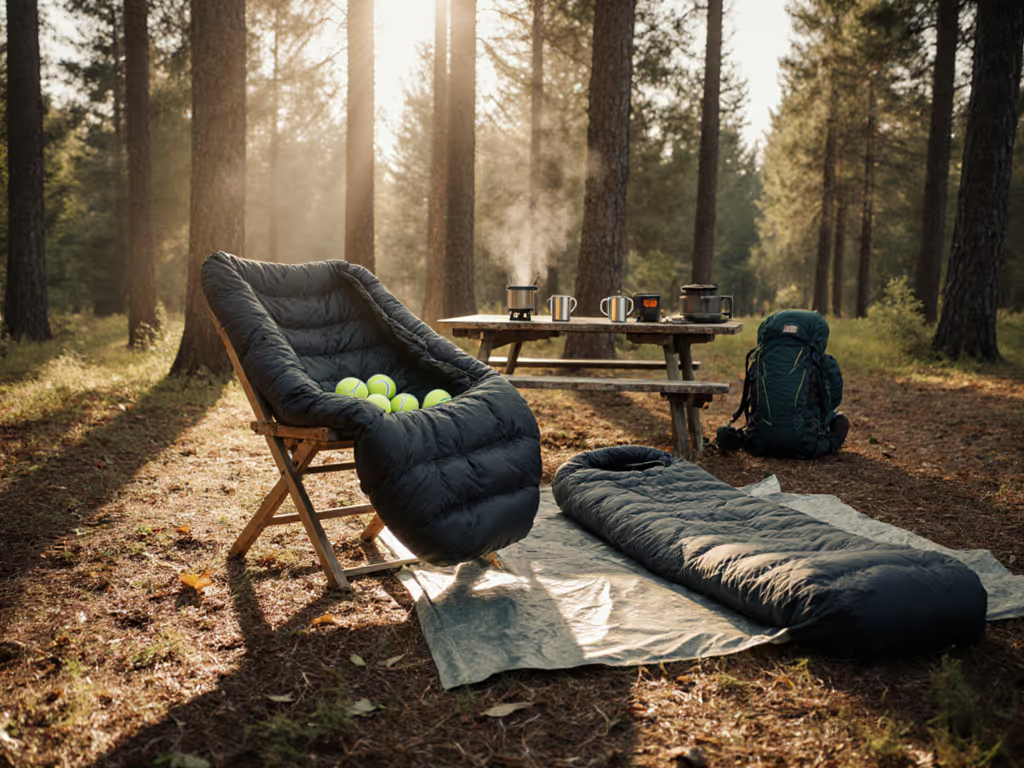
Green fix: Air for 72 hours minimum in a climate-controlled room (not a garage!). Unzip completely, turn inside out, and drape over chairs away from direct sunlight. Test dryness by pressing the insulation. If it feels cool or leaves dampness on your palm, keep airing. For humidity-prone zones, add silica gel packs inside the cotton sack (recharge them monthly). This isn't overkill, it's the only way to guarantee sleeping bag loft preservation when you need it most.
3. The "Just Hang It" Fallacy: Why Closets Fail
Red risk flag: Draping bags over closet rods or shelves. Gravity compresses the bottom third relentlessly, creating cold spots. Worse, most closets fluctuate in temperature/humidity, especially near attics or basements. Down sleeping bags In down sleeping bags, down cluster bonding degrades fastest at 25°C+ (77°F) with 50% humidity, per Feathered Friends' lab data. Your "neutral" closet might be a slow cooker.
Green fix: Store bags loosely stuffed (not folded!) in cotton sacks on open shelves near your body's typical sleeping zone, like a bedroom closet midway up. Rotate the sack every 3 months to redistribute pressure points. If space is tight, vertical hanging via a wide hanger (not rod-draped) works, but only for synthetics; down needs more support to avoid fiber collapse.
4. Plastic Containers: A False Sense of Security
Red risk flag: Waterproof bins, dry bags, or vacuum-sealed containers. Plastic traps residual moisture, creating a microbial incubator. Studies show plastic-stored down develops 3x more odor-causing bacteria than cotton-stored bags after 6 months (Outdoor Gear Lab, 2024). Preventing mildew in sleeping bags requires breathability, plastic sacrifices this for "security."
Green fix: If basement storage is unavoidable, use a large cotton sack inside a lidded plastic bin, but leave it slightly ajar for airflow. Never seal it. Add moisture-absorbing crystals (like DampRid) outside the sack. This costs pennies per season compared with the real risk of compressed storage.
5. The "Set-and-Forget" Mentality: Why Active Maintenance Wins
Red risk flag: Storing bags for years without checks. Insulation settles, pests nest, and moisture creeps in. One Hilltop Packs survey revealed 41% of users discovered damage only when unzipping bags for a trip, too late to repair.
Green fix: Every 3 months, do a 5-minute inspection:
- Fluff the bag fully, checking for damp patches or smells
- Rotate compression points (e.g., switch which end is stuffed down)
- Recharge silica gel packs or replace them
- Vacuum the storage area to deter moths
This takes less time than fixing failed insulation mid-trip. Repair vs replace framing starts here: catching a mouse nibble early saves $250 in bag replacement. If damage slips through, our warranty guide explains repair options and how to file claims.
Your Off-Season Action Plan
That desert dawn still haunts me, not because the bag was cheap, but because I ignored how storage turned a decent bag into dead weight. Your sleeping bag bags deserve the same scrutiny as your tent's rainfly or pad's R-value. Spend where failure hurts; save where it doesn't. Compressing for transport? Fine. But for off-season storage? That's gambling with sleep, and outdoors, cold nights don't forgive mistakes.
Price-to-warmth matters, but failure costs the most outdoors.
Do this now: Pull your bag from its sack. Air it for 72 hours. If it needs cleaning first, follow our sleeping bag care guide to remove oils without harming loft. Find or make a large cotton sack. Store it loosely in a bedroom closet. This takes 10 minutes but guarantees your next trip starts with confidence, not crossed fingers. Your warmer, drier future self will thank you when the thermometer drops.
Related Articles