Best Women’s Sleeping Bags for Tall Campers Over 5'8"
By Rina Takahashi • 2nd Jun
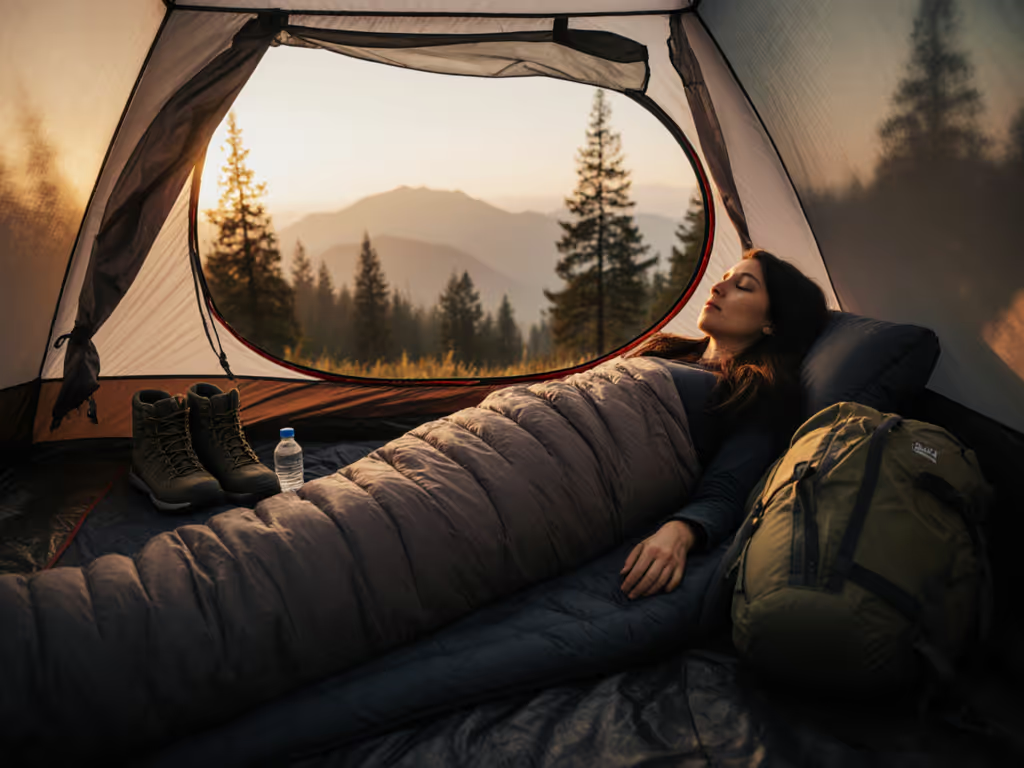
Consistently warm sleep as a tall woman over 5'8" is less about finding a magic bag and more about dialing in a system (bag, pad, shelter, and wind) for your height and shape. The best women's sleeping bags for tall campers are the ones that combine extra length, correct hip-to-shoulder geometry, and a realistic temperature rating with the right pad and shelter.
Assumptions first, then conclusions: this guide assumes you're a tall camper (5'8"-6'0"), mostly 3-season with some shoulder-season ambitions, and willing to invest once in a high-performing system rather than churn through "almost right" bags.
How ISO Ratings Really Feel for Tall Women
Before comparing models, you need to translate the label rating into real-world comfort for your body and setup.
Comfort vs lower limit (and why women's numbers look different)
Most modern bags use EN/ISO testing, which reports at least two key numbers: a comfort rating (where a standard cold-sensitive sleeper is comfortable) and a lower limit (where a warm sleeper can last the night curled up but not necessarily in comfort).[15][12] Women's bags are usually designed around the comfort rating, which is why a women's "15°F" might feel warmer than a unisex "15°F" for many cold sleepers.[1][11]
If you sleep cold or camp in wind, read the comfort rating as your realistic floor, not the marketing number on the big hang tag.
How tall length changes warmth
For tall women, length isn't just about foot room:
- Too short: Your head or feet press into the ends, compressing insulation and creating cold spots.[15]
- Too long: Extra dead air takes more energy to heat, especially in the footbox.
That's why extra length women's mummy bags that go to 6'0" are ideal for most women between 5'8" and 5'11", you gain space without the huge volume jump that often comes with unisex long bags.[1][6] For step-by-step measuring and fit checks, see our sleeping bag size guide.
A simple height/length heuristic:
- 5'8"-5'9.5": women's "long" (often up to 6'0")
- 5'10"-6'0": women's "long" if available; otherwise unisex "regular/long" with careful attention to girth
Pad-first logic: your R-value is half your warmth
ISO ratings are tested with a specific pad R-value, usually around 4-5.[15][12] If you use a lower-R pad than the test standard, your "20°F bag" might feel like a 30°F bag in real life.[7][15]
Practical 3-season heuristics for ground sleepers:
- Night lows ~40°F / 4°C: R 2.5-3 minimum
- Night lows ~30°F / -1°C: R 3.5-4.5
- Night lows ~20°F / -6°C: R 4.5-5.5
If you routinely wake up cold in a correctly rated bag, upgrading your pad usually buys more warmth per dollar and per ounce than buying a thicker bag, a fact echoed across multiple sleeping bag and pad guides.[2][7][15] For the science behind heat loss and how bags actually keep you warm, read our sleeping bag insulation guide.
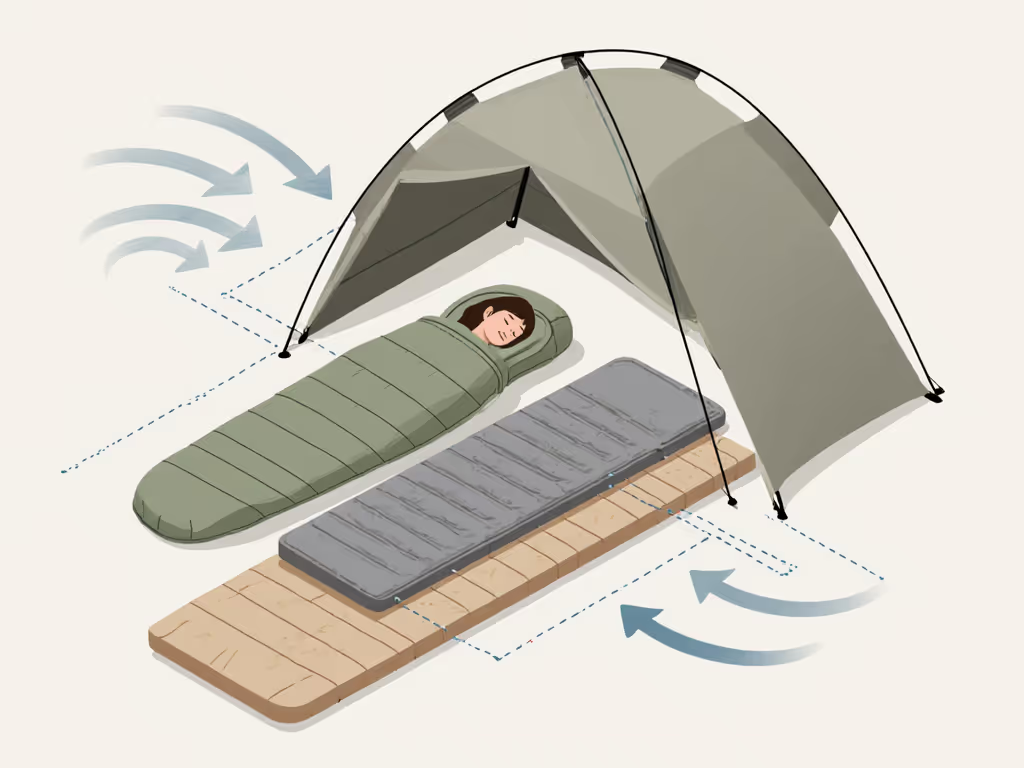
Wind and shelter: why the same bag feels "off" in different places
Field tests from Backpacker, REI, and independent reviewers all note that single-wall tents, tarps, and alpine wind can make a 20°F system feel closer to 30°F.[8][12][15] Drafty shelters and cross-breezes strip heat from your bag's outer shell, especially from the hood and shoulders.
Rule of thumb (for planning):
- Add 10°F of margin if you're in a tarp, floorless shelter, or very windy alpine site.
- Add 5°F of margin for humid/coastal trips where damp down loses some loft.[8][9][15]
This is why on one windy shoulder-season bivy, my "20°F" bag on a thin pad left me shivering in steady wind while the lab numbers were technically correct. Mapping wind and R-value into my pre-trip planning fixed that on the next trip, quiet, dreamless sleep at the same campsite.
What Tall Women Should Prioritize (Beyond Just Length)
1. Hip-to-shoulder ratio and shape
Women typically have a higher hip-to-shoulder ratio than men, which is why women's-specific bags add room at the hips and extra insulation around the core and feet.[1][11][14] For tall women, this matters even more: if you size up into a long unisex mummy, you often get:
- Too much shoulder girth (wasted volume you must heat)
- Not enough hip room (compressed insulation when side sleeping)
If you:
- Side sleep or move a lot → look at spoon/relaxed mummy designs with extra hip/knee room (side sleeper picks).[5][10][11]
- Sleep mostly on your back → a true mummy can be warmer and lighter.
2. Draft control and zipper design
Tall campers often get small gaps at the shoulders or hood if the bag is slightly too short or cut wrong for their torso. Key features:
- Effective draft collar that cinches around the neck without choking[12][14]
- Shaped hood that can follow a longer neck without pulling tight over the face[1]
- Zippers with draft tubes and minimal snagging, mentioned repeatedly in long-term tests by reviewers.[1][2][12]
3. Insulation type and moisture
Most of the top-performing women's bags for backpacking use high-fill-power down (e.g., 700-900 fill), which offers the best warmth-to-weight.[1][2][11] Many now use water-resistant down and durable water repellent (DWR) fabrics to resist light condensation.[9][10]
Choose:
- Down if you prioritize weight and packability, and your shelter/site selection keeps you mostly dry.[1][2][11]
- Synthetic if you camp in persistently damp climates or expect frequent condensation and can tolerate more weight.[12][14]
4. System thinking for tall bodies
For women over 5'8", "extra length women's mummy bags" are only one piece of the puzzle. To translate a label rating into real comfort, I keep a simple checkpoint:
- Bag comfort rating <= expected low minus 5-10°F for cold sleepers
- Pad R-value matches temperature goals (see earlier table)
- Shelter and site block prevailing wind
- Sleep clothing: dry, not tight, light base layer + warm hat[15]
Warmth is a system, not a single-spec promise.
With that framing, let's look at the actual bags.
The Best Women's Sleeping Bags for Tall Campers Over 5'8"
Below are six standout options from major tests and buyer data that specifically work well for taller women.[1][2][5][8][11][14] Each pick assumes a solid pad (R >= 3.5) and halfway decent shelter.
1. REI Co-op Women's Magma 15 (Long)
Best ultralight all-rounder for tall backpackers
Multiple comparative tests from OutdoorGearLab, SectionHiker, and REI themselves highlight the REI Magma 15 Women's as one of the strongest warmth-to-weight values on the market.[1][6][14] It uses high-fill-power down, a lightweight shell, and a true mummy cut tuned for women.
Why it works for tall women:
- Long size fits up to about 6'0", giving 5'8"-5'11" women real toe room without excessive dead space.[6]
- Women's-specific fit adds hip room and targeted insulation in the torso and feet.[1][14]
- A well-shaped hood and draft collar reduce cold creep at the neck and head.[1]
Best use envelope (for cold sleepers):
- With R 4-4.5 pad and a double-wall tent, many cold sleepers are comfortable down to around 25-28°F.[1][2][14]
- In wind-exposed or tarp setups, consider it a 30-35°F bag unless you add extra clothing.[8][12]
Choose this if you want one primary 3-season backpacking bag that stays light while still being legitimately warm for shoulder-season overnights.
2. NEMO Women's Disco 15 (Long)
Best for tall side-sleepers who hate tight mummies
NEMO's Disco series uses a "spoon" shape, wider at the elbows and knees, which is consistently praised by side sleepers and restless movers.[5][10][11] The women's Disco 15 adds extra insulation to match typical women's cold profiles.
Why it works for tall women:
- Long size fits up to about 6'0", ideal for 5'8"-5'11".[10]
- Spoon shape respects the hip-to-shoulder ratio sleeping bags need for women, reducing hip compression and cold spots when curled up.[5][10][11]
- Integrated "Thermo Gills" vents help bleed heat without fully unzipping, good for those overheat-then-chill cycles.[10][11]
Best use envelope:
- With an R ~4 pad and moderate wind protection, many cold-sleeping women find it comfortable into the high 20s°F.[5][11]
- Because of roomier cut, it's not as thermally efficient as a trimmed mummy like the Magma; expect to carry a few extra ounces for that comfort.[1][2]
Choose this if your priority is comfort and mobility over shaving every gram, and you often roll from side to side at night.
3. Sea to Summit Women's Flame FmIII (Long)
Best fast-and-light option for tall, experienced users
The Sea to Summit Flame women's series is designed as an aggressively lightweight, high-fill-power down line, often tested at or near the top of warmth-to-weight rankings.[2][9][11] The FmIII model hits the sweet spot for 3-season shoulder-season use.
Why it works for tall women:
- Long size fits taller sleepers while keeping a fairly slim, heat-efficient cut.[9]
- Zoned down distribution puts more fill where women lose the most heat (torso and feet).[9][11]
- Premium down and light shell fabric dramatically cut packed size and weight compared to many 15-25°F peers.[2][9]
Caveats:
- Narrower cut: great for efficiency, less ideal if you like to sprawl.[2][9]
- Ultralight fabrics demand more care and good campsite selection.
Best use envelope:
- With R 4.5+ pad, double-wall shelter, and dialed camp habits, it's a strong choice into the mid-20s°F for cold sleepers.[2][9][11]
Choose this if you're a tall backpacker who counts ounces, manages wind intentionally, and wants a small, light kit that still holds its own when temps dip.
4. Big Agnes Daisy Mae 15 (Long)
Best integrated pad system for restless tall sleepers
Big Agnes is known for pad-integrated bags, many models either have a pad sleeve or are designed to pair cleanly with specific pad widths and lengths.[11][14] The Daisy Mae 15 is a women's-specific, down-filled bag with a flex pad sleeve and torso-focused insulation.
Why it works for tall women:
- Long size accommodates taller sleepers while maintaining women's-specific shaping.[11]
- The pad sleeve helps prevent you from sliding off the pad, a major complaint among restless sleepers and couples sharing small tents.[11][14]
- Extra insulation around the torso and feet targets classic cold spots for women.[11][14]
Best use envelope:
- With a matching long pad of R ~4-4.5, many cold-sleeping women report comfort into the high 20s°F in protected shelters.[11][14]
Choose this if you've fought pad-slip for years or share a tent where one person's tossing tends to drag everyone off their pads.
5. Mountain Hardwear Women's Bishop Pass 15 (Long)
Best value for alpine-curious tall campers
The Bishop Pass line from Mountain Hardwear appears frequently in "best value" and "best three-season" lists thanks to a solid combination of warmth, durable fabrics, and reasonable weight.[8][11] The women's Bishop Pass 15 targets colder nights without jumping into expedition pricing.
Why it works for tall women:
- Long version extends usable length for women over 5'8" while keeping a women's-specific cut.[11]
- Mountain Hardwear uses a relatively robust shell fabric compared to some ultralight competitors, which helps with repeated use in rocky/alpine zones.[8]
- Good hood and draft collar design improve comfort in borderline temps.[8][11]
Best use envelope:
- With R 4.5-5 pad and a reasonably wind-protected tent, it's a solid choice for mid-20s°F trips and the occasional push toward 20°F with extra clothing.[8][11]
Choose this if you want a durable, alpine-friendly bag that still works for car camping and shorter backpacking trips without feeling delicate.
6. Kelty Cosmic 20 (Women's & Unisex Long)
Best budget-friendly tall option
The Kelty Cosmic 20 is a perennial budget pick, often recommended in entry-level buyer's guides thanks to its accessible price and honest (if not class-leading) performance.[4][6][14] The women's version offers women's-specific insulation, while the unisex long provides extra length.
Why it works (and its limits) for tall women:
- If the women's version fits your height, you get better targeted insulation at a lower price point.[6][14]
- If you're taller than the women's long allows, the unisex long provides the necessary length, though with less precise hip-to-shoulder tuning.[4][6]
- Slightly heavier and bulkier than premium down bags, but still very functional.[4][14]
Best use envelope:
- With an R 3.5-4 pad, plan on comfort more in the low-30s°F for cold sleepers; treat the 20°F label as an optimistic limit rather than conservative rating.[4][14]
Choose this if you're building a kit on a tighter budget, or you want a durable do-everything bag for car camping and occasional backpacking without the pressure of babying an expensive ultralight.
Comparison Table: Best Women's Sleeping Bags for Tall Campers
| Bag | Best For | Max Height (approx.) | Insulation | Fit/Shape Notes | Realistic Cold-Sleeper Range* |
|---|---|---|---|---|---|
| REI Magma 15 Women's (Long) | Ultralight backpacking all-rounder | ~6'0" | High-fill down | Trim mummy, women's-specific | ~25-28°F with R 4-4.5 pad[1][2][14] |
| NEMO Disco 15 Women's (Long) | Tall side sleepers, comfort-first | ~6'0" | Down | Spoon shape, roomy hips/knees | High 20s°F with R ~4 pad[5][10][11] |
| Sea to Summit Flame FmIII Women's (Long) | Fast-and-light, experienced users | Tall (varies by size) | High-fill down | Narrow, highly efficient mummy | Mid-20s°F with R 4.5+ pad[2][9][11] |
| Big Agnes Daisy Mae 15 (Long) | Pad-integrated restless sleepers | Tall (varies by size) | Down | Women's-specific, pad sleeve | High 20s°F with long R ~4 pad[11][14] |
| MH Bishop Pass 15 Women's (Long) | Value alpine/shoulder-season | Tall (varies) | Down | Slightly roomier mummy, durable shell | Mid-20s°F with R 4.5-5 pad[8][11] |
| Kelty Cosmic 20 (Women's/Unisex Long) | Budget, beginner setups | Up to ~6'0" in long | Down | Basic mummy, roomier cut | Low-30s°F with R 3.5-4 pad[4][14] |
*Realistic ranges are approximate, assuming a cold-sleeping woman, good site selection, and minimal wind exposure; they sit warmer than many advertised lower-limit ratings.[1][8][12][15]
How to Pick the Right Bag for Your Height, Shape, and Trips
To keep this practical, here's the checklist I use with tall clients and trip partners.
Step 1: Lock in your target temperature system, not just bag
- Identify your typical coldest night for the next 2-3 years (example: 25°F shoulder-season mountain trips).
- Add 5-10°F safety margin if you:
- Sleep very cold
- Use a more exposed shelter (tarp, single wall, alpine ridges)[8][12]
- Choose a sleeping bag whose comfort rating is at or below that adjusted number.[12][15]
- Match your pad R-value to that target (R 4+ for nights dipping to the 20s°F).[7][15]
Assumptions first, then conclusions: once you know your target low, wind exposure, and pad, the "right" temperature rating stops being a guess and becomes a simple spec.
Step 2: Choose length and shape for your body
- If you are 5'8"-5'11":
- Start with women's long (often to 6'0").[1][6]
- Only move to unisex long if women's long is still too short or too snug in the shoulders.
- For side sleepers / athletic legs:
- Favor spoon/relaxed mummies like NEMO Disco or roomier cuts like Big Agnes Daisy Mae.[5][10][11]
- For back sleepers or weight-focused trips:
- Trim mummies like REI Magma 15 or Sea to Summit Flame maximize efficiency.[1][2][9]
Try to avoid "solving" height by jumping into a huge unisex long with way too much girth, tall women then pay for extra down they don't fully benefit from.
Step 3: Dial in draft and moisture management
- Look for a real draft collar and well-shaped hood, particularly if your neck/torso are longer and you've felt gaps at the shoulders in the past.[1][8][12]
- Practice using the hood and collar at home so you can adjust them in the dark without over-tightening.
- In humid or coastal environments, favor bags with water-resistant down and DWR shells, and be picky about site choice and ventilation to avoid condensation pooling on the footbox.[8][9][10]
Step 4: Optimize with clothing and liners (without over-relying on them)
- A thin liner or mid-weight base layers typically add only a few degrees, useful, but not a substitute for undershooting the bag rating.[15]
- For very cold sleepers, a light puffy jacket and warm socks can comfortably extend your bag's range when needed, especially in controlled wind.
Quick Scenario Examples for Tall Women (>5'8")
-
Weekend backpacking, shoulder season, lows ~30°F, 5'9" side sleeper
-
Bag: NEMO Disco 15 (Women's Long)
-
Pad: R 4 inflatable
-
Shelter: double-wall tent in sheltered sites
-
Expect: comfortable, draft-free sleep with room to move at ~30°F.
-
Alpine-curious trips, lows ~25°F but often windy, 5'10" cold sleeper
-
Bag: REI Magma 15 Women's Long or MH Bishop Pass 15 Women's Long
-
Pad: R 4.5-5 insulated pad
-
Shelter: sturdy double-wall tent, pitch out of the wind
-
Expect: solid comfort into the mid-20s°F with a defined margin for surprise cold snaps.
-
Budget build, mixed car camping and occasional backpacking, lows ~35°F, 5'8" back sleeper
-
Bag: Kelty Cosmic 20 Women's (or unisex long if needed for height)
-
Pad: R 3.5+ foam/inflatable combo
-
Shelter: typical family or dome tent
-
Expect: good comfort in the 30s°F without overspending, with clear upgrade path (pad first, then bag if needed).
Summary and Final Verdict
If you're a tall woman over 5'8", the best women's sleeping bags are the ones that recognize your actual proportions, not just your height. Among the current standouts:
- REI Magma 15 Women's (Long) is the best all-around choice for tall backpackers who want high warmth-to-weight, an honest rating, and a women's-specific fit that still packs small.[1][2][14]
- NEMO Disco 15 Women's (Long) is the comfort king for tall side sleepers who prioritize room to move over strict efficiency.[5][10][11]
- Sea to Summit Flame FmIII Women's (Long) is the fast-and-light specialist for experienced users who control wind and site selection and want minimal bulk.[2][9][11]
- Big Agnes Daisy Mae 15 (Long) is the pad-integration solution when staying on your pad matters as much as the bag itself.[11][14]
- Mountain Hardwear Bishop Pass 15 Women's (Long) is the value workhorse for alpine-curious tall campers who still car camp often.[8][11]
- Kelty Cosmic 20 (Women's / Unisex Long) is the budget gateway, a solid, if heavier, option that gets you into real 3-season camping without over-committing.[4][6][14]
To avoid another cold, confusing night where the label and your experience don't match, pick your bag only after you've defined:
- Your target coldest night (with wind and humidity in mind)
- Your pad R-value
- Your shelter's draft exposure
- Your height and hip-to-shoulder needs
Once those assumptions are clear, the right bag for your tall frame almost picks itself, and your next shoulder-season camp can feel uneventful in the best possible way: warm, quiet, and forgettable.
Related Articles