EN/ISO Ratings Decoded: Real-World Warmth Formulas
By Sofia Petrovic • 23rd Mar
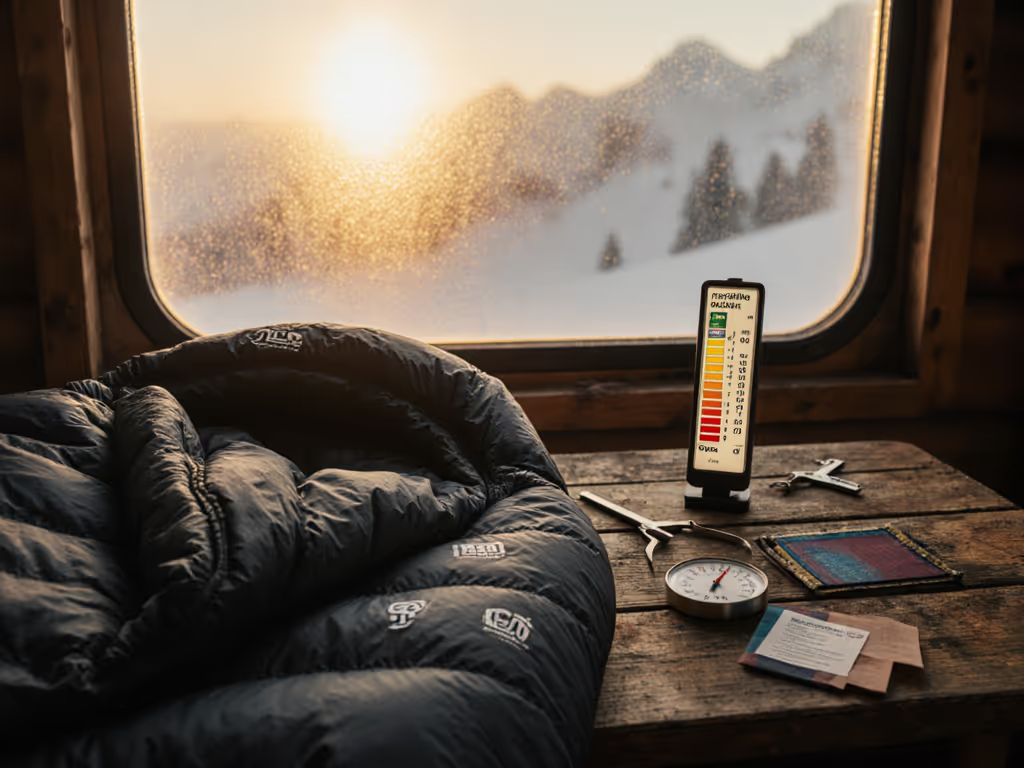
EN/ISO temperature rating evolution has transformed sleeping bag shopping from guesswork into a science. The shift from manufacturer-decided numbers to standardized lab testing means two 20°F bags are now genuinely comparable, a massive leap forward. But here's the catch: understanding what a winter rated sleeping bag label actually promises, and translating it into the specific warmth you'll feel on a windy night in your tent, requires stepping beyond the rating tag itself.
That distinction is everything. A rating isn't a guarantee; it's a data point in a controlled environment. Your real warmth comes from the system: the bag, the pad beneath it, the shelter, your clothing, and your own physiology. This guide walks you through how EN/ISO ratings work, where they diverge from field reality, and how to build a bulletproof warmth formula for your sleep system.
How EN/ISO Ratings Were Born (And Why They Matter)
Before 2005, sleeping bags lived in the Wild West. A manufacturer could call a bag "30°F" if they felt like it, and no two brands meant the same thing. Two 30°F bags might differ by 20 degrees in actual warmth.
The European Norm (EN 13537) standard, introduced in 2005, changed that. Then in 2017, the International Organization for Standardization (ISO) rolled out ISO 23537 as the global replacement, which is nearly identical to EN but more refined.
Now here's what matters for your planning: all standardized bags are tested the exact same way. A manikin dressed in thermal base layers lies on a foam pad inside a climate-controlled chamber. Sensors measure how much electrical heat is needed to keep the manikin warm at different air temperatures. The result is three temperature thresholds (a step toward clarity that your past cold nights will appreciate).
The Three Ratings: Comfort, Limit, and Extreme
Each rating serves a distinct role in your if/then decision tree.
Comfort Rating
This is the temperature at which an "average female" sleeper can rest in a relaxed, unpanicked posture and maintain warm equilibrium. It's the lowest temperature at which the bag is meant to deliver a cozy night, no shivering, no fetal curl.
If you're a cold sleeper, the person who always wants another blanket, then this is your primary number. When you're shopping, don't ignore it in favor of the Limit rating. Comfort is your minimum threshold.
Limit Rating
This is the lowest temperature at which an "average male" sleeper can maintain warmth while curled in a protective position. Below this, continued use carries meaningful risk.
If you're a warm sleeper who runs hot and despises overheating, then the Limit rating speaks to you more than Comfort. It's also the relevant metric if you plan to supplement with thick base layers or expect active movement (restless sleepers generate internal heat).
Extreme Rating
This is a survival rating, not a comfort one. It's the absolute floor below which hypothermia risk spikes. Don't camp here routinely. It exists for emergency reference, not trip planning.
Where Lab Meets Reality: The Controlled vs. Field Gap
Here's where the anecdote from my first winter hut trip becomes relevant. I overpacked a zero-degree bag and under-packed a cheap foam pad, thinking the bag rating would carry me. At midnight, I was sweating inside the bag. By 4 a.m., the sweat had cooled and I was shivering. The bag's lab rating was flawless. My system wasn't.
The ISO test uses a standard foam sleeping pad, thermal base layers, and stationary conditions: no wind, no elevation, no humidity swings, no calorie deficit, no poor circulation from sleeping on your side, no drafts leaking around a quilt. The test is indoors at sea level with the manikin passive. At altitude, ratings can feel optimistic; see our altitude performance guide for how to adjust. You, however, are a human in a tent on a mountainside with variables stacking up.
Consider the specifics:
- Pad R-value: The ISO test sits the bag on a standard foam pad. If you use a thin pad with low R-value, ground cold bypasses the bag entirely, dropping your effective warmth by 10-30°F or more.
- Shelter design: A single-wall tent with interior condensation, or a bivvy with zero air movement, concentrates moisture and cold differently than the laboratory's steady conditions.
- Wind and elevation: Both destroy warmth. A 20 mph wind and 8,000 feet of altitude combine to make a "rated" bag feel optimistic.
- Body size and fit: The ISO test uses a standard-sized manikin. If you're broader-shouldered, the bag compresses insulation in those zones. If you're smaller, heat leaks through extra volume.
- Clothing and metabolism: The test assumes sleepwear and a resting metabolic rate. Fatigue, calorie burn, and layering all pivot the equation.
This isn't a flaw in ISO ratings, it's the nature of lab tests. They give you a controlled benchmark, not a life guarantee. The real-world translation is where planning rigor matters.
Building Your Warmth Formula: Climate Presets and Buffers
This is where the shift from anxiety to confidence happens. Instead of treating the ISO number as gospel, use it as the foundation for a climate preset checklist (a repeatable planning ritual that accounts for your body, your gear stack, and the conditions you'll actually face).
Start with five questions:
- What is the expected low temperature on your trip?
- What is your sleep profile? (cold sleeper, warm sleeper, restless, side-sleeper, etc.)
- What pad R-value do you own, and what should you upgrade to?
- What shelter will you use? (double-wall tent, single-wall, bivy, hammock, hut)
- What wind and humidity do you expect?
Once you answer these, map them to an if/then decision path:
If you're a cold sleeper planning a winter trip to a mountain zone with forecast lows of 10°F, windy conditions, and only a 3.0 R-value pad, then a "20°F Limit" bag isn't enough. The Comfort rating, often 0°F or lower, becomes your baseline. Add a 1-2°F buffer for wind, pad inadequacy, and your sleep profile. To calculate a precise buffer for your metabolism, use our personal warmth offset guide. Now you know you need a bag rated Comfort at -5°F or colder, or upgrade the pad to R 4.5+.
If you're a warm sleeper with a high-quality 4.5 R-value pad, a double-wall tent, and only shoulder-season trips forecast, then a 30°F Limit rating bag is genuine. You don't need the Comfort rating; Limit is your relevant threshold, and you might add a 1-2°F buffer for surprises, not 10°F.
The beauty of this method: Plan the night, not just the number on the tag. You're not memorizing ISO numbers; you're building a scenario-specific warmth system.
Temperature Rating Accuracy in the Real World
Reputable brands test honestly, and ISO ratings are far more reliable than pre-2005 marketing. For brand-by-brand nuances in how the standards are applied, see our EN vs ISO testing comparison. The gaps you'll encounter come from system incompleteness, not from manufacturers cheating.
Field-tested warmth adjustment means running small experiments:
- On shoulder-season outings, note your comfort or discomfort at specific temperatures with your exact gear combo. Log the pad R-value, tent type, base layers, and air temperature. After 3-5 trips, you have a personal curve.
- If you felt cold at 25°F with a "30°F Limit" bag and a 3.0 pad, your effective floor is higher. Next time, either upgrade the pad (higher ROI) or choose a warmer bag.
- Real-world bag performance varies by batch and by your fit, but ISO ratings narrow the range of surprise. Use them as a starting checkpoint, not an endpoint.
The Checklist Approach: No Shame, No Guessing
The best sleeping system is the one you trust enough to stop second-guessing at 11 p.m. when it's dark and cold outside. That confidence comes from a margin of safety built into a repeatable checklist.
Here's a sample:
- Trip temperature low forecast
- My sleep profile (cold/warm/restless)
- My pad R-value
- Required bag Comfort rating (low forecast + buffer for profile/pad gap + shelter factor)
- Backup layers (liner, VBL, extra baselayer) A quick sleeping bag liner warmth guide shows realistic degree boosts by material.
- Shelter type verified
- Boots/socks/hat stashed inside bag for emergency warmth
No overpacking required. No tough-it-out advice. Just an honest system that works.
Related Articles