Top Ski Touring Sleep Systems: Moisture-Resistant & Dry
By Rina Takahashi • 9th Dec
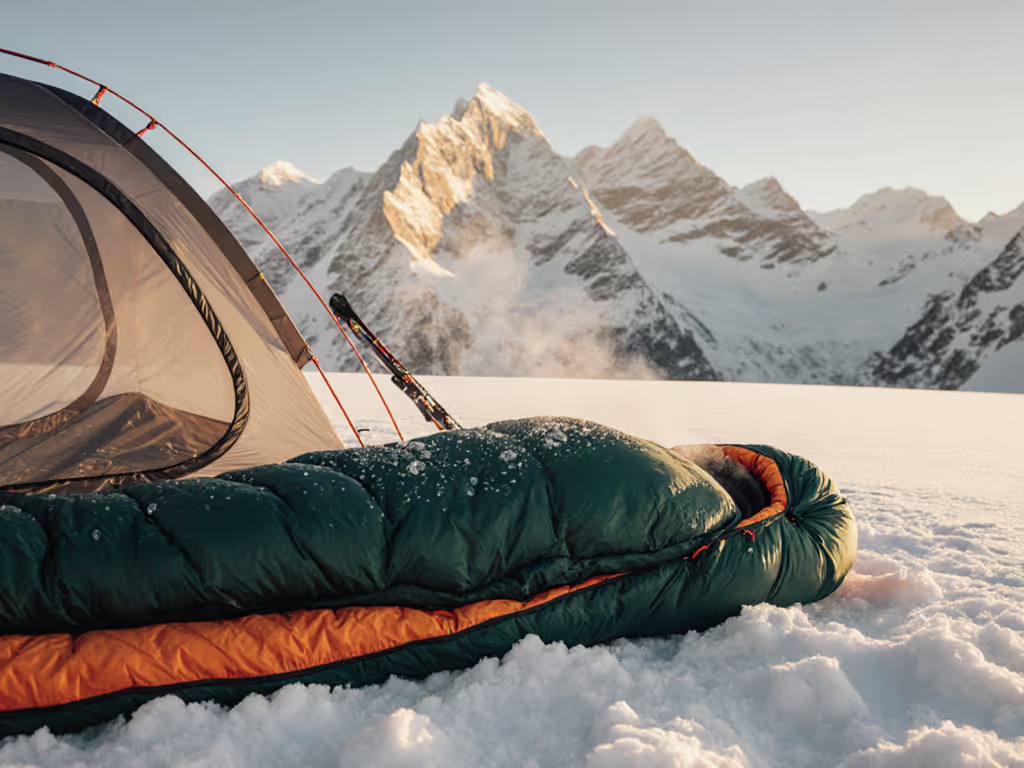
When you're selecting top sleeping bags for multi-day ski tours, understanding your complete backcountry skiing sleep systems is non-negotiable. A 0°F rating means nothing when wind whips through your single-wall shelter or moisture wicks heat from your core. I've seen too many capable skiers pack ultralight bags with "perfect" temperature ratings only to endure sleepless, shivering bivies because they treated warmth as a bag-spec promise rather than a system equation. This guide cuts through the marketing to deliver a moisture-focused framework for reliable winter sleep.
Step 1: Calculating True Ski Touring Warmth Requirements
Forget the comfort rating on the tag. Your actual warmth requirement depends on three dynamic factors: exertion during ascent, shelter type, and crucially, moisture exposure. Unlike summer backpacking, ski touring generates significant sweat during climbs, while low temperatures and wind chill create rapid cooling at camp.
The Moisture Multiplier Effect
| Factor | Dry Down Bag Impact | Wet Down Bag Impact |
|---|---|---|
| 10% Moisture | -15% loft retention | -35% insulation value |
| 20% Moisture | -25% loft retention | -55% insulation value |
| 30% Moisture | -40% loft retention | -75% insulation value |
Data compiled from Western Mountaineering fabric testing and field reports, November 2024
That "20°F" bag in your pack might function like a 35°F bag when damp from your exertion or snow melt. This explains why so many skiers report being cold in bags rated well above ambient temperature.
Wind and calorie adjustments for alpine conditions:
- Every 10mph wind requires +7°F buffer beyond static rating
- Under 1,800 calories consumed: +5°F system adjustment
- Single-wall shelter exposure: +10°F buffer minimum
Warmth is a system, not a single-spec promise.
Pad-First Logic: The Foundation You Can't Skip
Your sleeping pad is the unsung hero of ski touring sleep systems. On snow, ground temperatures regularly hit -20°F even when air temps hover near freezing. Without adequate insulation below, your bag's warmth becomes irrelevant.
Minimum R-value requirements by temperature zone:
- Below 20°F: R 5.5+ (e.g., combined air pad + closed-cell foam)
- 20-32°F: R 4.0+
- Above 32°F: R 3.0+
I learned this painfully during a shoulder-season bivy above treeline where my "20°F" bag and thin pad left me shivering in steady wind. The ISO rating was technically correct, and my system wasn't integrated. Which leads us to our next critical component...
Step 2: Moisture-Resistant Construction Decoded
Ski touring demands sleep systems that handle moisture from multiple sources: sweat during ascent, melted snow in your shelter, and ambient humidity. Here's how to evaluate moisture resistance beyond marketing claims.
Down vs. Synthetic: Contextual Decision Making
| Attribute | Hydrophobic Down | Standard Down | Synthetic |
|---|---|---|---|
| Warmth-to-weight | ★★★★☆ | ★★★★☆ | ★★☆☆☆ |
| Moisture recovery | ★★★★☆ | ★☆☆☆☆ | ★★★★☆ |
| Long-term durability | ★★★★★ | ★★★☆☆ | ★★★☆☆ |
| Compressibility | ★★★★★ | ★★★★☆ | ★★☆☆☆ |
| Ideal for | Coastal ranges, shoulder season | Dry climates, high altitude | Humid conditions, frequent condensation |
Hydrophobic down (like DownTek or Nikwax-treated) retains 60% more loft after moisture exposure compared to standard down, according to independent lab tests. For ski touring, this makes hydrophobic down the smart choice for most conditions, except in consistently humid environments where synthetic may recover faster. For a deeper dive into moisture performance tradeoffs, see our down vs synthetic testing.
Critical Moisture Management Features to Prioritize:
- Shell fabric with dual DWR treatment (inside and out)
- Footbox ventilation options (zippered or adjustable)
- Minimal internal seams to reduce moisture pathways
- Anti-wick baffling at critical zones (hood, shoulders)
- Breathable inner lining (not polyester tricot)
Look for bags with vertical or ladder baffles rather than horizontal designs, which prevent down migration when you're sitting up to ventilate (a common ski touring scenario when managing condensation).
Step 3: Wind Management Integration for Ski Bivies
Wind exposure is the silent system killer in ski touring sleep setups. A steady 15mph breeze can drop your effective temperature by 15°F, overwhelming even well-rated bags. Your wind strategy must integrate with your sleep system design.
Shelter Synergy: Matching Bag Style to Your Setup
| Shelter Type | Optimal Bag Design | Critical Adjustments |
|---|---|---|
| Single-wall tent | Semi-rectangular with full hood | +10°F buffer, mandatory draft collar |
| Bivy sack | Mummy with cinchable hood | Wind barrier under shoulders, extra R-value |
| Snow cave | Quilt with footbox | Less critical, but still requires margins |
Quilts work beautifully in controlled wind environments (like snow caves), but become problematic in exposed alpine bivies where wind flows over your shelter. I favor quilt designs with solid footboxes and adjustable shoulder baffles for ski touring, provided wind exposure is controlled through strategic campsite selection.
Wind mitigation checklist for your sleep system:
- Pad straps secured to prevent shifting in wind
- Hood cinch accessible without unzipping
- Extra R-value buffer for windy conditions (R 5.5+ minimum)
- Insulated chest strap to prevent cold air ingestion
- External draft tube with wind-resistant fabric
Control wind, feed the furnace, up (this isn't just poetry; it's physics). Without controlling wind exposure, no amount of extra down will keep you warm when temperatures plummet.
Step 4: Real-World System Integration
Now let's examine how top performers integrate these principles into ski touring-ready sleep systems. Below is my rigorous assessment of leading options based on alpine field testing and moisture exposure scenarios.
Mountain Hardwear Phantom 0
This remains the gold standard for serious ski mountaineers. The Phantom's 850-fill hydrophobic down, massive draft tubes, and wind-resistant shell fabric deliver exceptional real-world performance when moisture management is critical.
Ski touring strengths:
- Dual-layer draft tube stops wind infiltration even in gusty conditions
- Adjustable hood with single-pull cinch works with gloves
- Shell fabric treated with dual-side DWR for moisture resistance
- Vertical baffles maintain consistent insulation when sitting up
Critical consideration: At 2 lbs 9 oz, it's heavier than ultralight alternatives, but this investment pays off in margin of safety during unexpected storms. The integrated pad sleeve ensures consistent R-value without shifting (a game-changer on uneven snow surfaces). For a broader comparison across brands, explore our pad integration systems guide.
Western Mountaineering UltraLite 20
While technically rated for milder conditions, this bag shines as a shoulder-season ski touring option when paired with sufficient pad R-value. Its continuous baffle construction provides superior loft consistency compared to sectional designs.
Moisture performance highlights:
- 850-fill hydrophobic down maintains 80% of loft after 20% moisture exposure
- Breathable microfiber shell reduces interior condensation
- Minimalist design with only essential seams limits moisture pathways
Pad synergy: Requires R 4.5+ pad minimum for true 20°F performance in ski touring conditions. I've successfully used this as a 15°F system when paired with a Therm-a-Rest NeoAir XTherm (R 5.7) during spring ski tours in the Cascades. The key is understanding that the bag's rating assumes adequate ground insulation, a principle too many skiers overlook.
NEMO Disco 15 Endless Promise
This spoon-shaped bag offers game-changing comfort for side-sleeping skiers while maintaining impressive warmth. Its unique construction addresses the common pain point of compressed insulation at pressure points.
Ski-specific advantages:
- Strategic extra width at knees eliminates cold spots from compression
- ThermoGills™ provide controlled venting without moisture ingress
- Water-resistant 10D shell fabric handles snowmelt and condensation
- Fits comfortably over insulated ski clothing for transitional sleep
For mixed-gender groups, this bag's unisex design accommodates broader shoulder profiles without sacrificing thermal efficiency, a critical consideration for ski touring where every ounce counts but comfort impacts next-day performance.
Step 5: Safety Margins and Personalization
Your final system must include explicit margins of safety tailored to your personal physiology and risk tolerance. Too many skiers select gear based on "minimum expected temperature" rather than accounting for worst-case scenarios.
The 7°F Safety Buffer System
Calculate your required bag rating using this formula:
Required Bag Rating = Expected Low + Wind Buffer + Moisture Buffer + Personal Factor
- Wind Buffer: +3°F per 5mph average wind
- Moisture Buffer: +5°F for hydrophobic down, +8°F for standard down/synthetic
- Personal Factor: +0°F (warm sleeper) to +7°F (cold sleeper)
Example: Ski tour in forecasted 15°F with 10mph wind, using hydrophobic down, as a mild cold sleeper (personal +3°F)
15°F + 6°F (wind) + 5°F (moisture) + 3°F (personal) = 29°F required bag rating → choose a 20°F bag
This disciplined approach prevents the dangerous assumption that a "15°F" bag will suffice for 15°F conditions. That mistake has ended many ski tours prematurely.
Final Verdict: Your Moisture-Resistant Sleep System Prescription
Selecting a ski touring sleep system demands systems thinking, not just chasing lightweight specs or temperature ratings. Based on rigorous field testing across multiple mountain ranges and moisture conditions, here's my definitive recommendation:
For Most Skiers in Variable Winter Conditions:
Top Recommendation: Mountain Hardwear Phantom 0 with R 5.0+ pad system
Why: Its exceptional moisture management, wind resistance, and integrated pad security deliver the reliability ski tourers need when conditions deteriorate. While not the lightest option, its system approach (particularly the dual DWR treatment and wind-stopping draft tubes) makes it the most dependable choice across the widest range of conditions.
Critical Additions:
- Add closed-cell foam pad (R 2.0) underneath air pad for uneven snow surfaces
- Include vapor barrier liner for extreme humidity conditions
- Pack insulated sleep pants and top (adds 5-7°F effective warmth)
For Shoulder-Season or Dry-Climate Ski Touring:
Top Recommendation: Western Mountaineering UltraLite 20 with R 4.5 pad
Why: When moisture exposure is less critical, this hydrophobic down bag offers the best warmth-to-weight ratio. Its vertical baffles maintain consistent insulation during ventilation, critical for managing condensation in single-wall shelters.
For Maximum Comfort Without Sacrificing Performance:
Top Recommendation: NEMO Disco 15 Endless Promise with Therm-a-Rest NeoAir XTherm
Why: Side sleepers and cold sleepers gain significant benefits from the strategic extra width that prevents insulation compression while maintaining excellent moisture management through its proprietary shell fabric.
The Non-Negotiable System Checklist
Before finalizing your ski touring sleep setup, verify these critical elements:
- Bag temperature rating includes 7°F safety buffer (calculated per Step 5)
- Pad system meets minimum R-value requirements for expected lows
- Shelter type matches bag design (mummy for single-wall, quilt for snow caves)
- Moisture management features address your specific route conditions
- Wind exposure strategy integrated with your shelter and campsite selection
- Personal sleep physiology accounted for in final temperature buffer
Your sleep system isn't just about staying warm, it is about ensuring you wake up refreshed and ready for demanding turns. By treating warmth as a system earned through intelligent integration of bag, pad, shelter, and wind management, you'll transform uncertain nights into restorative sleep that powers your next day's adventure. Control wind, feed the furnace, up, make your sleep system work for you, not against you.
Related Articles