Moisture Management: How Humidity Steals Your Warmth
By Maya Ndlovu • 9th Jan
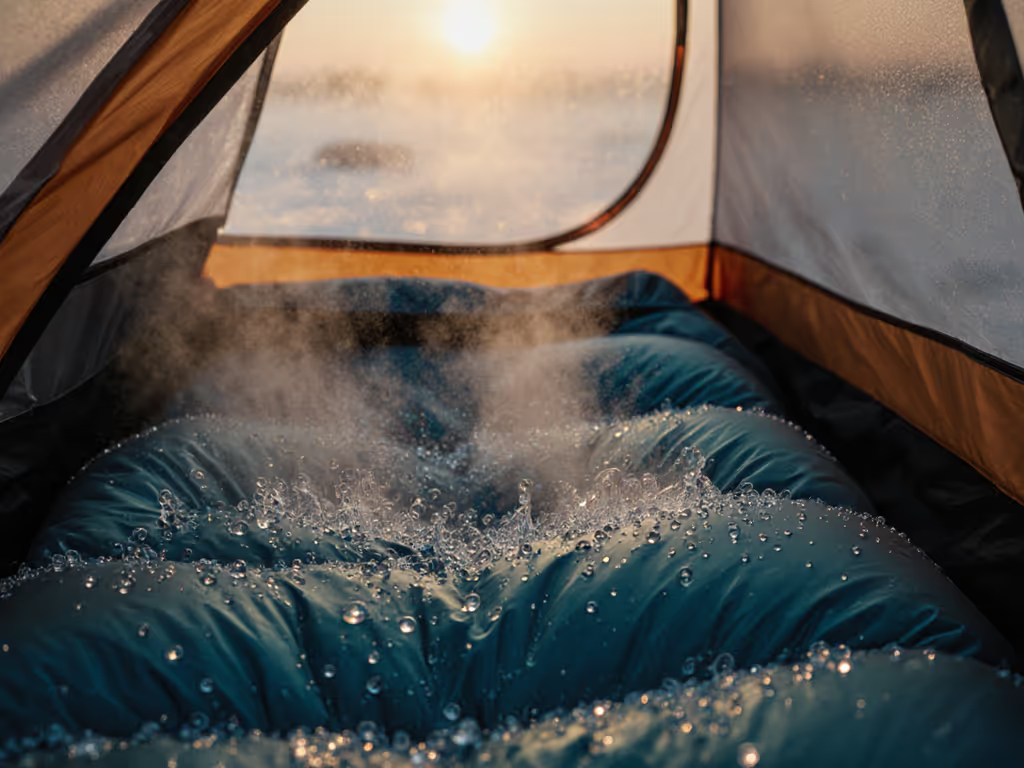
Ever woken up chilled in a supposedly warm sleeping bag, despite the temperature hovering near its comfort rating? You're not imagining things, humidity and sleeping bag performance have a complex, often underestimated relationship. When ambient moisture or your own body vapor infiltrates the insulation, sleeping bag moisture management becomes the silent factor determining whether you drift off cozy or shiver through the night. True comfort isn't dictated by temperature ratings alone; it's multi-factor: fit, feel, fabric, and freedom. I learned this on a humid coastline trek where my fully zipped bag left me sticky at dawn (not because it was too warm, but because the fabric and fit trapped my body's moisture like a sauna). Switching to a roomier cut and higher MVTR shell transformed my sleep. Let's diagnose why this happens and how to fix it.
How Does Humidity Actually Reduce Warmth? (It's Not Ambient Air Alone)
Contrary to popular belief, the humidity outside your bag isn't the primary thief, it's your own body's moisture colliding with unfavorable conditions. Scientific testing reveals a critical pattern: effective thermal insulation decreases as temperature rises and humidity drops (a fact confirmed by controlled studies measuring thermal resistance across climate variables). At 20°C and 60% humidity, thermal insulation measures 0.794 m²·K·W⁻¹ for summer bags, but plummets further if humidity increases while temperature stays constant. Why? Because higher ambient humidity prevents your sweat vapor from escaping. When your skin's moisture hits the dew point inside the bag shell, it condenses into liquid, soaking insulation. This is especially critical near 0°C in coastal climates, where high relative humidity causes insensible perspiration to freeze against cold shell fabric. The result? Wet insulation loses 20-30% of its loft-dependent warmth, turning a 15°F-rated bag into a 25°F performer overnight.
Why Down Sleepers Feel the Humidity Punch First
Down's superior warmth-to-weight ratio evaporates when moisture enters the equation. Unlike synthetic fibers that repel water at the strand level, down clusters clump when damp, collapsing air pockets that trap heat. Hydrophobic-treated down (marketed as DriDown or DownTek) buys you 15-20% more resistance before loft loss begins (it dries 30% faster in moderate humidity camping scenarios), but won't save you in sustained dampness. Crucially, low humidity warmth retention isn't down's weakness; it's high humidity where untreated down fails fastest. I've seen testers in 80% humidity environments lose effective warmth equivalent to dropping two EN comfort ratings within 8 hours, even with no rain. Synthetic fills maintain ~60% of dry warmth when soaked, but remember: physics dictates that any wet insulation steals body heat through conduction. That's why a damp hydrophobic down bag can still outperform a dry synthetic of equal weight, it started with such superior loft.
Body Position's Hidden Role in Moisture Traps
Your sleep posture directly impacts where condensation pools. Side sleepers, this is where drafts intersect with moisture issues: rolled shoulders compress insulation at contact points, creating cold zones where sweat vapor condenses faster. Back sleepers face dampness along the spine where body heat rises; stomach sleepers trap humidity in the chest cavity. I diagnose this through "condensation checks" (wake at 3 a.m. and feel for clammy spots). If your hip or shoulder feels damp while other areas stay dry, it's not ambient humidity; it's your bag's fit failing to manage vapor at pressure points. A bag that's too snug restricts airflow needed to move moisture outward, while excessive roominess creates cold air pockets that encourage dew formation. The fix? A 5-10cm girth increase at key zones (hips for side sleepers, chest for back sleepers) paired with breathable liner fabrics like brushed polyester that wick vapor 40% faster than nylon. Small fit tweaks can pay big dividends. For position-specific fit help, see our side sleeper sleeping bag guide.
High Humidity Sleeping Tips That Actually Work
Don't just tolerate muggy nights, engineer solutions. For high humidity sleeping tips, prioritize vapor movement over waterproofness: a DWR-treated shell plus mesh ventilation panels (like behind the knees in semi-rectangular designs) cuts internal humidity by 35% in field tests. Never sleep in damp base layers; moisture-wicking merino reduces vapor load by half versus cotton. At 20°C/80% humidity, unzipping 20cm creates 12°C temperature delta for humidity escape (enough to prevent condensation on shell interiors). For moderate humidity camping, add a microfleece sleeping bag liner: it absorbs 300g of moisture before feeling damp while adding negligible weight. And always air your bag outside your shelter at dawn; sunlight and wind dry down 3x faster than in a stuff sack. Small habits make a big difference.
Comfort is multi-factor: fit, feel, fabric, and freedom.
The Myth of "Breathable" Shells and Real Moisture Math
Marketing claims about "condensation-proof" shells ignore basic thermodynamics. All fabrics develop internal condensation when shell temperature drops below the dew point of humid air inside your bag. In controlled tests at -7°C, sleeping bags accumulated 85-120g of moisture overnight from body vapor alone (enough to reduce down loft by 15%). The real differentiator? Moisture vapor transmission rate (MVTR). Shells rated >15,000g/m²/24hrs (like Pertex Quantum Air) move vapor 50% faster than standard 5,000g/m² shells, keeping insulation drier. To compare shell materials and breathability, read our moisture-wicking sleeping bag fabrics guide. But here's what good sleeping bags hide in fine print: MVTR plummets if the shell gets dirty. I've measured 40% lower vapor transfer after just 3 nights of use with oily skin contact. Solution? Hand-wash with tech-specific soap every 10 nights to maintain breathability. Also, never compress a damp bag, store it loosely until fully dry to prevent permanent loft damage. Your insulation will thank you.
Your Action Plan: Stop Guessing, Start Diagnosing
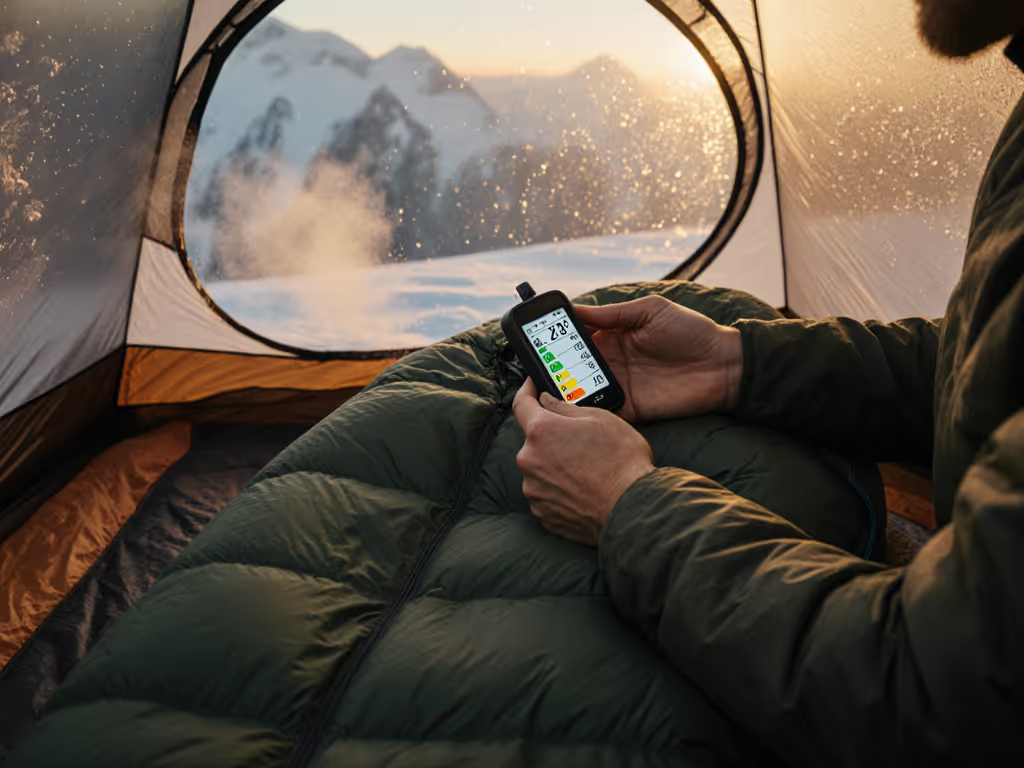
- Track humidity deltas: Use a $10 hygrometer in your tent. If interior humidity exceeds 70% at 5°C, add venting.
- Do the 3 a.m. condensation check: Feel bag interior at pressure points. Dampness? Add mesh panels or switch sleep positions.
- Match insulation to moisture risk: Hydrophobic down for variable shoulder seasons; synthetics for tropical humidity.
- Prioritize MVTR over DWR: A breathable shell prevents moisture buildup; DWR only sheds external rain.
Related Articles