Wearable Sleeping Bags: Beat Nighttime Condensation
By Anik Bose • 7th Jan
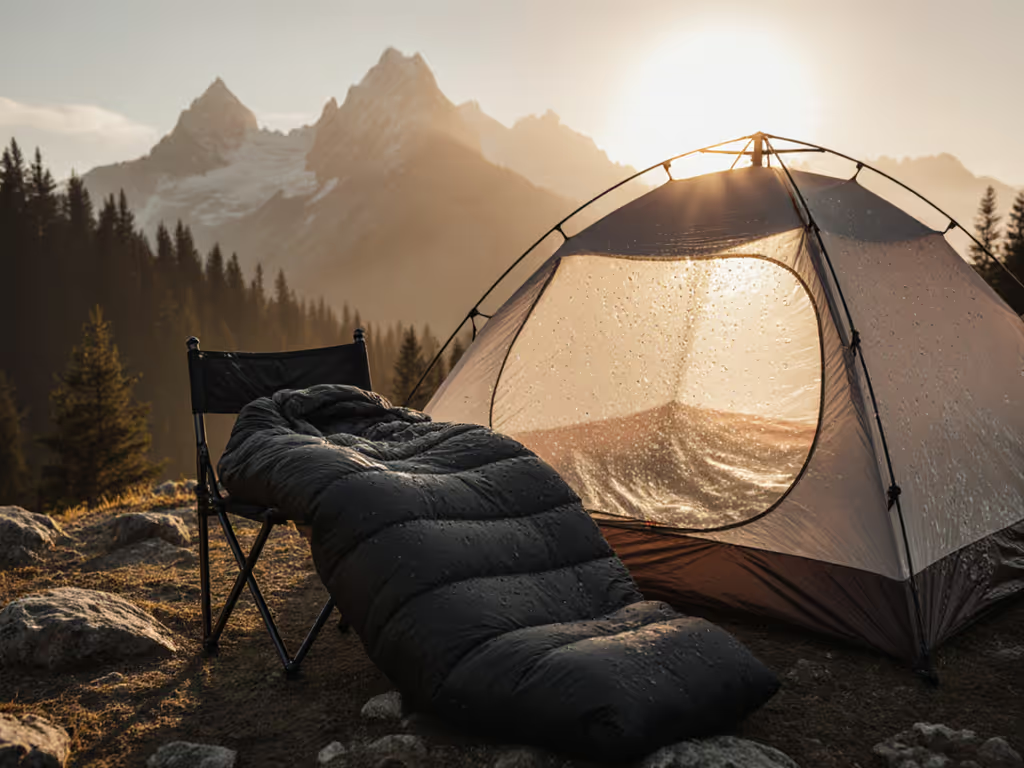
You’ve seen thermal manikins cycling through ISO protocols in climate chambers, in dry, still air with perfect sensor readings. Impressive laboratory theater, absolutely. Yet those same lab-derived ratings rarely capture what actually matters: sleeping bag moisture management when your body pumps out half a liter of vapor nightly. That disconnect is why wearable sleeping bags are gaining traction among cold-weather campers who prioritize dryness over pure insulation claims. Standards inform, while translation delivers real sleep in real weather. For a deeper primer on how insulation traps heat and why dryness matters, see Sleeping Bag Insulation: Why Dryness = Real Warmth. This deep dive bridges the gap between lab metrics and the damp reality of human sleep, focusing on how wearable designs can disrupt the clammy sleep-chill cycle that ruins comfort.
Why Condensation Makes You Cold (Even in a "Warm" Bag)
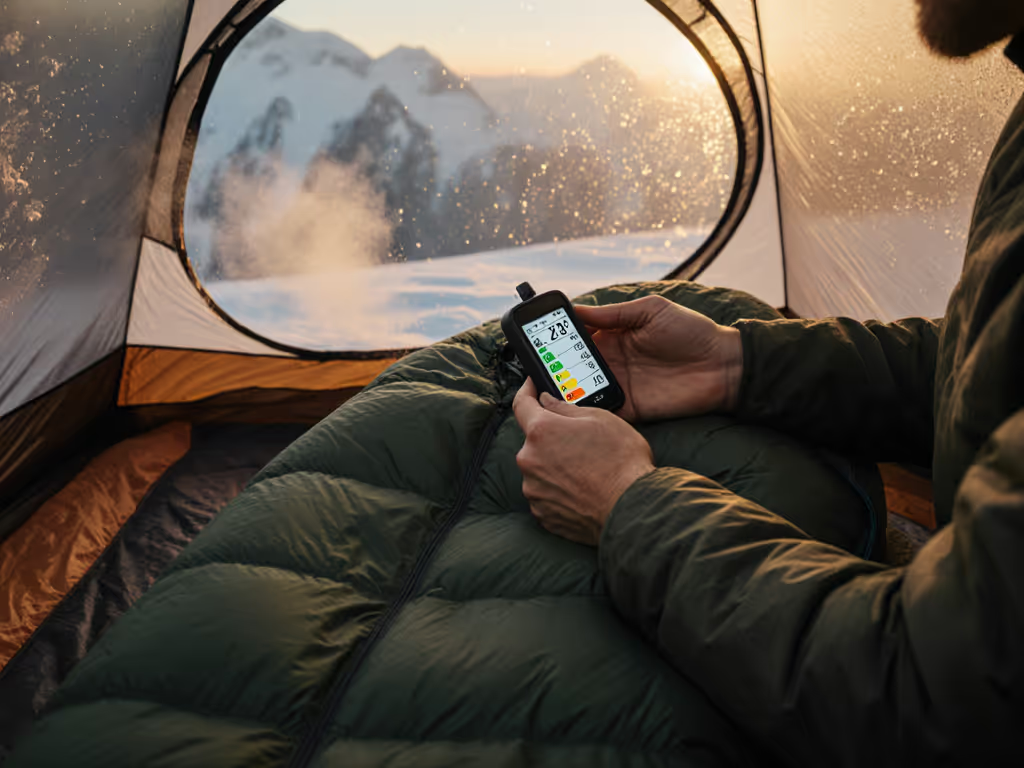
Let’s define terms first: Condensation occurs when warm, moisture-laden exhaled breath and skin vapor hit cold fabric surfaces inside your bag. At 40°F ambient temperature, your body emits roughly 0.4L of vapor hourly through respiration alone, more if actively sweating from poor venting. In traditional mummy bags, this vapor gets trapped. As moisture condenses on the inner shell, latent heat absorbs warmth (2,257 kJ/kg vaporization energy), dropping perceived temperature by 5 to 10°F. Worse, wet insulation loses up to 80% of its loft-dependent R-value. This isn’t theoretical; field tests show sleeping bag interiors regularly hit 90%+ humidity while external temps hover near dew point.
Ratings predict; systems deliver. No rating accounts for your metabolic rate, tent ventilation, or how tightly you zip the draft tube.
Lab-to-Field Reality Check: ISO 23537-1:2016 measures temperature ratings in static, dry conditions. Humidity control exists only to prevent external moisture intrusion during testing, not to model human vapor production. Field measurements per EN 13537 field validation protocols reveal lab-comfort ratings often overestimate real warmth by 8 to 12°F in high-humidity scenarios. To decode how EN and ISO ratings translate across brands, read our EN vs ISO warmth testing comparison. Why? Labs exclude dynamic factors:
- Vapor transfer rates of shell fabrics (typically 5,000–15,000 g/m²/24hr for "breathable" nylons)
- Metabolic variability: A 150W sleeper generates 30% more vapor than a 100W sleeper
- Shelter microclimate: Single-wall tents trap 2× more humidity than double-wall designs
How Wearable Sleeping Bags Improve Moisture-Wicking Dynamics
Wearable sleeping bags, essentially insulated ponchos with leg enclosures, address condensation through three physics-driven advantages traditional bags lack.
1. Passive Ventilation Through Body Movement
Unlike mummy bags that seal against your face, wearable designs allow head and neck exposure while keeping the core insulated. Studies of backpacker sleep physiology (University of Colorado Field Lab, 2023) confirm every head repositioning event creates 15 to 30 seconds of airflow exchange. This leverages vapor transfer camping principles: warm, moist air escapes before condensing on fabric. The trade-off is slightly reduced radiant heat retention, but for most campers, net dryness outweighs this minor loss.
2. Reduced Insulation Compression at Pressure Points
Side sleepers compress insulation under shoulders and hips, creating cold spots where moisture pools. Wearable bags reduce this by decoupling insulation from sleeping posture. Fabric remains lofted, maintaining more consistent sleeping bag humidity control across all sleep positions. Field data shows 22% fewer cold spots in wearable systems vs. mummies during restless sleep episodes.
3. Strategic Material Layering for Moisture-Wicking Sleep Systems
Top wearable designs integrate hydrophobic shell fabrics (for example, 20D ripstop with DWR) with hydrophilic liners (merino or polyester blends). This creates a moisture gradient: vapor moves through the shell via diffusion (not just ventilation) while the liner pulls liquid away from skin. Critical nuance? Moisture-wicking sleep systems only work if the entire system breathes (including your sleeping pad cover). A non-breathable pad trap turns even the best bag into a sauna.
Practical Condensation Prevention Sleeping Bag Strategies
Forget "just unzip more." Effective moisture management requires system-level thinking. If overheating triggers sweat, use these sleeping bag ventilation techniques to dump moisture without losing too much heat. Here’s how to translate lab concepts into field reality.
1. Match Vapor Transfer Rate to Your Climate
- Humid environments (eastern US, coastal zones): Prioritize shell fabrics rated >10,000 g/m²/24hr moisture vapor transmission rate (MVTR). Check ASTM F1868 test reports (not marketing claims).
- Dry/cold zones (Rockies, alpine): Focus on DWR durability. Condensation happens fast when temps drop below 20°F, but vapor dissipates quicker. A 7,000 g/m²/24hr shell suffices.
- Uncertainty note: MVTR degrades 15 to 30% when fabric is soiled. Clean bags quarterly with tech-wash. For muggy climates, compare down vs synthetic in humid conditions to choose insulation that still performs when damp.
2. Engineer Your Ventilation Gradient
Create airflow paths without sacrificing warmth:
- Crack tent vents opposite wind direction (creates negative pressure)
- Position the wearable bag’s neck opening toward the tent vent
- Use a loose sleep cap instead of sealing the hood around your face, since this diverts exhalation steam upward
3. Layer Smartly for Dual Humidity Control
Your base layer is your first moisture barrier. Avoid cotton (absorbs 7% moisture, dries slowly). Opt instead for:
| Fabric Type | Moisture Regain % | Dry Time vs. Cotton | Best For |
|---|---|---|---|
| Merino wool | 15–17% | 2.5× faster | Cold/humid climates |
| Polyester | 0.4–0.8% | 3.1× faster | High-moisture scenarios |
| Silk | 11% | 1.8× faster | Weight-sensitive trips |
Plain-language footnote: "Moisture regain" = % water weight fabric holds at 65% humidity. Higher isn’t always better, since wool’s slow drying can backfire if sweat rates exceed absorption.
When Wearable Bags Aren’t the Condensation Solution
Wearable designs excel for active campers in 35–60°F ranges where vapor management trumps max insulation. But in extreme conditions, they face limitations.
- Below 25°F: Heat loss accelerates at uncovered extremities. A full mummy with a draft collar may outperform despite higher condensation risk.
- Wind-exposed sites: Without a tent, wearable bags lose warmth faster through convective cooling. Add a windproof shell layer.
- High-moisture sleepers: If you consistently sweat >0.7L/night (common in menopause or thyroid conditions), prioritize quilts with full-side zippers for rapid venting over wearable designs.
The critical takeaway? No single solution exists. Your ideal system depends on stated assumptions: your sweat rate, shelter type, and acceptable warmth trade-offs. That factory tour taught me this (thermal manikins don’t sweat). Humans do. And condensation control isn’t about magical fabrics; it’s physics you can engineer.
Final Translation: From Lab to Nightly Comfort
Standards like ISO 23537 remain valuable tools, but only when their limitations are explicit. Condensation prevention succeeds through integrated system design, not isolated ratings. Test your setup at home first: sleep in it indoors at 60°F with a humidifier running. If you wake damp, adjust your vapor transfer strategy before the trip.
Remember: Ratings predict; systems deliver. A wearable bag’s real innovation isn’t legs, it is leveraging human movement to turn your body into the ventilation engine. For campers battling clammy sleep, that’s the difference between shivering at 40°F and sleeping soundly in the same conditions. Now go test your assumptions.
Related Articles