Sleeping Bag Ratings: Calculate Your Personal Warmth Offset
By Sofia Petrovic • 19th Jan
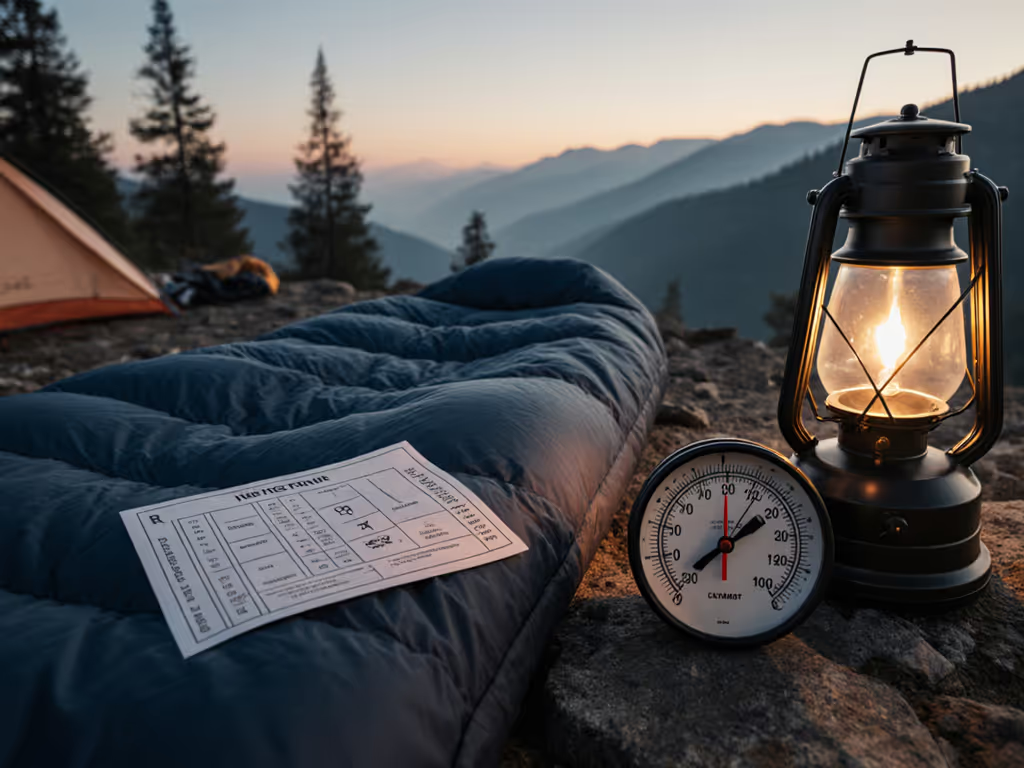
Let's cut through the confusion: sleeping bags with identical ISO ratings sleep differently for every camper. The printed temperature is just a lab benchmark, not your reality. That's why understanding your personal temperature offset is non-negotiable for predictable sleep. If your bag felt drafty at 35°F while your friend snoozed comfortably in the same model, this isn't random. Your body's unique heat production, shelter setup, and even thyroid function shift that rating by 5°, 10°, or more. Today, we'll translate lab numbers into your actual warmth needs with data-driven steps (not guesswork).
Back when I trusted bag tags blindly, I overpacked a zero-degree mummy but under-spec'd my pad on a winter hut trip. Sweating at midnight, shivering by 4 AM... it taught me that reliable sleep demands a system approach. ISO ratings measure bag insulation alone, but your comfort depends on dynamic interactions between metabolism, shelter, and terrain. The good news? Building your personal offset into a simple calculator turns chaos into calm. As I always tell new campers: Plan the night, not just the number on the tag.
Here's how to calculate your offset in five repeatable steps:
1. Anchor to Your Metabolic Baseline (The "+5°" Rule)
ISO comfort ratings assume an "average" metabolism, but few of us are average. Metabolic rate and warmth vary significantly based on gender, age, and activity levels. Studies show women often sleep 3-5°F colder than men due to lower muscle mass and different fat distribution. For model picks that match biology, see our guide to cold vs warm sleepers. If you're a cold sleeper who needs extra blankets at home, automatically add 5° to the bag's comfort rating as your starting offset. Warm sleepers (who kick off covers indoors) might subtract 2-3°. Track your sleep for three nights: note ambient temps when you feel chilled despite proper layers. This self-testing builds your metabolic anchor. For example: if a 20°F comfort-rated bag leaves you cold at 25°F, your offset is +5°. Document this in your seasonal checklist. It is your new baseline.
2. Adjust for Blood Circulation & Sleep Position (The "Side Sleeper Tax")
Blood circulation sleeping comfort plummets when you compress insulation. Side sleepers apply 30% more pressure to hips/shoulders than back sleepers, creating cold spots even in high-loft bags. If you shift positions nightly (as 78% of campers do), add 3-7° to your offset based on pressure points. Test this: lie on your pad in your sleeping position wearing base layers. If your hips feel the ground through the bag, circulation is compromised. Solution? Increase pad R-value first (it is cheaper than buying a new bag). A baseline R 4.5 pad might suffice for back sleepers at your offset temp, but side sleepers need R 5.5+ for the same comfort. Track this in your shelter pairing table: "R 5.5 pad = -4° offset for side sleepers."
3. Factor In Body Composition (The "Fat vs. Muscle" Math)
Body composition warmth retention isn't intuitive. While subcutaneous fat provides insulation, muscle generates heat. A lean hiker with high muscle mass may sleep warmer despite less fat insulation, especially after exertion. Conversely, someone with higher body fat might retain heat better at rest but struggle to shed moisture if overheating. Use this heuristic:
- If you gain weight easily: subtract 2-4° from your offset (natural insulation)
- If you're highly muscular: add 3-5° when resting (less passive insulation)
Pro tip: This is why two people with identical metabolisms sleep differently. Your personal calculator must account for this.
4. Account for Medical & Hormonal Variables (Often Overlooked)
Thyroid issues, anemia, or medications can sabotage sleep warmth, no matter the bag rating. Thyroid function camping challenges are real: hypothyroidism reduces core temperature by 1-3°F, making you feel cold even in mild conditions. Perimenopausal women report 5-10°F colder sleep due to blood flow shifts. If you have medical conditions affecting circulation, add 5-8° to your offset conservatively. There's no shame here (it is data). My checklist includes a "health buffer" column: for thyroid issues, I default to +7°. Consult your doctor for personalized adjustments, but assume at least +5° if managing chronic conditions. This isn't weakness; it's precision.
5. Integrate Shelter & Climate Buffers (The Critical Safety Layer)
Here's where most systems fail: ISO ratings ignore wind chill and ground conduction. A single-wall tent at 30°F with 15mph winds? Your effective temperature drops 8-10°F. That's why your personal temperature offset must include shelter-specific buffers:
- Single-wall tent/tarp: +8° offset (wind penetration)
- Double-wall tent: +4° offset
- 4-season cabin/hut: +2° offset (like my overconfident zero-bag trip!)
Always add at least +3° for humidity (it wicks heat 25x faster than dry air). Learn how humidity reduces perceived warmth and how to adapt in our moisture management guide. Build these into your climate presets. For example: "Coastal spring = +5° offset base + 5° humidity buffer." This is your margin of safety. Remember: Here's your buffer for messy weather. It is the difference between shivering and sleeping like a log.
Your Actionable Next Step: Build the Offset Calculator
Stop guessing. Plug in:
- Your metabolic baseline (+5° if cold sleeper)
- Sleep position multiplier (side sleeper +5°)
- Body composition adjustment
- Medical buffer (+7° if applicable)
- Shelter/humidity variables
It outputs your true comfort rating. Example: A 20°F bag isn't "20°F" for you; it is 20°F + 5° (metabolism) + 4° (side sleeper) + 3° (windy tent) = 32°F comfort. To tighten technique beyond the numbers, use our step-by-step staying warm in your sleeping bag guide. Pack accordingly. No more under-dressing your sleep system. I've seen beginners sleep warmly on day one by respecting these offsets, while experienced campers finally understand why past trips failed. Your perfect night isn't about the bag's tag. It is about your plan. Start building yours tonight.
Related Articles