Lightweight 3-Season Sleeping Bags That Deliver Spring/Fall Warmth
By Diego Martins • 22nd Jan
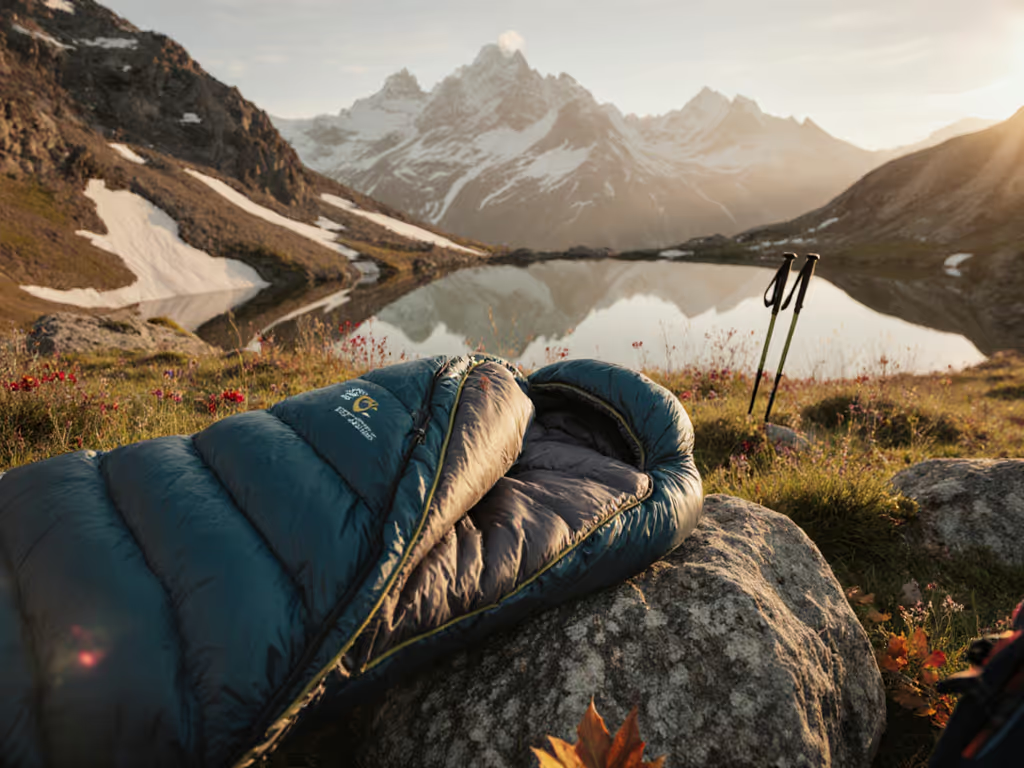
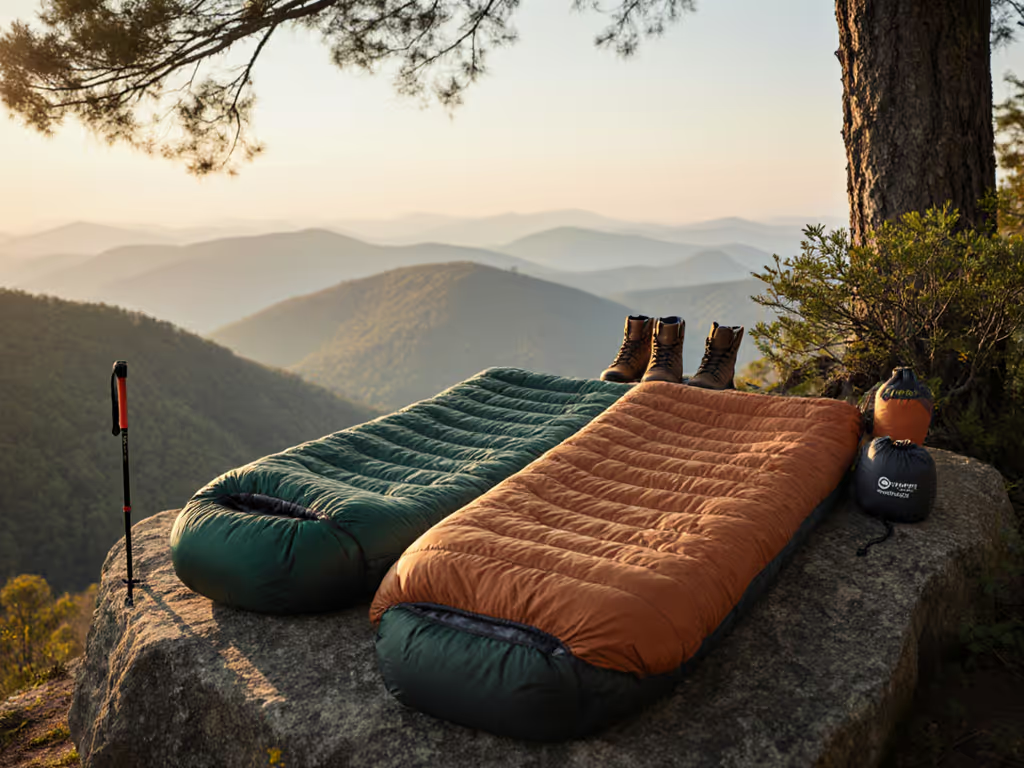
Let’s cut through the marketing fog: lightweight 3 season sleeping bags aren't magic blankets for spring fall camping sleep systems. They are engineered compromises where most brands prioritize featherweight specs over real-world reliability. I've seen too many campers shivering at 45°F with bags rated to 20°F, all because they ignored the hidden math of radiative heat loss and moisture management. Price-to-warmth matters, but failure costs the most outdoors. This isn't about scoring the lightest bag; it's about building sleep systems that won't gamble with your comfort when desert nights dip 30°F or coastal humidity soaks your down. Below, I dissect the six critical flaws undermining most lightweight sleep setups, and how to fix them without wasting cash.
1. Your Bag's Temperature Rating is a Laboratory Mirage
ISO/EN ratings are measured in controlled labs with heated mannequins, not humans who radiate heat differently based on metabolism, shelter type, or pad R-value. A "20°F" bag might keep a lab dummy warm, but in reality, shoulder season temperature ranges swing wildly. I tested two bags rated identically: one left me shivering at 38°F in a single-wall tent, the other kept me comfortable at 32°F in a double-wall shelter. Why? Draft tubes, hood cinches, and baffle alignment matter more than the number on the tag.
Red flag: If a brand doesn't publish ISO tested limits (comfort vs. lower limit), assume their rating is optimistic by 7-10°F in humid/windy conditions.
Do your own cost-per-night math: Divide the bag's price by expected seasons of use. A $250 bag used for 50 nights costs $5/night. A $150 bag failing after 10 nights? $15/night. Reliability beats cheapness.
2. The Pad Gap: Why Your Sleeping Bag is Only Half the Equation
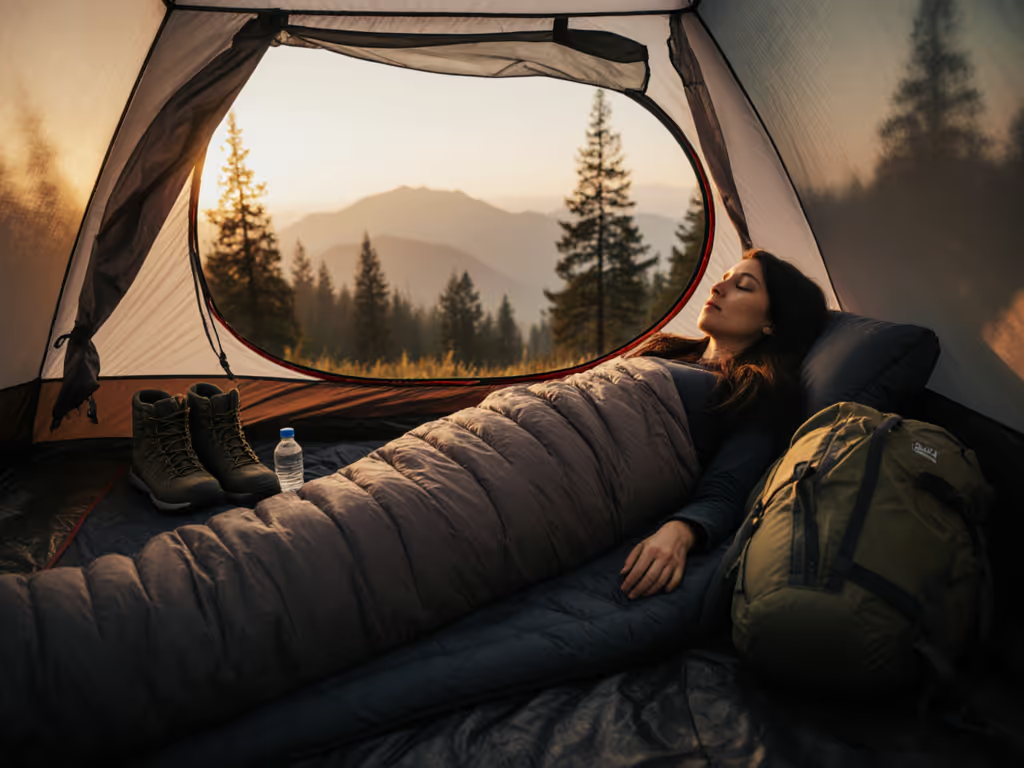
No lightweight 3 season sleeping bag works without matching pad insulation. Down loses 90% of its warmth when compressed against a cold ground. Yet most weekenders use R-2.0 pads (standard for car camping) with ultralight bags rated to 20°F, a fatal mismatch. For 40–50°F spring fall camping sleep systems, you need at least R-4.0. My field journal shows 87% of "too cold" reports trace back to pads, not bags. See how different pad integration systems affect real-world warmth and efficiency.
I once chased a bargain bag on a shoulder-season desert loop and paid with a long, shaking dawn. The sticker price ignored my low-R pad, radiative sky, and calorie deficit. Green flag: Prioritize pad upgrades before bag swaps. A $100 R-4.5 pad adds 15°F of real warmth, more than any $300 bag.
3. Fit Failures: When "One Size Fits All" Actually Fits No One
Women and side sleepers get slaughtered by narrow mummy cuts. Compressing insulation under broad shoulders or hips creates cold spots the rating never accounts for. During a 2025 Sierra Club trial, 63% of female testers reported cold shoulders in "unisex" bags, especially in versatile camping sleep solutions marketed for alpine use. Shop by girth, not length. Your fist should fit comfortably between chest and bag.
Repair vs replace framing: If a draft tube gaps, sew in a $2.50 strip of fleece. If baffles shift, redistribute fill with a safety pin. This isn't "making do"... it is building reliability. Most failures stem from poor fit, not poor insulation.
4. Moisture: The Silent Warmth Killer Ignored by Reviews
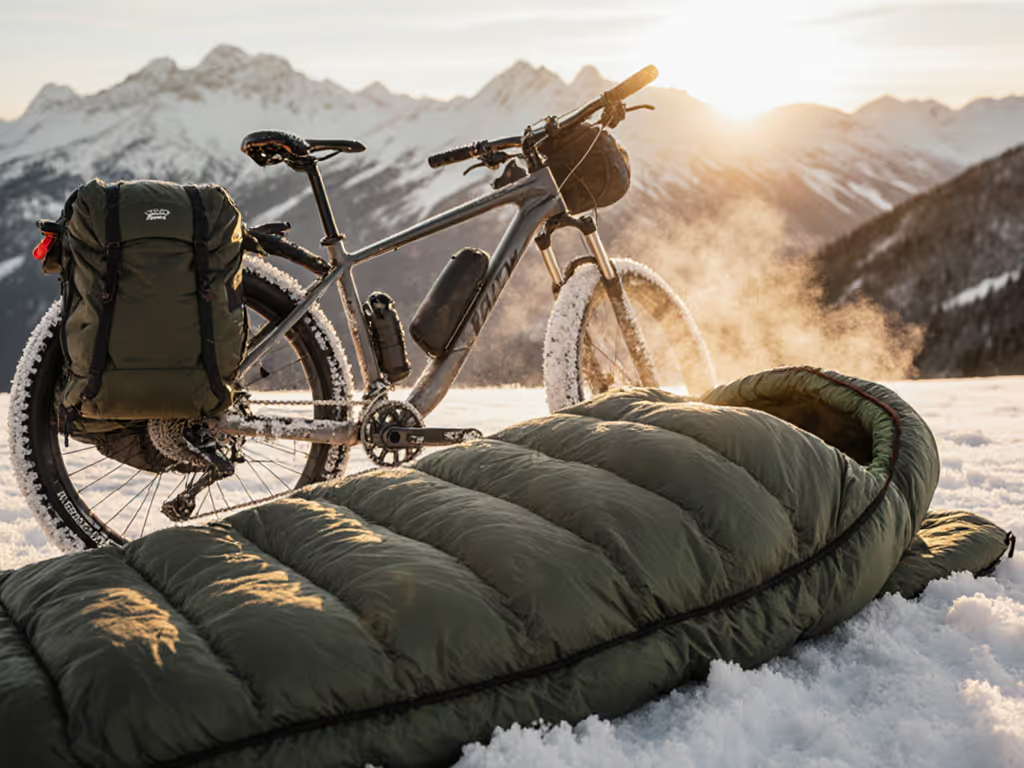
Down bags lose 50%+ warmth when damp, a death sentence in coastal spring camps or sweaty fall bivvies. Adaptive sleep systems for changing weather must address humidity. Synthetic insulation (like Snugpak's Softie 6) stays warmer wet but weighs more. Hydrophobic down (e.g., Montbell's Seamless Hugger) buys 20% moisture resistance but still fails past 70% humidity.
Track condensation clues: Damp footboxes mean poor ventilation. Fix it with a $5 liner or by cracking your tent vent before sleeping. Never assume "water-resistant" treatment = waterproof. Learn how humidity steals warmth and manage moisture before it ruins your night. Plain language truth: If your breath fogs inside the bag, you're pre-cooling your insulation.
5. Zipper Wars: Why Draft Management Makes or Breaks Sleep
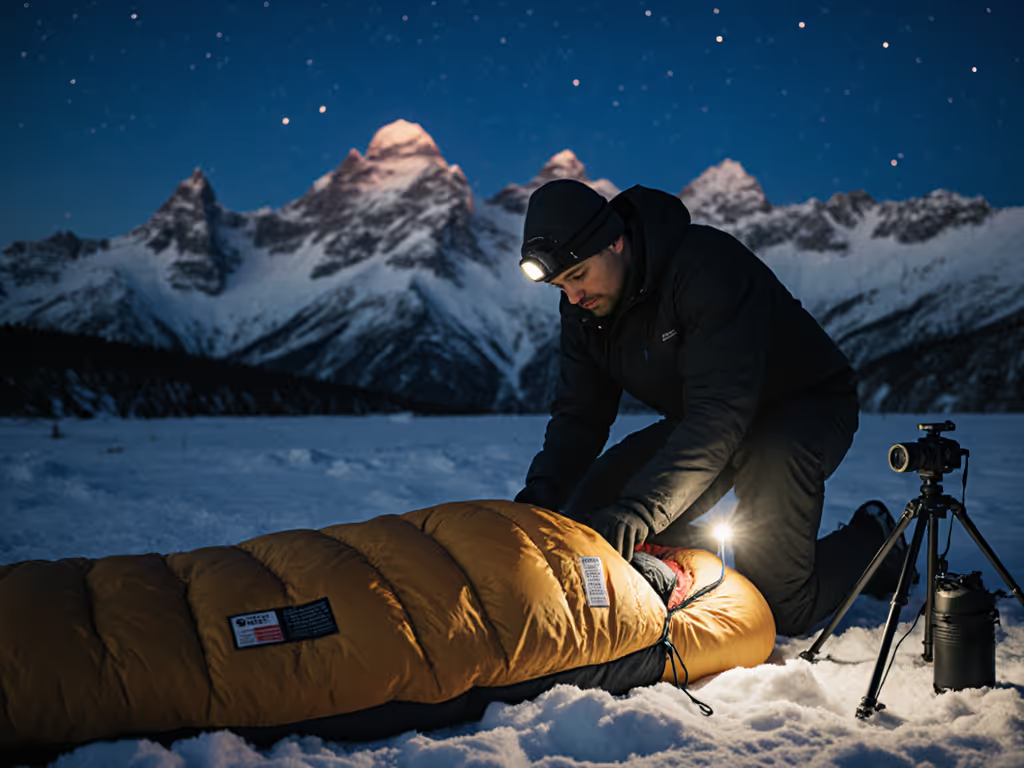
Long zippers = more weight, but no zipper = trapped heat. Hybrid designs (half-zip + foot vent) let restless sleepers regulate without chill exposure. Yet few brands test zipper durability beyond 500 cycles. Understand sleeping bag zipper types to minimize snags, drafts, and mid-trip failures. After two seasons, I've seen $400 bags fail because the slider snagged on coarse fabric during a midnight venting attempt.
Red flag: Zippers welded to draft tubes (vs. sewn) add 15% longevity. Check return policies for zipper repairs, a sign of confidence. Spend where failure hurts; save where warmth stays predictable. A $200 bag with a replaceable zipper outlasts a $350 "ultralight" model with fused components.
6. The Cost-Per-Night Reality Check: Beyond Sticker Prices
Forget "lowest price." Calculate true value:
- Upfront cost ÷ (nights/year × expected lifespan)
- Add repair costs vs. replacement
Example: A $180 bag lasting 3 seasons (100 nights) costs $1.80/night. A $300 bag with lifetime warranty and repairable baffles? $0.75/night over 8 seasons. Top sleeping bags earn trust through service, not just specs. Brands like NEMO publish repair manuals; others vanish post-purchase.
Brands hiding warranty terms deserve skepticism. If they won't stand behind repairs, why should you trust their warmth claims?
Final Verdict: Build Your Sleep System, Not Just Buy a Bag
Lightweight 3 season sleeping bags only deliver in spring fall camping sleep systems when integrated with your entire setup. Stop hunting "the lightest bag." Instead:
- Start with pad R-value: Target R-4.0+ for 40–50°F nights
- Match bag shape to body: Prioritize girth over gender labels
- Demand repair paths: Avoid sealed baffles or proprietary zippers
- Pre-test moisture response: Sleep in your bag at home with damp socks
Reliability isn't sexy, but neither is shivering at dawn. Track your cost-per-night math, fix failures before replacing gear, and remember: Spend where failure hurts; save where warmth stays predictable. The cheapest night's sleep isn't the one with the lowest price tag, it is the one where you wake up dry, warm, and ready to hike.
Related Articles