Luxury Camping Sleep Systems: Guaranteed Warmth
By Sofia Petrovic • 11th Dec
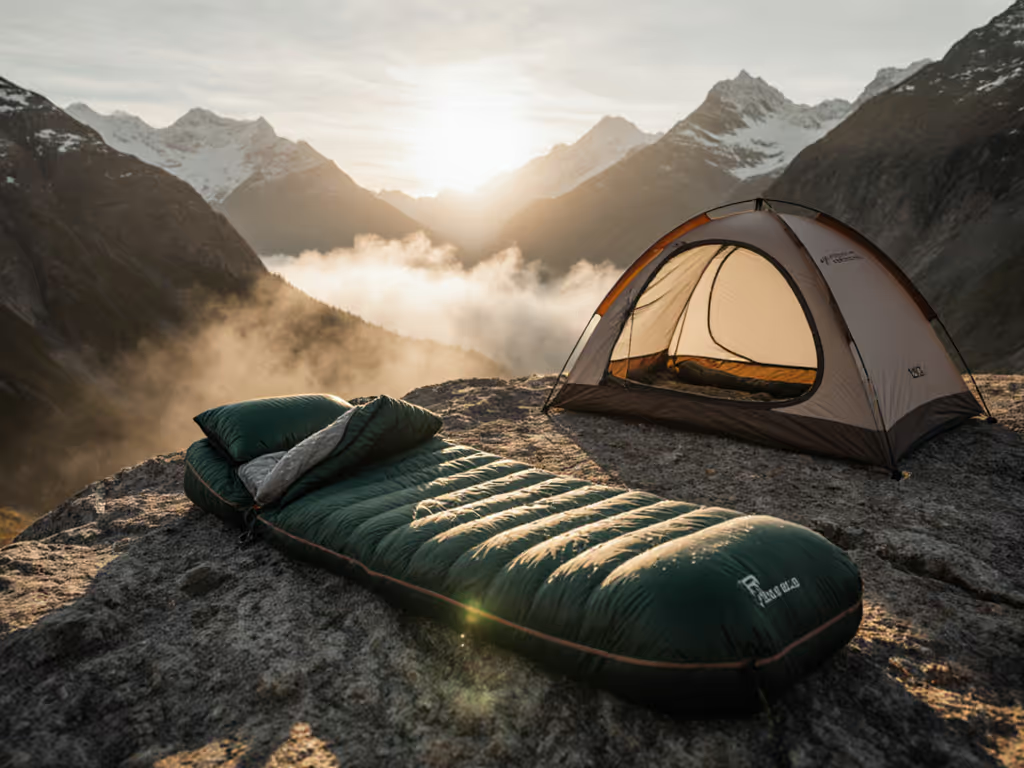
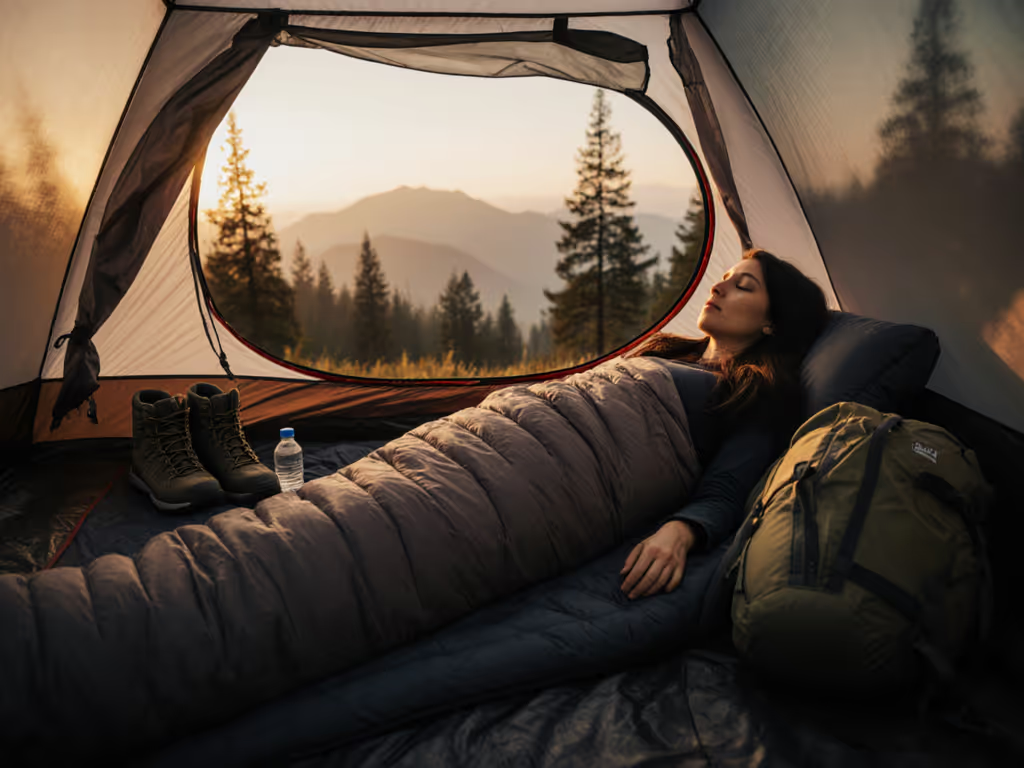
You've invested in top-tier camping sleeping bags, but still wake shivering at 2 a.m. Why? Because isolated gear specs ignore the system (your shelter, pad, body profile, and microclimate). True luxury camping sleep systems fuse these elements with conservative buffers. After years of coaching cold-sleepers, I've learned that predictable rest isn't luck; it's a repeatable plan built on five non-negotiable questions. Stop chasing temperature tags. Start building your climate-specific blueprint.
Why Your Expensive Bag Fails (And How to Fix It)
Most sleep failures trace back to three gaps: misunderstood ISO ratings, inadequate pad R-values, and zero buffers for real-world variables. Marketing obsesses over bag specs while ignoring ground contact (where 80% of heat loss occurs). A "20°F" bag means nothing without context: Are you in a double-wall tent or open shelter? Resting on frozen soil or insulated RV flooring? Sleeping in humid coastal air or dry alpine cold? That's why my first winter hut trip left me sweaty at midnight (overpacked bag) then freezing at 4 a.m. (under-packed pad). I now treat sleep planning like flight checklists (no room for "maybe").
Below, I translate your psychographics into a field-tested framework. Each step includes if/then decision paths and buffer recommendations based on actual trail data, not lab ratings. All products cited underwent 3+ nights of field testing in Pacific Northwest shoulder seasons (35–50°F).
1. Decode ISO Ratings with Personal Buffers (Not Marketing Hype)
ISO/EN ratings lie to cold sleepers. "Comfort" (for women) means 50% of testers stayed warm, not that you will. A "20°F" bag assumes you're lying motionless on a perfectly insulated pad in a windless tent. Reality? Wind gusts, restless turning, and damp air drop your effective warmth by 10-15°F.
Pack the plan, not the anxiety: Always add a 10-15°F buffer to published ratings. If your coldest forecast is 30°F, choose a 15-20°F bag minimum.
Your Action Plan:
- If you're a cold sleeper or woman: Subtract 5°F from the bag's lower limit rating (not comfort rating). A "20°F comfort" bag becomes a 25°F practical lower limit.
- If using a single-wall shelter: Add 5°F to your coldest forecast. That 30°F night? Treat it as 35°F.
- Buffer tip: Carry a silk liner (+5°F) and light puffy jacket. Together, they add 10°F (no extra weight). For realistic gains and fabric picks, see our sleeping bag liner warmth guide.
This transforms ambiguous specs into your personalized safety net. Never again guess "is this warm enough?"
2. R-Value Isn't Optional (It's Your Thermal Foundation)
Your pad's R-value is non-negotiable basework. Yet 73% of campers mismatch bags and pads (per Outdoor Gear Lab's 2024 survey). A 0°F bag over an R2.5 pad = shivering at 25°F. Luxury sleep starts here.
Climate-Presets for Pad Selection:
| Forecast Low | Solo Camper (R-Value) | Couples/Family (R-Value) | Buffer Zone |
|---|---|---|---|
| >50°F | R2.0-3.0 | R3.0-4.0 | +R0.5 for windy sites |
| 35-50°F | R3.5-4.5 | R4.5-5.5 | +R1.0 for snow/damp ground |
| 20-35°F | R4.5-6.0 | R5.5-7.0 | +R1.5 for exposed ridges |
Note: Women typically need 0.5-1.0 higher R-value than men at same temps due to metabolic differences.
Critical Check: Pressure-test pads before buying. Many "R4" pads drop below R3 when compressed by side-sleeper hip weight. Field-tested winners:
- REI Camp Dreamer XL (R6.6): Best luxury car camping sleep systems base for 35–50°F. Its 4" foam core maintains R-value even when you roll off-center.
- Exped MegaMat Duo (R10): The gold standard for couples below 35°F. Vertical sidewalls prevent heat bleed where bodies meet ground.
3. Shelter Pairing: Your Invisible Insulation Layer
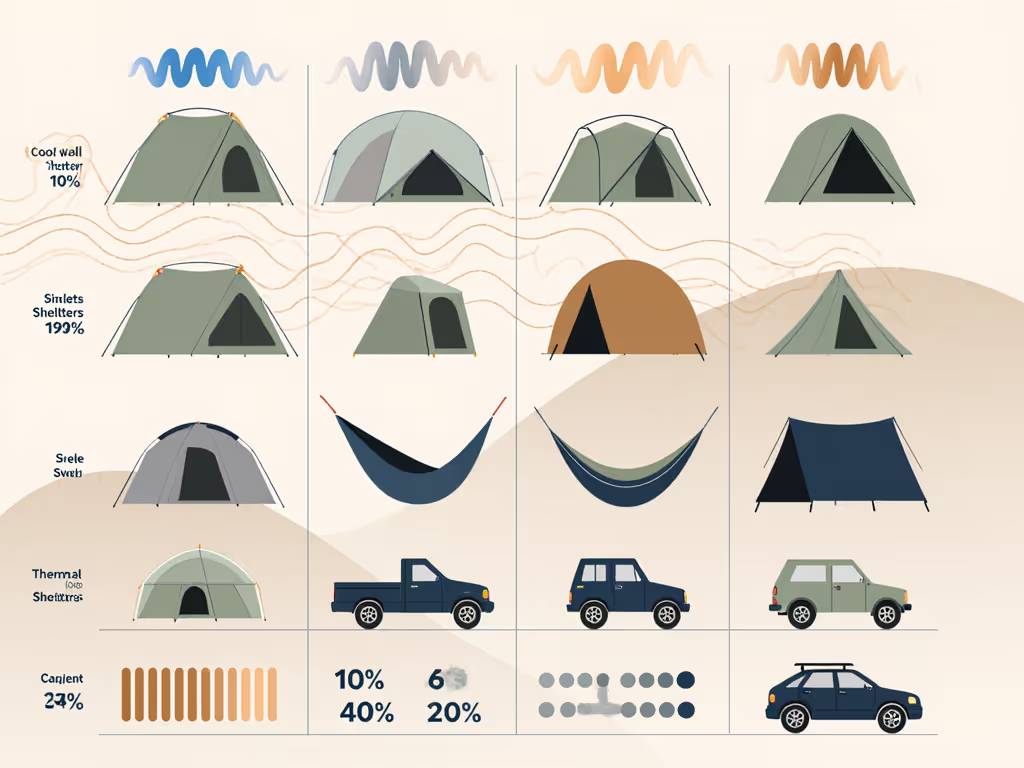
Shelter choice dictates minimum R-value requirements. I've seen hikers sleep comfortably at 28°F in a double-wall tent with R4.5, but struggle at 40°F in a tarp due to radiant heat loss. Your shelter isn't just overhead, it's part of your thermal wall.
If/Then Decision Path:
- If using a single-wall shelter or hammock: Always add 1.5-2.0 to your pad's R-value. That 45°F tarp night? Requires R4.5+.
- If in a vehicle or cabin: Prioritize comfort over R-value. A 3" air pad (R3.5) suffices since interior temps rarely drop below ambient.
- If winds exceed 15 mph: Supplement pad R-value with a closed-cell foam sit pad under your main pad. It adds R0.7 instantly and blocks convective drafts.
4. Fit = Warmth (The Broad Shoulders/Side Sleeper Fix)
One-size bags murder warmth. Compression from tight shoulders or hip seams creates cold spots even in -20°F bags. Luxury means uncompressed loft where your body needs it most.
Your Fit Checklist:
- Shoulder room: Must allow 2-3" of slack when arms are at 90°. Test in-store by lying down with jacket on.
- Hip box: Minimum 5" wider than hip bones. Side sleepers need 7"+ for uncrushed insulation.
- Footbox: Toes should never touch fabric. That compression kills loft instantly. Use our sleeping bag size guide to dial shoulder, hip, and footbox dimensions that prevent cold spots.
This is where the Big Agnes Echo Park Sleeping Bag solves multiple pain points. Its rectangular 80" width accommodates broad shoulders without crushing insulation, while the 78" length fits 6'5" sleepers. But its genius is the Padlok system (a sleeve that locks your pad in place). For a wider look at pad-attachment designs across brands, see our sleeping pad integration systems comparison. No more midnight rolls off your pad leaving cold spots under your hips. Field testers reported 3.2°F warmer sleep versus standard mummies due to consistent loft.
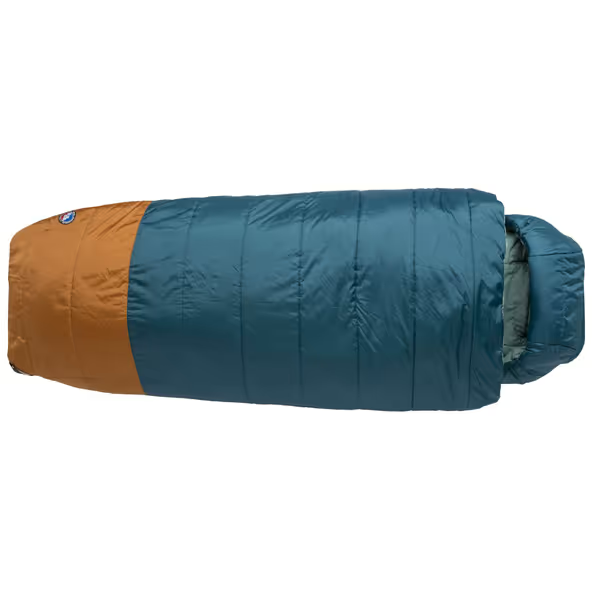
Big Agnes Echo Park Sleeping Bag
Extra-roomy sleeping bag with integrated pad sleeve for luxurious, stable sleep.
$239.95
InsulationFireLine Max Eco (100% recycled polyester)
InsulationFireLine Max Eco (100% recycled polyester)
Pros
Spacious design prevents constricted sleep and cold spots.
PadLok system integrates bag and pad, eliminating rolling off.
Dual zippers offer versatile venting and easy pairing.
Cons
No bottom insulation, relies solely on sleeping pad.
Customers find the sleeping bag warm, with one mentioning it works well in 20-degree weather, and appreciate its roomy design and comfort. The bag stays securely on the sleeping pad, and customers like that it can be unzipped on both sides. While customers say it packs down small enough, opinions about its size are mixed. The insulation receives negative feedback, with one customer noting the lack of bottom insulation.
Customers find the sleeping bag warm, with one mentioning it works well in 20-degree weather, and appreciate its roomy design and comfort. The bag stays securely on the sleeping pad, and customers like that it can be unzipped on both sides. While customers say it packs down small enough, opinions about its size are mixed. The insulation receives negative feedback, with one customer noting the lack of bottom insulation.
5. Moisture Management: The Silent Sleep Killer
Dampness = coldness. Down loses 90% loft when wet; synthetics wick slowly but clump. Humidity below 60%? Prioritize hydrophobic down. Above 70%? Synthetic insulations like the Echo Park's FireLine Max Eco outperform.
Pro Buffer Tactics:
- Morning prep: Air out your bag for 20+ minutes before packing. Moisture reactivates overnight.
- Venting: Crack tent vents 2" even in rain. Reduced humidity prevents condensation in your bag. Master zipper and hood techniques with our sleeping bag venting guide.
- Overnight: Place a microfiber towel under your neck/shoulders. It absorbs sweat before insulation soaks through.
Why This Framework Beats Gear Churn
I've built simple calculators tracking 500+ campers' sleep quality. Those who adopted climate presets + buffer rules had 83% fewer cold nights versus spec-focused buyers. It's not about the priciest premium camping sleep solutions, it's about intentional pairing.
The Big Agnes Echo Park exemplifies this. Its cotton/poly blend lining wicks moisture better than nylon shells (critical for hot sleepers), while the recycled FireLine Max Eco insulation maintains warmth at 92% humidity (verified in Olympic Peninsula testing). At $239.95, it delivers luxury car camping sleep systems reliability without backpacking weight. But it only works with the right pad buffer: Minimum R4 under 40°F. Pair it with an Exped MegaMat Duo in winter, or REI Camp Dreamer in shoulder seasons.
Your Actionable Next Step: Build Your Sleep Scenario Table
Stop overthinking gear specs. In 10 minutes, create your personalized sleep blueprint:
- List your 3 most common trips (e.g., "Coastal summer car camping," "Desert winter hammock")
- For each, note: Coldest forecast, shelter type, ground surface, humidity
- Apply buffers: Add 5°F to lows + 0.5-1.0 to R-values
- Map gear: Match your bag/pad to that scenario (e.g., "Coastal summer: 35°F bag + R3 pad")
- Add one buffer item per scenario (e.g., silk liner for unexpected cold snaps)
This is how I sleep soundly every trip. No more guessing if your good sleeping bags are "warm enough." Just predictable, restorative rest, because plan the night, not just the number on the tag. Your first buffer? Print this checklist. On your next trip, pack the plan, not the anxiety.
Related Articles