Synthetic Insulation Comparison: Moisture-Resistant Showdown
By Rina Takahashi • 17th Jan
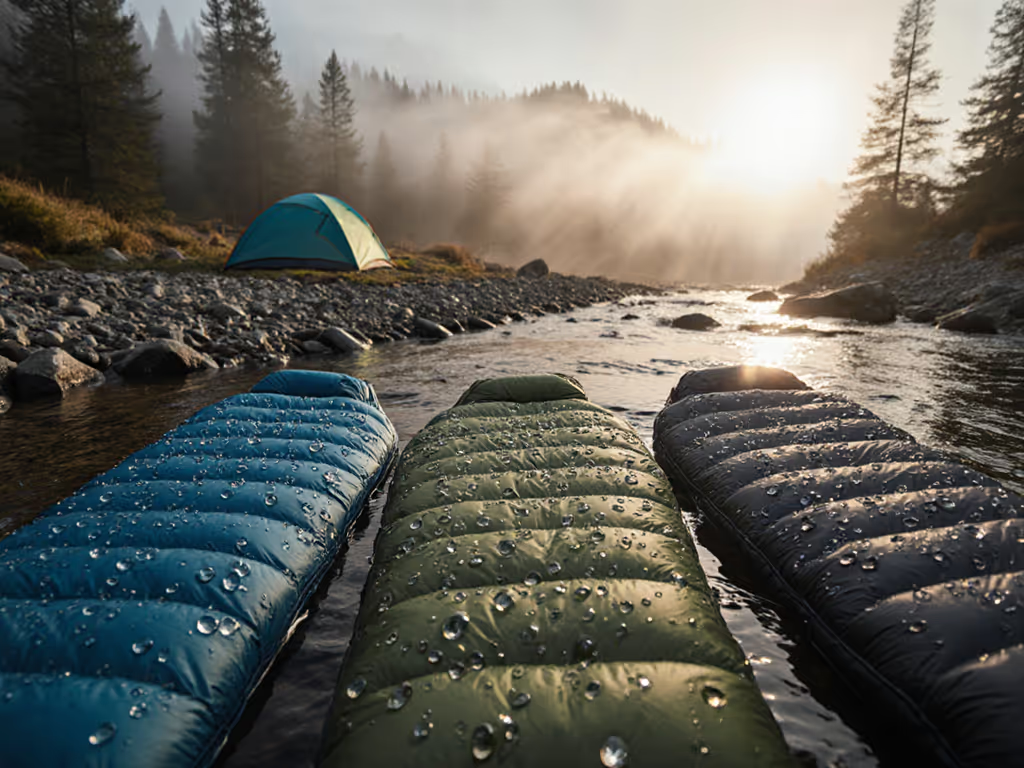
When evaluating synthetic insulation comparison options for shoulder-season adventures, the critical question isn't just "which is warmest?" but "which maintains warmth when conditions turn against you?" That Primaloft vs Thermolite debate gets oversimplified in marketing materials, but real-world performance depends on moisture exposure, wind chill, and how the insulation integrates with your entire sleep system. Having spent years engineering solutions for windy alpine bivies where a single damp night can compromise safety, I've learned that moisture resistance isn't just about insulation type; it is about system integration.
Understanding the Data: Beyond Marketing Claims
Let's cut through the noise with what the numbers actually tell us. Independent testing reveals significant differences in how synthetic insulations perform when dry versus wet, a critical distinction for shoulder-season campers who face morning dew, drizzle, or sweaty sleep cycles. The search results provide concrete metrics we can trust:
| Insulation Type | Dry clo/g/m² | Wet clo/g/m² | Warmth Retention When Wet | Key Structural Features |
|---|---|---|---|---|
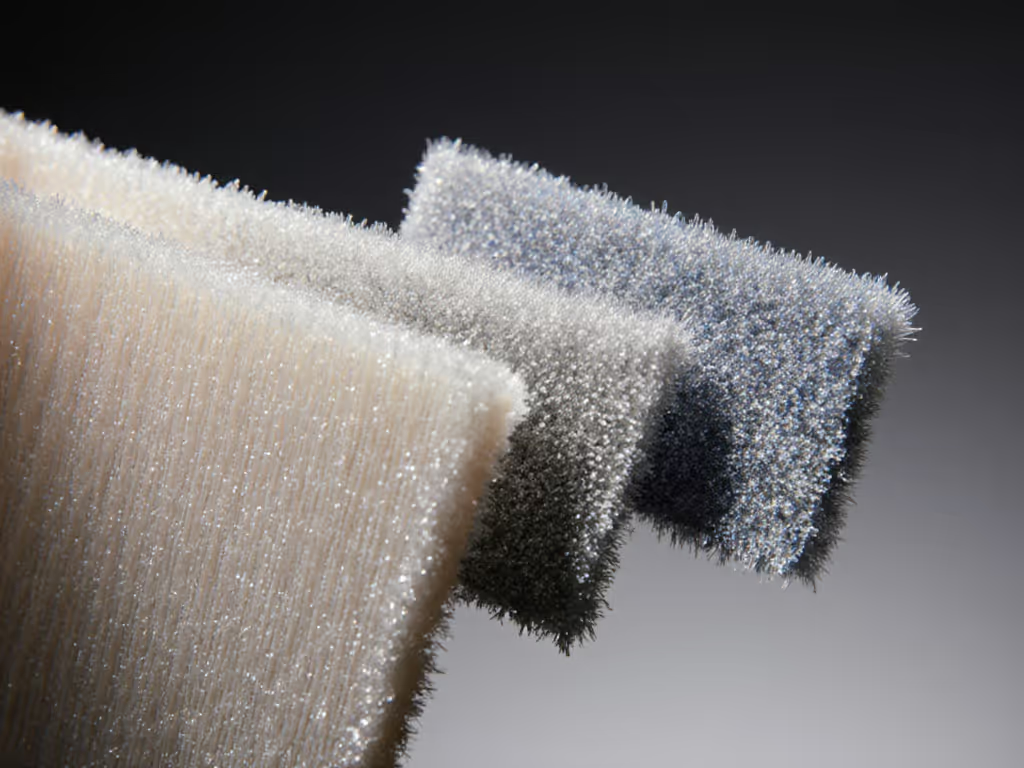
| Primaloft One | 0.92 (0.027) | 0.90 (0.026) | 97.8% | .5 denier fibers (85%), 4 denier fibers (15%), silicone-treated, no binders |
| Thermolite Micro | 0.598 (clo/oz) | Not directly stated | ~75% | .9 denier fibers, 55% slicked for moisture resistance, 27% dry, 18% binders |
| Climashield | 0.90 (approx.) | 0.85 (approx.) | 94.4% | Parallel fiber structure, binder-free |
| Thinsulate (Type C) | 0.455 | Not directly stated | Unknown | High-density thin fibers, better performance in thin applications |
The data reveals what experienced backcountry sleepers know: Primaloft One maintains exceptional warmth when wet (less than 10% reduction), while Thermolite Micro shows approximately 25% reduction, a significant gap when you're shivering at 3 AM. However, this isn't just about which material "wins" in a lab test; it's about how these materials function in your specific system.
As I learned during that shoulder-season bivy where my '20F' bag failed me despite the ISO number being "correct," warmth is a system, not a single-spec promise. If EN/ISO ratings have ever felt confusing, our temperature ratings guide explains how lab numbers translate to real-world warmth. That night taught me to stop fixating on bag ratings alone and start mapping moisture, wind, and R-value relationships.
The Pad-First Logic: Why Insulation Alone Can't Save You
All the premium synthetic fill in the world won't compensate for inadequate ground insulation. Your sleeping pad's R-value determines how much warmth you're losing downward, typically 30-50% of your total heat loss. This fundamentally changes the moisture-resistance equation:
- With an R<2.5 pad in 35°F conditions: Primaloft One's superior moisture retention becomes irrelevant, you're losing too much heat through the ground regardless
- With an R≥4.5 pad: That moisture resistance creates a meaningful safety margin when humidity exceeds 70% or light precipitation occurs
Consider this scenario-specific calculation for a 40°F night with 80% humidity:
Required System Warmth = Target Comfort Temperature + (Wind Exposure Factor) + (Moisture Penalty)

- Target Comfort: 40°F
- Wind Exposure: +5°F penalty (steady 10mph wind)
- Moisture Penalty: +3°F for Thermolite Micro, +1°F for Primaloft One

Required System Warmth = 40°F + 5°F + 3°F = 48°F for Thermolite
Required System Warmth = 40°F + 5°F + 1°F = 46°F for Primaloft
This pad-first logic shifts how we evaluate moisture-resistant insulation. That extra 2°F margin from Primaloft One might seem minor until you're in windy coastal conditions where moisture penetrates seams or alpine morning condensation accumulates in the footbox.
Wind Exposure: The Silent Insulation Killer
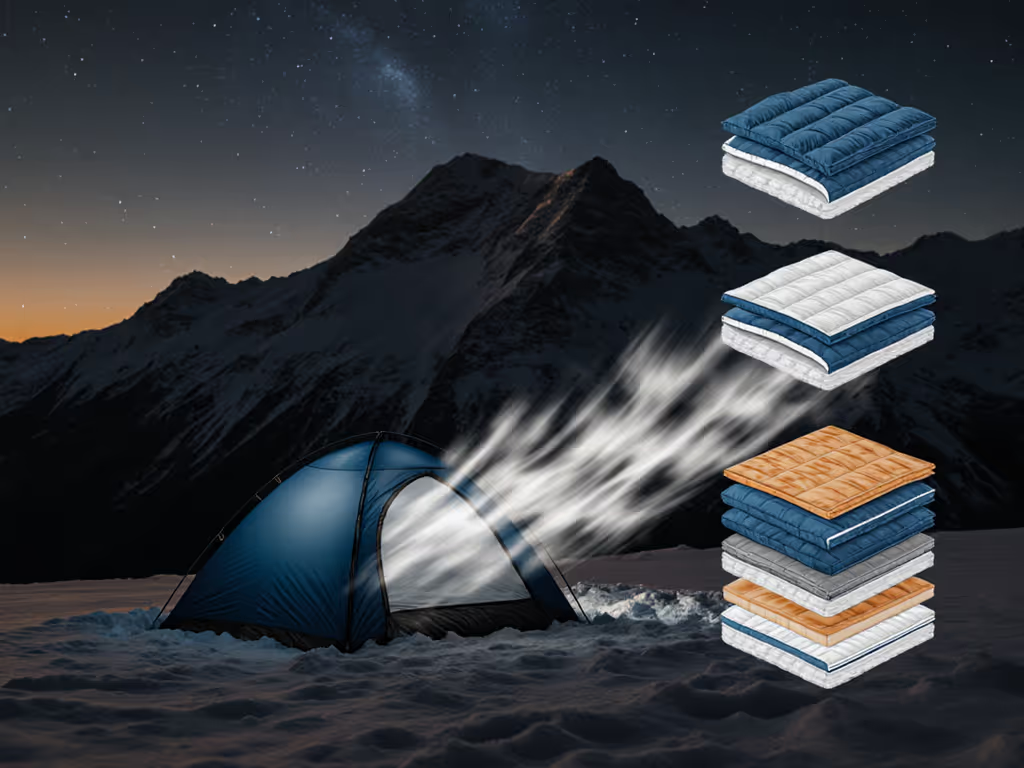
Wind doesn't just make you feel colder, it actively degrades insulation performance by compressing loft and increasing evaporative cooling. My engineering background taught me to quantify this:
Wind reduces effective insulation value by approximately 0.5°F per mph above 5mph, with diminishing returns above 15mph. This means 10mph wind effectively reduces your bag's rating by 2.5°F, while 20mph wind reduces it by 7.5°F.
This explains my shivering summit experience: my "20°F" bag was rated for 0mph wind, but steady 15mph gusts effectively made it a 30°F bag. No amount of Primaloft One could compensate for that system failure.
Your wind management strategy determines which insulation makes sense: To prevent sweat buildup that later chills you in gusts, learn sleeping bag ventilation techniques.
- Controlled wind environments (forest camping, double-wall tents): Thermolite Micro's slightly lower compressibility provides better warmth-to-weight ratio when moisture isn't extreme
- High-wind exposure (alpine ridges, single-wall shelters): Primaloft One's superior moisture retention becomes critical as wind-driven moisture penetrates fabrics
- Variable conditions (shoulder-season transitions): Climashield often provides the best balance of durability and moisture resistance for long trips
Climashield Performance: The Overlooked Contender
While debates focus on Primaloft vs Thermolite, Climashield deserves serious consideration for shoulder-season use. Its parallel fiber structure provides unique advantages:
- Near-Primaloft moisture retention (approximately 94% vs Primaloft's 98%)
- Superior durability for long-term use (no fiber migration issues)
- Better performance in thinner applications (ideal for quilt backs)
- More consistent warmth across temperature ranges
For weekend backpackers who prioritize longevity over absolute minimum weight, Climashield performance often delivers better value. I've seen Climashield-insulated quilts maintain 95%+ of their original loft after 3 seasons of alpine use, while some Primaloft bags showed noticeable compression in high-stress areas.
Making Your Choice: A System-Based Decision Framework
Rather than asking "which is best," ask "which works best in my system?" Here's my pad-first decision checklist based on real-world warmest synthetic sleeping bags evaluations:
Before selecting insulation, verify these fundamentals:
- Pad R-value ≥ 4.5 for temperatures below 50°F (non-negotiable safety margin)
- Shelter provides at least basic wind protection (tent fly, tarp configuration)
- You understand your personal cold tolerance (calorie requirements in cold)
- You've tested your sleep system in progressively cooler conditions
Then match insulation to your specific moisture/wind profile:
- High moisture + moderate wind (Pacific Northwest shoulder season):
- Primaloft One (gold or active) delivers best moisture protection
- Prioritize hydrophobic shell fabric with DWR treatment
- Add 2-3°F safety margin to bag rating
- Moderate moisture + high wind (Rocky Mountain alpine):
- Climashield Apex provides best durability and wind resistance
- Ensure tight stitch-through construction (max 15cm baffles)
- Plan for wind and calorie adjustments (extra 200kcal evening meal)
- Low moisture + variable conditions (Northeast fall):
- Thermolite Micro offers best packability-to-warmth ratio
- Focus on ventilation options (zippered chest vents)
- Carry lightweight vapor barrier liner as contingency
The Real Verdict: It's Not About the Insulation Alone
After analyzing hundreds of shoulder-season sleep systems, one truth becomes undeniable: No single insulation type universally outperforms others. Your choice must align with your specific conditions and integrate with your entire sleep system.
For most backpackers facing variable moisture conditions, Primaloft One provides the most reliable moisture protection, but only when paired with adequate ground insulation and wind management. If your R-value is too low or your shelter offers poor wind protection, even the best synthetic fill becomes secondary.
I've seen Thermolite Micro outperform Primaloft in dry desert conditions with minimal wind, while Primaloft proved essential in [coastal fog environments]. The key is understanding your moisture exposure profile and building safety margins accordingly.
Final Recommendation: Build Your System, Not Just Your Bag
The quest for the warmest synthetic sleeping bags misses the point. True warmth comes from system integration where insulation choice is just one component. Based on my experience optimizing sleep systems for challenging conditions:
- For unpredictable shoulder-season conditions: Prioritize Primaloft One with a minimum R 4.5 pad and wind-blocking sleep setup
- For predictable dry conditions: Thermolite Micro provides excellent value with lighter weight
- For long-term durability: Climashield delivers the best multi-season performance
Most importantly, never let marketing claims override system thinking. That night above tree line taught me to ignore single-spec promises and focus instead on how components work together. Your next summit sleep doesn't have to end in shivering. Control wind, feed the furnace, up your system game.
Related Articles