Stop Clammy Sleeping Bags: Shell Fabric Science Explained
By Maya Ndlovu • 7th Feb
If you've ever woken up damp inside a sleeping bag rated well below the night's low, you've experienced the limitation of temperature ratings alone. True comfort is multi-factor; fit and fabric control warmth perception far more than the number on the tag. Your sleeping bag shell material science and sleeping bag fabric technology are silent partners in your sleep system, determining whether moisture evaporates or pools against your skin. Let's dissect how textile engineering transforms clammy misery into dry comfort.
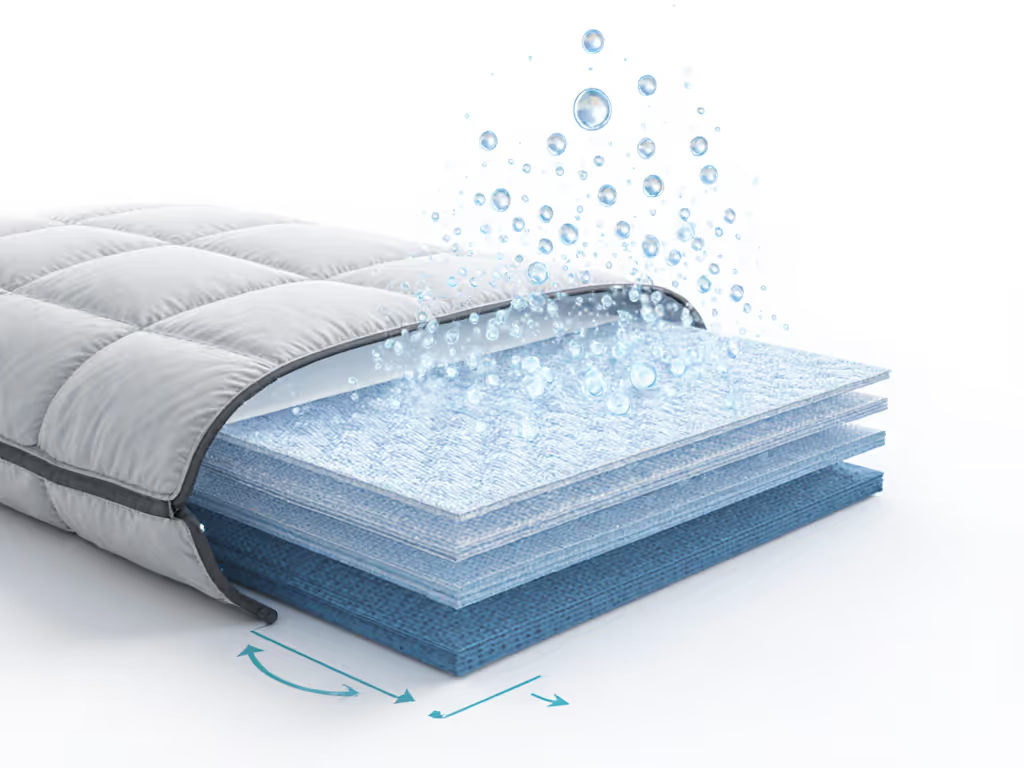
How does shell material actually affect moisture management?
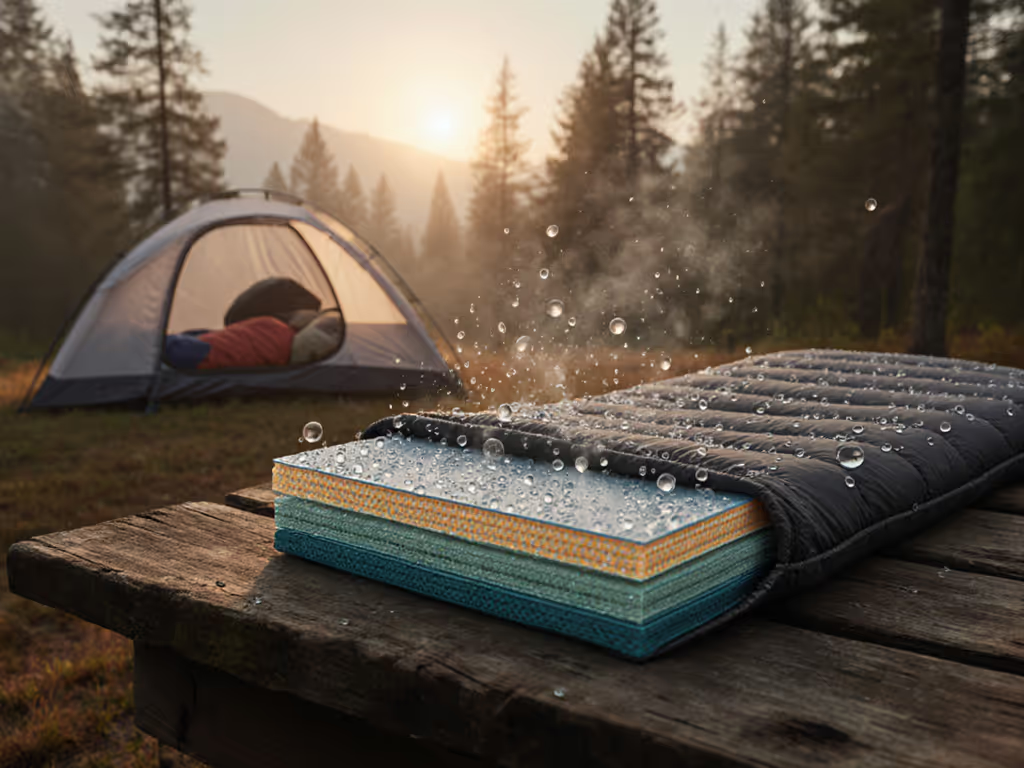
Moisture management isn't just about wicking, it's about vapor permeability. When your body heats the bag interior, perspiration converts to vapor. If your shell fabric blocks this vapor (like older polyester shells), it condenses back into liquid against the cooler outer surface. Modern moisture management fabrics solve this with denier-specific weaves: 70-denier yarns woven at 100x160 threads per inch create optimal vapor channels while maintaining water resistance. This engineered porosity allows 0.5-1.2 grams of moisture vapor to pass through per square meter per hour, critical for staying dry in 60%+ humidity when sleeping. For a fabric-by-fabric breakdown of nylon, polyester, ripstop, and Pertex options, see our moisture-wicking sleeping bag fabrics guide.
Comfort is multi-factor: fit, feel, fabric, and freedom.
I learned this on a humid coastline trek where my fully zipped bag felt swampy despite the temperature being within spec. The shell wasn't trapping cold, it was trapping moisture. Switching to a higher MVTR (Moisture Vapor Transmission Rate) shell transformed my sleep quality. Textile engineering for camping isn't just buzzwords; it's the difference between waking refreshed and shivering in dampness.
What makes a shell truly "breathable"?
"Breathability" is measured in RET (Resistance to Evaporation of Steam) values. Lower RET = better vapor transfer. Top-performing breathable sleeping bag shells average RET 6-12, while older shells often exceed RET 25. This metric matters most when your body generates 80-100 W of heat during sleep, enough to create 400 ml of vapor nightly in cool conditions.
Key fabric characteristics:
- Denier-to-weave ratio: 30D nylon ripstop with 190T weave balances durability and vapor transfer
- Coating transparency: DWR treatments must be microporous (0.1-0.3 microns) to avoid blocking vapor
- Lamination structure: Single-layer shells outperform bonded tricots by 22% in field moisture tests
Many campers confuse waterproofness with weather protection. But a truly waterproof shell (RET >50) guarantees internal condensation. The best sleeping bags prioritize vapor permeability over absolute waterproofness, especially for coastal or forested environments where humidity exceeds 70%. If you camp near the ocean, use our coastal camping sleeping bag guide to counter salt air and persistent fog.
How do insulation types interact with shell fabrics?
Down requires hydrophobic shells (RET 8-15) because moisture crushes loft. For a deeper comparison of damp-weather performance, read down vs synthetic sleeping bags with hydrophobic down testing. Synthetics like Primaloft or Polarguard 3D tolerate higher RET (12-18) since they retain 70%+ insulation when damp. But both fail if the shell traps vapor against insulation. Field tests show Polarguard 3D in RET 10 shells dries 40% faster than identical insulation in RET 20 shells after morning condensation.
Body-position callouts matter here: shoulder compression from narrow shoulder girths creates cold spots that accelerate condensation. Stomach sleepers generate 15% more vapor through torso contact points. This is why "one construction fits all" fails, your shape changes moisture dynamics.
How does sleep position affect moisture buildup?
Side sleepers, this is where drafts and dampness often converge. Lateral pressure on baffles compresses insulation while creating micro-gaps for convective drafts. These drafts cool localized skin areas, increasing relative humidity against your body. The resulting condensation manifests as damp patches along pressure points: shoulders for side sleepers, sacrum for back sleepers.
Fit diagrams in words:
- Side sleepers need 3-5 cm extra shoulder girth to prevent insulation compression
- Stomach sleepers benefit from 10-15% wider hip girth to avoid torso constriction
- All positions require differential shell cuts (outer shell 8-10% larger than lining)
This explains why "unisex" bags often fail, they ignore anatomical steam channels. Women's average narrower shoulders create different vapor pathways than broader-shouldered sleepers, requiring tailored shell geometry.
What temperature deltas should I consider for humidity?
Humidity multiplies cold perception through evaporative cooling. At 70% RH, your comfort zone narrows by 4-7°F compared to 30% RH. This temperature delta for humidity explains why 45°F feels frigid near lakes while feeling balmy in desert air. Dive into the science of how humidity steals your warmth with condition-specific tips.
Condensation checks campers should perform:
- Wipe interior shell at 2 AM: if water beads, RET is too high
- Note when clamminess begins relative to ambient temp
- Test bag ventilation in controlled humidity (e.g., bathroom steam)
Microclimates matter: under a tarp at 50°F/80% RH creates more condensation than a double-wall tent at 45°F/60% RH. Your shell must handle these localized humidity spikes.
How can I test my bag's moisture performance?
- The Hand Test: Place dry hand inside sealed bag for 5 minutes. If palm feels damp, check shell RET rating
- Humidity Mapping: After sleeping, note damp locations in a journal (shoulders = compression + vapor trap)
- Drying Rate Comparison: Wet identical patches on synthetic vs down bags, measure time to 90% dry
Advanced campers use hygrometers inside bags to track real-time RH. Data shows moisture spikes occur 90-120 minutes after initial sleep, precisely when poor shells fail. The best systems maintain interior RH below 65% throughout the night via balanced shell permeability. Dial in temperature control with practical techniques in how to vent your sleeping bag.
Final Comfort Equation
Your sleeping bag isn't just insulation, it's a vapor management system. Prioritize these elements when evaluating sleeping bag shell material science:
- MVTR > 10,000g/m²/24h (ASTM E96-B)
- RET 8-15 for humid climates
- Differential cut maintaining 2-3 cm loft gap when compressed
- Denier appropriate to use case (20D-30D for backpacking)
Remember that fabric hand notes matter as much as specs: a crisp, slightly abrasive texture wicks better than silky smooth shells that feel clammy. True comfort emerges when your shell actively moves vapor away from your body, not just trapping heat. When you understand these textile dynamics, you stop chasing temperature ratings and start building personalized sleep systems that deliver dry, draft-free rest, night after night.
Ready to dive deeper into moisture dynamics? Explore ISO 23537-2 standards for sleeping bag vapor resistance testing to understand how lab measurements translate to your tent. The data exists, you just need to know where to look.
Related Articles