Women's Sleeping Bags: Why Body Composition Changes Ratings
By Anik Bose • 20th Apr
Winter rated sleeping bags and gender-specific warmth perception are not marketing fiction, they reflect how sleep physiology, thermal manikin protocols, and real-world field conditions diverge. Understanding why women's bags are engineered differently requires translating ISO/EN laboratory standards into the metabolic and anatomical realities that determine whether you sleep warm or spend the night counting degrees.
Defining the Standard: How Labs Rate Temperature
Before comparing bags, we need precision on what "temperature rating" actually measures.
The ISO 23537 standard (formerly EN 13537) defines three temperatures for any sleeping bag:
- Upper limit: Room temperature at which a sleeping body begins to sweat (typically 95°F for standard testing)
- Comfort rating: Temperature at which a standard sleeper (the "reference person") achieves a comfortable, restful night in a relaxed position
- Lower limit: Minimum temperature at which a sleeping bag provides survival-level thermal protection (also called the survival temperature)
Manufacturers publish the comfort rating (that 15°F, 20°F, or 32°F number on the tag) because it's the most practical threshold for users planning trips.
Here's the critical detail: The reference person differs by gender.[1] Nemo Equipment's published testing shows this directly: when rating their Disco line to the same comfort temperature, a women's model requires more insulation than an identically-sized men's model. The reason is physiological. Testing laboratories assume the average female will remain comfortably asleep at approximately 10 to 15°F colder ambient temperature than the average male in the same bag.[1] In Nemo's data, this translates to a difference of 15.4 degrees between how men's and women's bags are validated.[1] For women's-specific features and model picks, see our best women's sleeping bags.
Why? Three interconnected factors:
Metabolic rate and body composition
Women on average have lower resting metabolic rates and higher body fat percentages than men. Basal heat production during sleep, the furnace keeping you warm, is shaped by muscle mass and metabolic efficiency. Labs factor this into their reference person, building in a thermodynamic offset.
Core-to-extremity prioritization
Thermoregulation favors the core (brain, heart, lungs) over limbs. Women's bodies, on average, show greater peripheral vasoconstriction in cold (meaning blood flow to the extremities reduces faster, making feet and fingers feel colder first). Insulation design must compensate.
Hormonal variation
Circadian cycles, menstrual phase, and hormonal profile influence peripheral skin temperature and thermal comfort thresholds in ways that don't uniformly track across individuals, but population averages show measurable shifts relative to male reference data.
The Laboratory Test: Controlled Conditions, Real Limitations
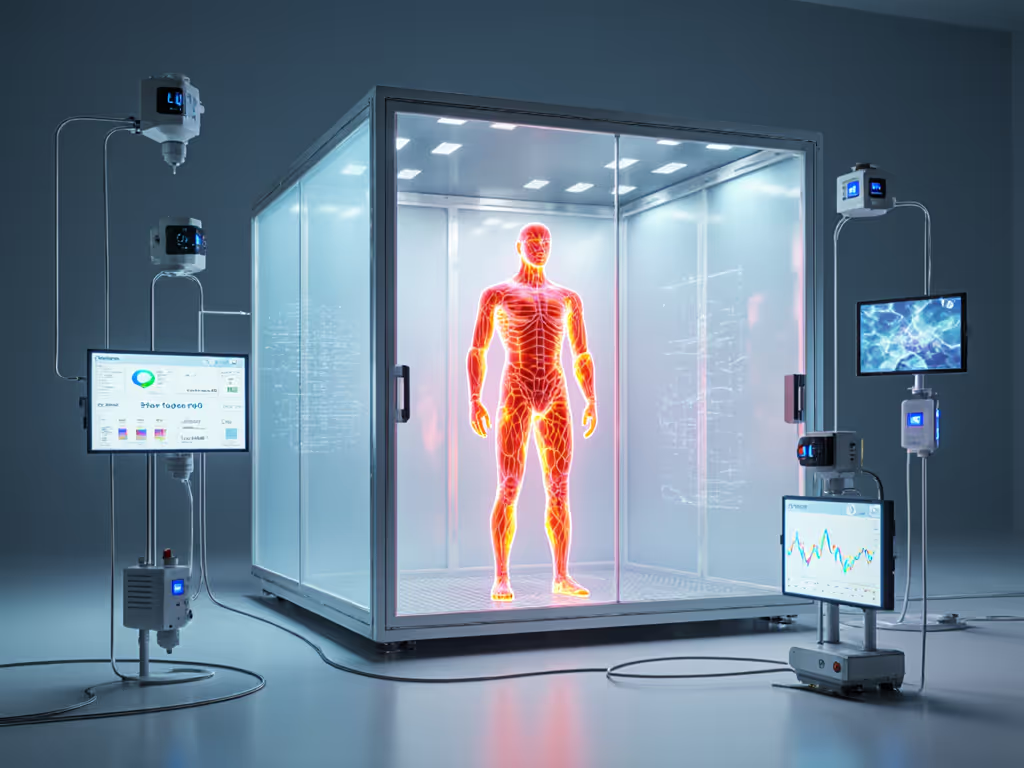
ISO testing uses a thermal manikin (a life-sized dummy torso and limbs, instrumented with heat sensors, dressed in standardized sleepwear, placed in a sleeping bag on a test mat in a climate chamber). The chamber air is still. Humidity is controlled. The manikin's skin is heated to simulate a human at rest. Technicians gradually lower chamber temperature until the manikin's sensors indicate it can no longer maintain thermal comfort (or survival) at a given power draw.
I remember watching this protocol at a factory test facility: the manikin cycling through ISO cycles, sensors drifting a fraction of a degree over hours, the chamber's still air so perfectly controlled it felt sterile. Impressive engineering, yet it clarified something essential. That dry, still air bears no wind. No damp ground. No restless human shifting, compressing insulation unevenly. A person on a thin or low-R-value pad will dump heat downward that the bag alone cannot recover. Humidity and condensation inside the bag, moisture wicking from ground through the fill, none of that enters the lab model.
Lab-to-Field Translation: Key Assumptions
When you translate an ISO rating into real sleep:
- Assumed pad R-value: Labs use a standardized test mat; your inflatable pad's R-value (thermal resistance) is not part of the rating. A bag rated 15°F assumes you're on an R-2 to R-3 mat. On an R-1 mat, you lose 8 to 15°F of effective warmth; on an R-5 mat, you gain margin.
- Assumed shelter type: The standard presumes calm air. Wind penetration through single-wall shelters, drafts around seams, and air circulation reduce effective bag rating by 5 to 20°F depending on shelter design and wind speed.
- Assumed humidity: Laboratory air is typically 40 to 60% relative humidity. Coastal regions, humid river valleys, and wet spring conditions can climb to 80 to 95% RH. Down insulation loses loft when damp; synthetic retains warmth longer but conducts heat faster when saturated.
- Assumed clothing: Most ISO testing assumes light sleepwear and a beanie; layers and liners add warmth but also cost weight and pack volume.
- Assumed metabolism: The manikin's heat output mimics a resting adult; fever, stress, or cold-induced shivering metabolically generates extra heat. Young children and elderly sleepers generate less.
Assumptions disclosed, limitations acknowledged. Standards inform; translation delivers real sleep in real weather.
Gender-Specific Design: Beyond Temperature Ratings
Women's sleeping bags don't just use more insulation; their ergonomic geometry and fill placement reflect anatomical and thermal preferences.
Shape and taper
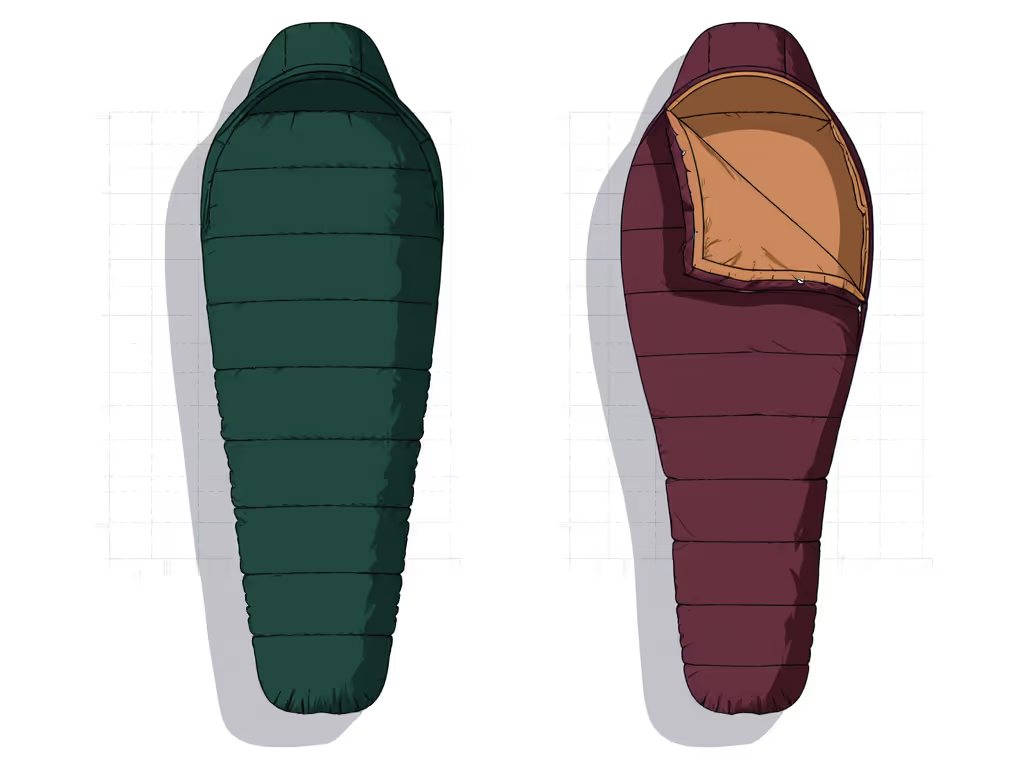
Men's mummies traditionally taper sharply from shoulders (wide) through hips to feet. Women's specific bags use a less drastic taper, a more gradual narrowing.[3] Why? Two reasons: (1) women on average have proportionally wider hips relative to shoulder width, and a sharp taper bunches fabric and compresses insulation in the hip zone, creating cold spots; (2) a less restrictive fit reduces pressure on the arms and torso, allowing the bag to loft fully without being squeezed down.
Insulation placement
Women's bags concentrate insulation at the core and feet[1][3][4]: the zones most prone to feel cold first. Many models add a draught collar[2] (a quilted band around the upper neck) to prevent warm air from escaping as you move, and an adjustable hood[2] that seals tightly around the head without cinching excessively.
Hood and collar fit
A women's-specific hood is typically smaller in diameter and shorter in depth to fit smaller head/shoulder geometry without excess fabric that would trap cold air or allow the hood to shift off during sleep.
Footbox geometry
Women's bags often have a footbox that's slightly narrower but taller (deeper), preventing the feet from slipping sideways and allowing for thicker socks or layered booties without compressing insulation.
The Nuance: One Size Doesn't Fit All Bodies
The gender-specific warmth perception label, while useful at population level, masks real individual variation.
A woman with high muscle mass, fast metabolism, and peripheral vasodilatation (loose blood-flow regulation) may sleep warmer than a slighter man with low metabolism. A man with high body fat may sleep warmer than a lean woman. Fitness level, age, sleep position, caffeine intake, recent exertion, and sleep quality all shift where you land on the comfort spectrum.
What the ISO/EN standard does is anchor the average. To translate that average to your own biology, use our personal warmth offset guide. Manufacturers build women's bags to that average female reference person. If you deviate, high metabolism, or conversely, prone to poor circulation, you adjust via:
- Pad R-value: Add a high-R pad under your bag to gain 10 to 15°F effective warmth.
- Shelter choice: Camp in double-wall tents with vestibules (adds 5 to 10°F) rather than single-wall or tarps.
- Sleep system layering: A silk liner adds ~3 to 5°F; a fleece liner adds ~7 to 10°F. For options and realistic gains, see our sleeping bag liners.
- Clothing: Sleep in merino base layers and wool socks to offset cold feet without needing a heavier bag.
Winter Rated Sleeping Bags: When Standard Ratings Aren't Enough
Winter rated sleeping bags (typically rated 0°F and below) amplify gender-specific design because the stakes are higher. A women's winter bag has to deliver reliable warmth in prolonged exposure, often on snow or in very humid mountain air.
Winter-specific refinements include:
- Hydrophobic down or synthetic fill rated for moisture retention
- Reinforced baffle construction (box-wall or V-baffle) to prevent cold spots from down shifting If you're comparing constructions, our sleeping bag baffles guide breaks down box-wall vs V-chambers for warmth.
- Full-length side zippers or integrated liner systems to reduce heat loss through seams
- Integrated heat-reflective liners (often aluminum or metallized plastic) that radiate body heat back inward
- Thicker draft collars and hood overlap to seal against wind and prevent face-contact heat loss
Winter bags, male or female, require higher-R pads (R-5 to R-7) to be effective. A women's 0°F bag on an R-2 pad won't reliably deliver 0°F comfort; it'll underperform by 15 to 20°F.
Comparative Frame: Women's vs. Unisex vs. Men's Bags
| Aspect | Women's | Unisex | Men's |
|---|---|---|---|
| Insulation weight | 15 to 20% more (same temp rating) | Baseline | Baseline |
| Packed weight | Slightly heavier for same rating | Baseline | Baseline |
| Taper | Gradual; wider hip room | Often moderate taper | Sharper taper |
| Core/foot fill | Enhanced | Standard | Standard |
| Hood/collar fit | Smaller, more contoured | Standard | Larger, roomier |
| Best for | Average woman; side sleepers | Mixed bodies; restless sleepers | Average man; back sleepers |
| Trade-off | Heavier per rating; may restrict broad shoulders | Compromise fit for all | May feel roomy for smaller bodies |
A practical note: Some manufacturers (notably Cascade Designs/ThermaRest[4]) argue that a well-chosen unisex bag with the right R-value pad and layering strategy serves many sleepers better than gender-specific models, because fit and pad synergy matter more than bag gender. This view is worth testing: if you're broad-shouldered or a restless mover, a unisex regular may suit you better than a women's long, regardless of your gender.
Field Translation: Your Sleep Scenario
Translating an ISO rating into actionable warmth requires three-variable estimation:
- Your body profile: Are you a cold sleeper (high body fat, lower metabolism, poor peripheral circulation) or a warm sleeper (lean, high metabolism, naturally vasodilatating)?
- Your pad R-value: What's the R-value of your sleep pad? (Check the tag or manufacturer specs.)
- Your shelter and conditions: Double-wall tent with vestibule, or single-wall bivy? Wind exposure? Expected humidity?
Example calculation:
- Scenario: You're a woman, typically cold in sleep, planning a shoulder-season alpine camp (nights dropping to 28°F, windy, low humidity).
- Women's reference rating says a 20°F bag suits average women down to 20°F. But you're a cold sleeper, so subtract 10°F margin: your effective comfort starts at 30°F without padding.
- Your pad: R-3.5 (medium-high quality). From ISO/EN, a pad adds roughly 1°F effective warmth per R-0.5; your pad adds ~7°F. Revised: 30°F + 7°F = 37°F effective.
- Shelter: Double-wall tent with vestibule. Adds ~5°F margin in wind.
- Result: Your 20°F women's bag + R-3.5 pad + double-wall tent will comfortably keep you warm to ~32°F. At 28°F, you'll be marginal; adding a fleece liner or sleeping in merino base layers bridges the gap.
This is where ISO standards translate into real sleep: Assumptions disclosed, limitations acknowledged.
Moisture and Fill: Gender-Neutral but Context-Dependent
Women's bags don't differ fundamentally in down vs. synthetic choice, but the context matters. Not sure which insulation fits your climate? Start with our down vs synthetic test for moisture and warmth trade-offs.
- Down (850 to 900 fill power): Lightweight, packs tiny, lofts quickly, and retains warmth well when dry. Risk: loses loft if saturated. Best for dry climates and high-R pads that minimize ground moisture.
- Synthetic (polyester blends): Retains warmth when damp, cheaper, and durable. Trade-off: heavier than down at the same warmth, slower lofting, and compresses over time.
For women (or anyone) in humid coastal or tropical-mountain environments, synthetic or hydrophobic-down blends reduce the risk of a catastrophic cold night from condensation buildup.
Why This Matters for Your Next Decision
Buying a women's sleeping bag isn't just about gender; it's about translating population averages into your sleep system. A women's winter rated sleeping bag, paired with an R-value pad and a shelter plan, gives you a physics-backed prescription for warmth. The ISO/EN standard anchors the conversation; your pad R-value, shelter choice, and body profile move the needle.
Extend Your Exploration
To refine your choice further:
- Calculate your sleep system: Identify your body's thermal profile (are you cold, average, or warm? past experience with bags and temps helps). Research your pad's R-value. Sketch your shelter type and expected conditions.
- Test the math: Use online sleep-warmth calculators (many cottage gear brands publish them) that let you input bag rating, pad R-value, expected temperature, and clothing to see predicted comfort ranges.
- Read field reviews from your context: Look for reviews from sleepers in your climate and body category. A woman who camps in the Cascades in spring provides more relevant data than a unisex review from a desert climate.
- Consider the full system first: Before splurging on a new bag, upgrading your pad R-value often yields bigger warmth gains per dollar. A shift from R-2 to R-4 adds ~12°F effective warmth, often equivalent to upgrading a 20°F bag to a 10°F bag.
- Check fit in real conditions: If possible, visit a retailer and actually lie in bags to gauge whether the taper, hood, and footbox suit your geometry and sleep position. Gender-specific design is only useful if it fits your unique body.
- Build a scenario library: Document past trips, temperature, conditions, pad, bag, clothing, and how well you slept. Real data beats theory every time.
Standards inform; translation delivers real sleep in real weather. Your next warm night depends on closing the gap between laboratory comfort and field reality.
Related Articles