Sleeping Bag Hood Design Comparison: Data-Backed Warmth & Fit
By Maya Ndlovu • 29th May
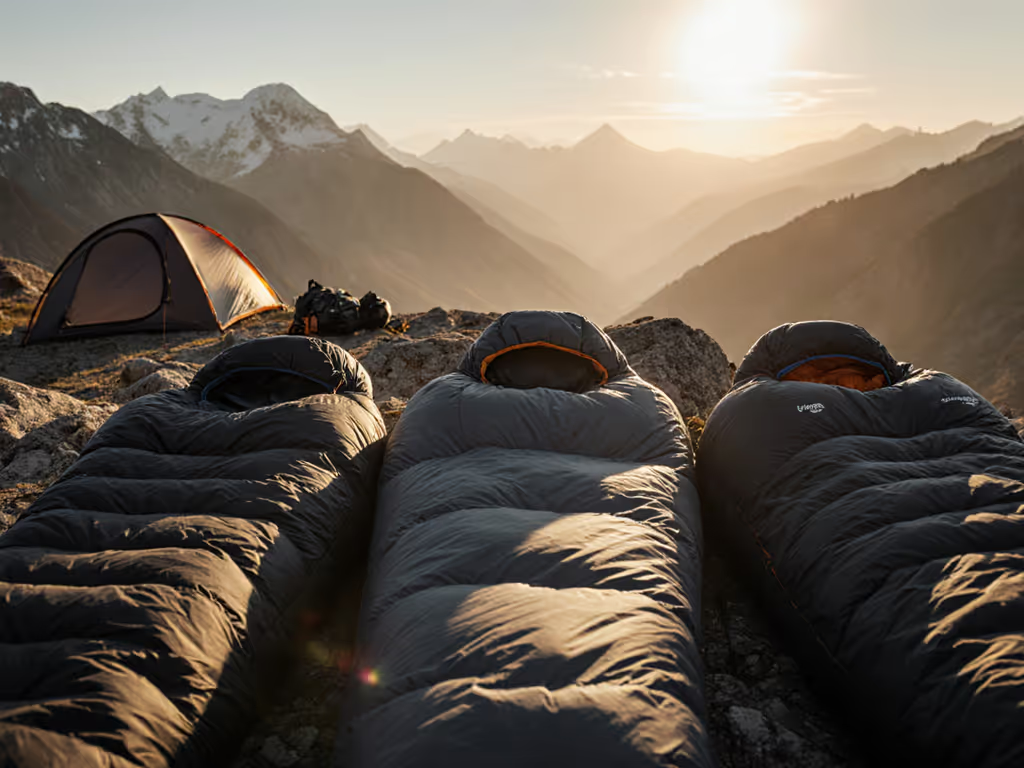
In this sleeping bag hood design comparison, we'll strip away marketing language and look at how different hood shapes, draft collars, and adjustable hood mechanisms actually change warmth, comfort, and real-world "thermal efficiency hood designs" for your sleep system.
If you've ever shivered in a correctly rated bag or woken sweaty and then chilled around your neck and face, the hood is often the missing variable. Comfort is multi-factor: fit, feel, fabric, and freedom. For field data on how different mummy bag hoods affect warmth, see our controlled tests.
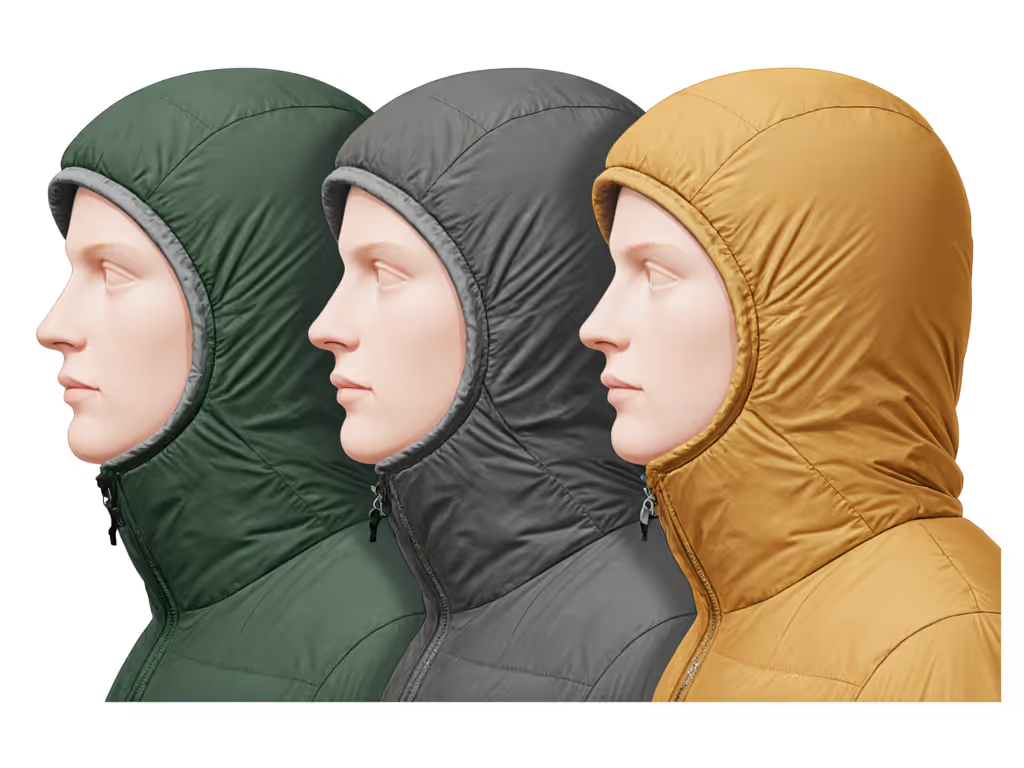
FAQ Deep Dive: Sleeping Bag Hood Design, Warmth & Fit
1. What does a sleeping bag hood really do for warmth?
A hood's job is draft control around one of your highest heat-loss zones: the head, neck, and upper chest interface.
Laboratory-style tests and comparative reviews consistently find that bags with well-shaped hoods and robust draft collars feel meaningfully warmer than bags with similar insulation but minimal neck/hood features.[7] A good hood effectively:
- Reduces convective heat loss by sealing the gap around your neck and cheeks.
- Keeps the loft stable around your shoulders so insulation doesn't collapse when you move.[7]
- Lets you tune exposed skin (mouth, nose, sometimes forehead) to manage moisture and overheating.
A practical takeaway from comparative testing: when everything else is equal (fill type, fill weight, fabrics), a bag with a full, contoured hood + real draft collar can feel roughly 5-8°F (3-5°C) warmer than a similar bag with a loose, flat hood and no collar, especially in wind or single-wall shelters.[7][4] That's not an official spec - just a consistent pattern from side-by-side evaluations.
If you're cold at the neck/shoulders in a "warm enough" bag, you don't necessarily need more fill - you may need a better hood and collar.
2. What are the main hood design types, and how do they compare for thermal efficiency?
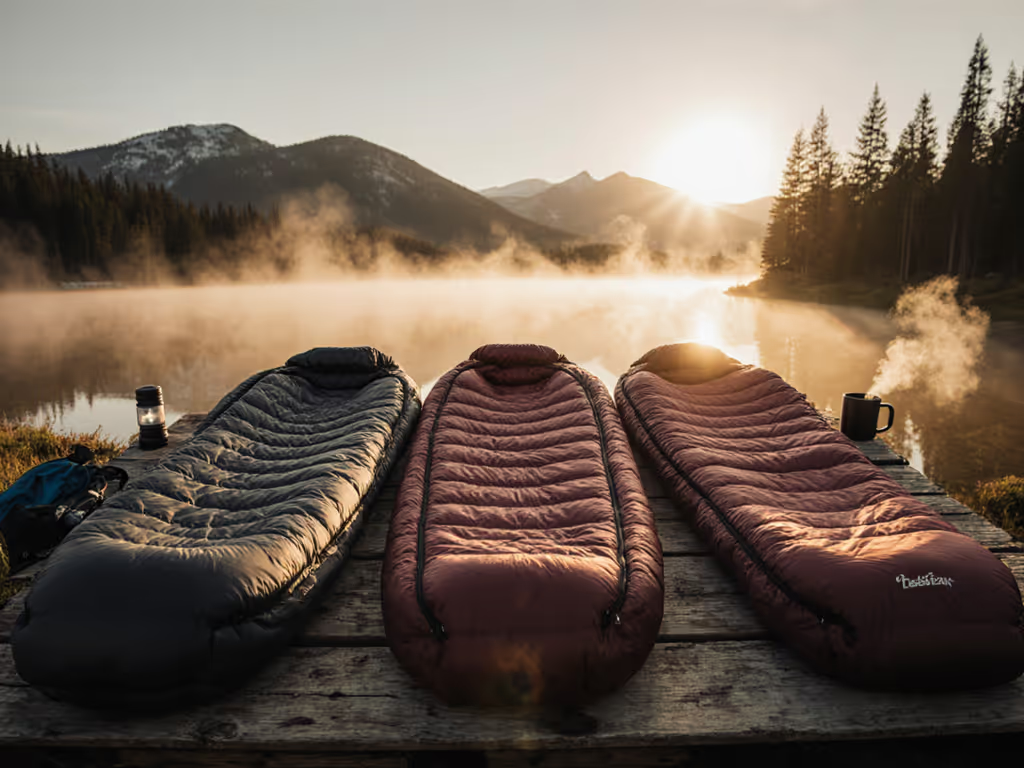
Let's do a structured sleeping bag hood design comparison using the four most common shapes you'll encounter.
a. Classic mummy / contour hood
Shape: Deep, rounded hood that tapers with the mummy bag, usually with a face gasket and single or dual drawcords.
Thermal traits:
- Highest thermal efficiency for fully zipped, cold-night use when properly sized.[7]
- Creates a near-continuous insulated shell around head and neck, minimizing dead space.
- When combined with a good draft collar, forms a "soft gasket" that moves with you as you roll inside the bag.
Best for:
- Sub-freezing conditions, high wind, and minimalist shelters.
- Back sleepers who don't move much.
Watch for:
- If the hood volume is too large for your head, you'll get cold air pockets that feel like "mysterious" drafts.
- Very narrow cuts can force side sleepers to shove their face into fabric or partially open the hood, losing efficiency.
b. Helmet-style hood (roomier, more vertical walls)
Shape: More like a belay parka hood - extra side volume, sometimes with a bit of overhang, often seen on comfort-focused or center-zip bags.
You'll see hints of this concept in some modern comfort-oriented mummies and zipperless bags that allow more upper-body freedom while still retaining a hood.[4][7]
Helmet-style hood performance:
- Warmer for restless and side sleepers because the hood can stay aligned with your head while your body rotates.
- Slightly less thermally "tight" than a classic mummy if you just lie flat and still, due to more internal air volume.
- The extra space gives better breath routing (you can sometimes exhale outside the hood while keeping cheeks covered), which helps manage condensation in humid or coastal climates.
Best for:
- Side and combination sleepers.
- People who hate the "face in a tunnel" feeling.
c. Jacket-style / comfort hood
Shape: Low, wide hood or "pillow hood" designed more for comfort than for full seal - common in car-camping or 3-season comfort bags.[2][9]
For example, many car-camping bags use a fleece-lined hood or pillow pocket that feels cozy but doesn't cinch into a tight seal around the face.[2][9]
Thermal traits:
- Moderate efficiency: great in the 40-60°F (4-15°C) range, less ideal near the lower limit of a 3-season rating.
- Encourages sleeping with face out, which reduces condensation but sacrifices some insulation in wind. To manage nighttime moisture proactively, learn the condensation and breathability basics.
Best for:
- Mild shoulder-season or summer use.
- Campers who prioritize a "bed-like" feel over storm-worthiness.
d. Hoodless bags + separate hood or balaclava
Shape: The bag has no hood; you pair it with a down or synthetic hood, a separate insulated balaclava, or a warm hat.[1][5][8]
- Cumulus, for example, sells dedicated down hoods designed to pair with hoodless bags or quilts.[5]
- Many ultralight and modular bags (such as some cottage designs similar in spirit to the Timmermade Wren) are intended to be used hoodless with separate insulation on the head.[8]
Thermal traits:
- Surprisingly high thermal efficiency for active sleepers because the hood stays aligned with your head, not the bag.
- The weak point is the neck gap - you rely on a good draft collar or quilt straps to stop air from pumping in and out as you move.[1][5]
Best for:
- Ultralight setups and people who already sleep in a warm hooded layer.
- Hammock users or those who dislike integrated hoods.
Watch for:
- Incomplete neck seal on windy nights.
- Managing overlaps between jacket hood, separate down hood, and bag collar to avoid cold channels.
3. How important is the draft collar, and how does it interact with the hood?
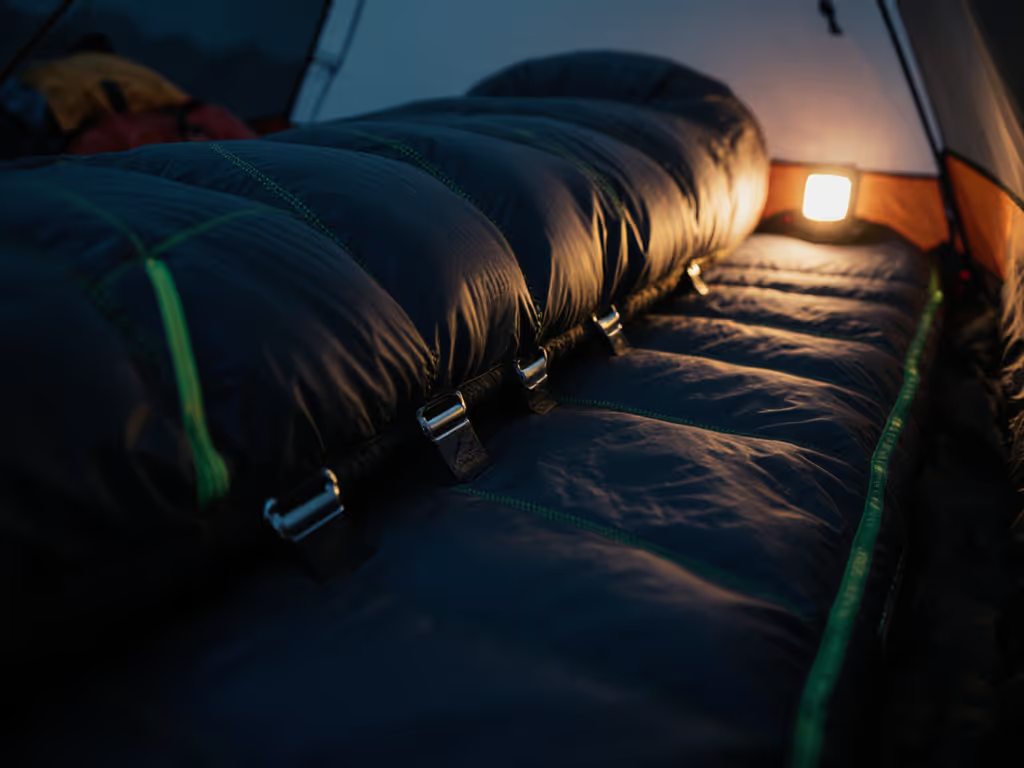
A draft collar is an insulated tube (or pair of tubes) around the inside of the neck/upper chest area. Its job is to prevent warm air from "bellows-ing" out every time you move or breathe. If your current bag lacks a proper collar, consider these DIY draft-collar upgrades to improve the seal.
Comparative reviews repeatedly highlight that bags without a real draft collar feel colder than their rating suggests, especially in the 25-35°F (-4 to 2°C) band where many campers push 3-season bags.[7][4]
You'll see different collar patterns:
- Full 360° collar: Completely encircles the neck. Highest warmth, best for near-limit use.[7]
- Partial / front collar or comforter-style flap: Covers the front and sides but not the back - common in zipperless designs like the Sierra Designs Cloud 20, which uses an integrated oversized comforter instead of a traditional collar.[4]
- No collar: Typical of basic or older bags; the hood cinch alone tries to manage drafts.
Draft collar effectiveness comparison (paired with hood types):
- Classic mummy hood + full collar -> maximum warmth, best for sub-freezing.
- Helmet-style hood + full or partial collar -> great for side sleepers, maintains seal during rotation.[4][7]
- Jacket-style hood + partial/no collar -> comfortable but rating-sensitive; expect to stay closer to the comfort rating, not the lower limit.[7][9]
- Hoodless bag + robust collar + separate hood -> system-dependent; excellent if dialed, drafty if not.[1][5]
If you remember warm torso but a cold band around your neck/clavicles, you're feeling missing or undersized draft-collar performance.
4. How do adjustable hood mechanisms change warmth and comfort?
"Adjustable hood mechanisms" refers to how you cinch and shape the hood opening. This matters more than most spec sheets admit.
Common design details:
- Single drawcord, symmetric: One cord tightens the opening evenly.
- Dual drawcords (top and bottom): Let you fine-tune forehead vs chin tension separately.
- Internal vs external cord routing: Internal routes reduce snagging on the outside but can tickle your face; external keeps the interior clean.
- Flat vs round cords; soft vs hard hardware: Comfort issue when cords lie across cheekbones or lips.
Why this changes perceived warmth:
- A well-placed lower cinch allows you to close the collar around the throat while leaving more breathing room for the mouth and nose, reducing the "ice mask" effect.
- Dual-cinch systems help side sleepers maintain seal on the lower edge while loosening the top edge for venting.
- Softer, flatter cords and low-profile toggles encourage you to fully cinch the hood instead of leaving it half-open out of discomfort, which directly boosts thermal efficiency.[7]
Some modern designs add removable or pivoting hoods, like MEC bags with detachable hoods for modular use.[10] These provide flexibility but rely even more on collar design for draft control when the hood is off.
5. What hood designs work best for side sleepers? (And why are they often cold at the neck?)
Side sleepers, this is where drafts sneak in.
When you roll to your side in a narrow mummy:
- The hood opening can shift off-axis, leaving your mouth/nose partly buried and your cheek exposed.
- The lower edge of the hood and collar can lift off your shoulder, creating an air gap.
- If the hood opening is small and tight, you may instinctively loosen it in the night, inviting more drafts.
For side and combination sleepers, look for:
- Helmet-style or slightly roomier contour hoods that allow your head to rotate without pulling the opening away from your face.[4][7]
- Dual-cinch mechanisms, so you can keep the lower edge sealed while leaving more space around the nose.
- A generous draft collar that can be fluffed and positioned like a scarf over your clavicles.
Another strong option is the hoodless bag + separate insulated hood system.[1][5]
- Your hood or balaclava stays locked to your head, not the bag.
- The bag's collar (or quilt straps) focuses purely on sealing the torso/neck.
If you often wake with a cold stripe across one shoulder or the side of your neck, your next upgrade should almost certainly focus on hood shape and collar volume, not just more fill weight. For model recommendations tuned to this need, see our best side-sleeper bags.
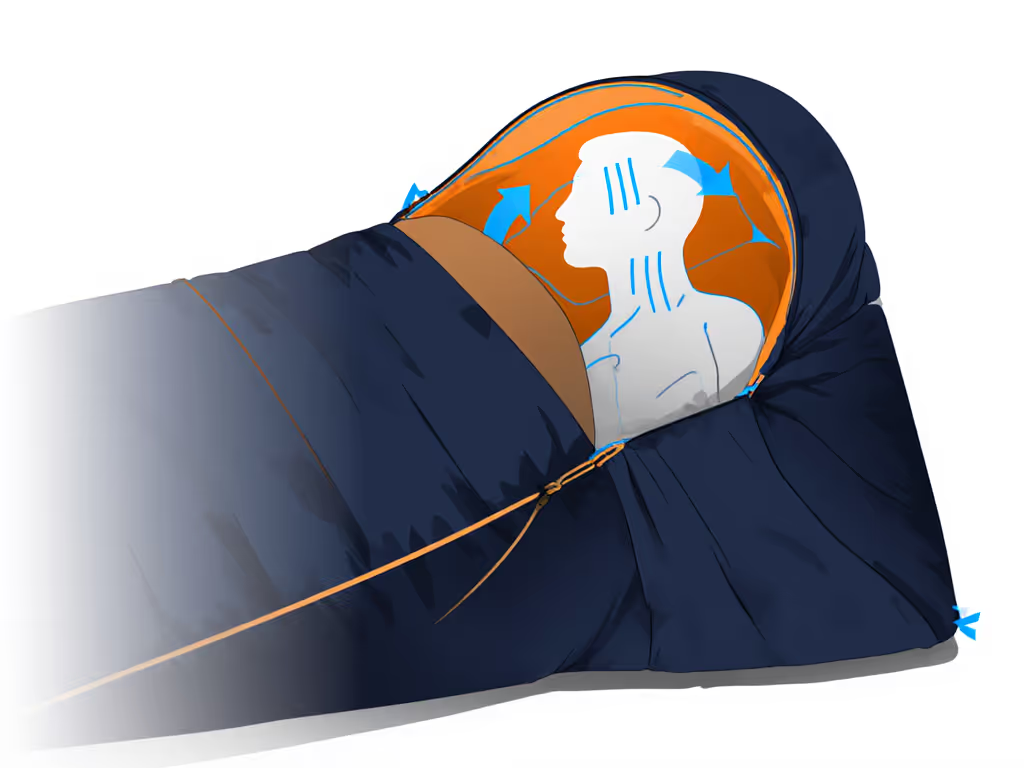
6. Are hoodless bags + separate hoods as warm as traditional hooded bags?
Short answer: they can be, but only if the neck seal is handled well.
Discussions among backpackers and ultralight users often compare hoodless mummy bags plus down balaclavas to traditional hooded bags.[1] The consensus pattern:
- Equal or warmer at the head when wearing a high-loft down hood or balaclava, since it stays perfectly aligned as you move.[1][5]
- Potentially colder at the neck and shoulders if the bag lacks a strong collar or if the quilt straps are loose.
Separate down hoods (like those offered by Cumulus) are designed to fill this gap and can add substantial warmth for relatively low weight.[5]
Where hoodless systems shine:
- You can re-use the same hood with different bags or quilts.
- In humid or coastal conditions, you can swap to a more breathable hood or just a fleece hat if you're battling clamminess.
- They pair well with false-bottom or partial-zip designs that already assume you'll manage head insulation separately.[8]
Where they struggle:
- Extremely windy, exposed camps where any neck leak is punishing.
- Users who don't like fiddling with multiple components at bedtime.
If you go hoodless, think of the system as: bag/quilt + serious draft collar + purpose-built hood, not just "bag + beanie."
7. How much should hood design matter compared to temperature rating and pad R-value?
From a comfort-first, data-informed standpoint, prioritize in this order:
- Correct overall warmth (bag rating + pad R-value appropriate to your low temps).[7]
- Fit that doesn't compress insulation at hips/shoulders.
- Hood and draft control (hood shape, collar, zipper baffles).
Independent test houses and comparative reviewers repeatedly find that pad R-value and total fill weight set the broad warmth band, but hood/collar design determines whether you feel closer to the comfort rating or the lower limit on real nights.[7]
So once you have:
- A bag/quilt with a realistic EN/ISO rating for your scenario, and
- A pad with adequate R-value for your ground temps,
... the hood and collar move from "nice extras" to "primary levers" for how that rating will feel to your body.
8. Data-backed rules of thumb for choosing a hood design
Use these as starting heuristics, then adjust for your personal hot/cold tendencies and shelter type.
Below ~20°F (-7°C)
- Choose a full mummy or helmet-style hood with a substantial 360° draft collar.[7]
- Prioritize a dual-cinch hood you're willing to fully close.
- Hoodless systems are viable, but only with a very warm separate hood and carefully tuned neck seal.[1][5]
20-35°F (-7 to 2°C)
- High-quality 3-season bags with good hoods and collars will generally keep average sleepers comfortable if pad and shelter are appropriate.[7]
- Side sleepers should strongly consider helmet-style hoods or hoodless + separate hood.
35-50°F (2 to 10°C)
- Comfort-focused hoods (wider, less aggressive cinch) are fine, especially if you hate tight hoods.[2][9]
- Draft collars still help a lot on windy shoulder-season nights.
Above ~50°F (10°C)
- Hood choice is more about comfort and moisture management than raw warmth.
- A low, pillow-like hood or even a hoodless bag/quilt is often ideal.
Remember: regional humidity, wind, and tent design can shift these thresholds by 5-10°F in either direction, especially if you're a known cold or hot sleeper. Dive deeper into humidity’s impact with our humidity and warmth guide.
9. Quick diagnostic: was your hood to blame on your last cold night?
Match your sensations to likely causes and fixes.
You felt: Cold streak around neck/collarbone, even though torso felt okay.
- Likely cause: Underbuilt or absent draft collar; hood opening too large.
- Fix: Look for a bag with a full, puffy collar and a lower cinch; or add a separate insulated scarf/neck tube in the short term.
You felt: Face buried or suffocated when tightening the hood; you kept loosening it and then got drafts.
- Likely cause: Narrow contour hood with aggressive taper; single-cinch design pulling equally on all sides.
- Fix: Try a helmet-style hood or dual-cinch design; or move to hoodless + separate hood so the opening stays where you want it.
You felt: Head warm, but cold air puffing across cheeks when you shifted position.
- Likely cause: Hood opening too big for your head; collar not sealing; bag too wide at the shoulders.
- Fix: Cinch the lower cord more than the top; fluff the collar over your shoulders; consider a bag with narrower shoulder girth and a more sculpted hood.
You felt: Sweaty scalp and damp hood fabric, followed by chills.
- Likely cause: Low-breathability shell/liner around the hood; fully sealed hood in humid or low-vent shelters.
- Fix: Loosen top cinch to vent exhaled moisture; consider more breathable materials and a hood shape that lets you exhale outside the opening. In humid zones, a slightly roomier hood with breathable fabrics can feel warmer by staying drier.
10. Where should you go from here? (Further exploration, not another gear churn cycle)
To translate all this into your own kit without endless buying and returning, try this framework:
- Log your last few cold or clammy nights
- Note position (side/back/stomach), wind, shelter type, and exactly where you felt drafts or sweat.
- Map sensations -> hood features
- Neck stripe cold? Prioritize a bigger, better collar.
- Face issues and constant re-adjusting? Explore helmet-style or hoodless + separate hood.
- Test adjustments before buying new
- On your next trip, experiment with different cinch patterns, collar fluffing, and layering a neck tube or separate hood.
- Only then refine your next bag choice
- Filter candidates by hood shape, collar design, and adjustable hood mechanisms - not just temperature rating and fill weight.
My own biggest leap in sleep quality didn't come from chasing a lower temperature rating; it came from dialing fit and moisture behavior around the hood and neck on damp coastal trips. A roomier, better-shaped hood with a real collar and more breathable shell turned sticky, restless nights into dry, predictable sleep - without adding much weight.
Use this lens - hood design, collar, and how they interact with your body position - to turn the marketing blur of thermal efficiency hood designs into a clear, personal spec. Once baseline warmth is covered, small design changes around your head and neck are where comfort turns from "tolerable" to "tailored."
Related Articles