Sleeping Bag Quilt Hybrids: Real-World Tests
By Anik Bose • 7th Mar
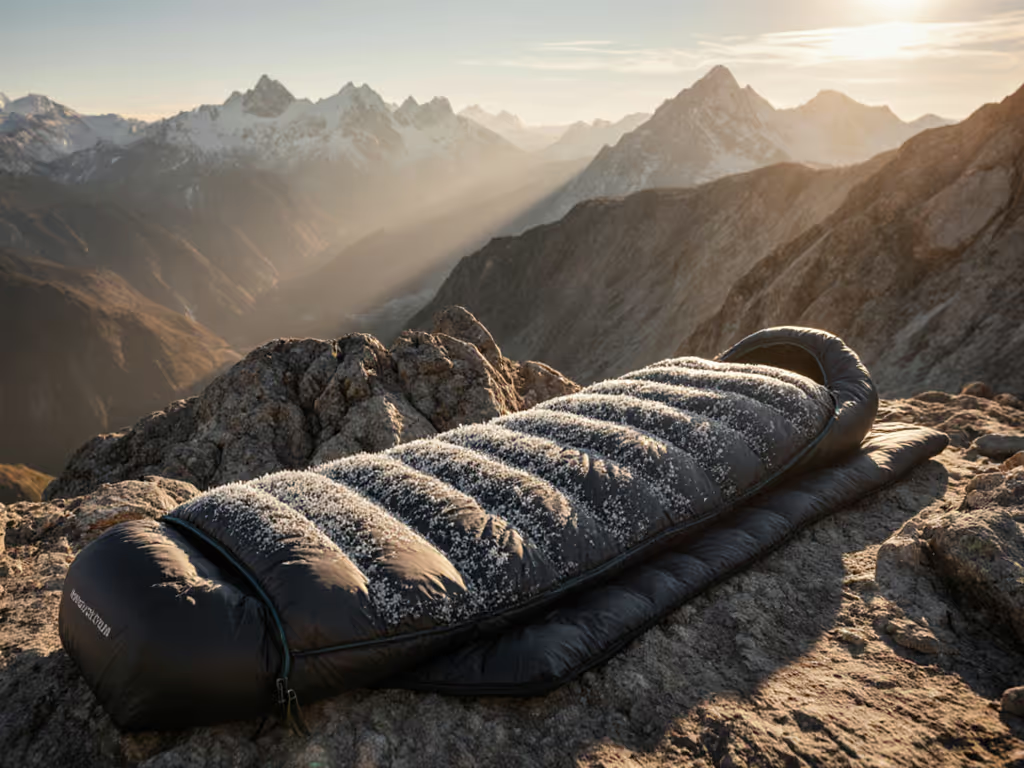
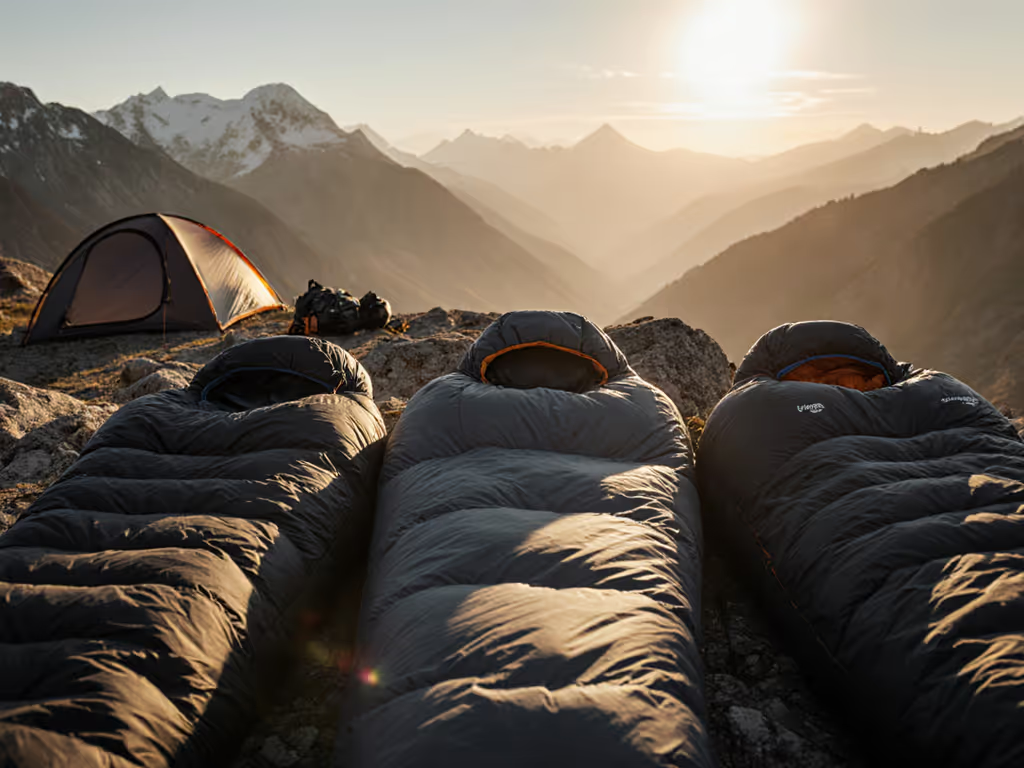
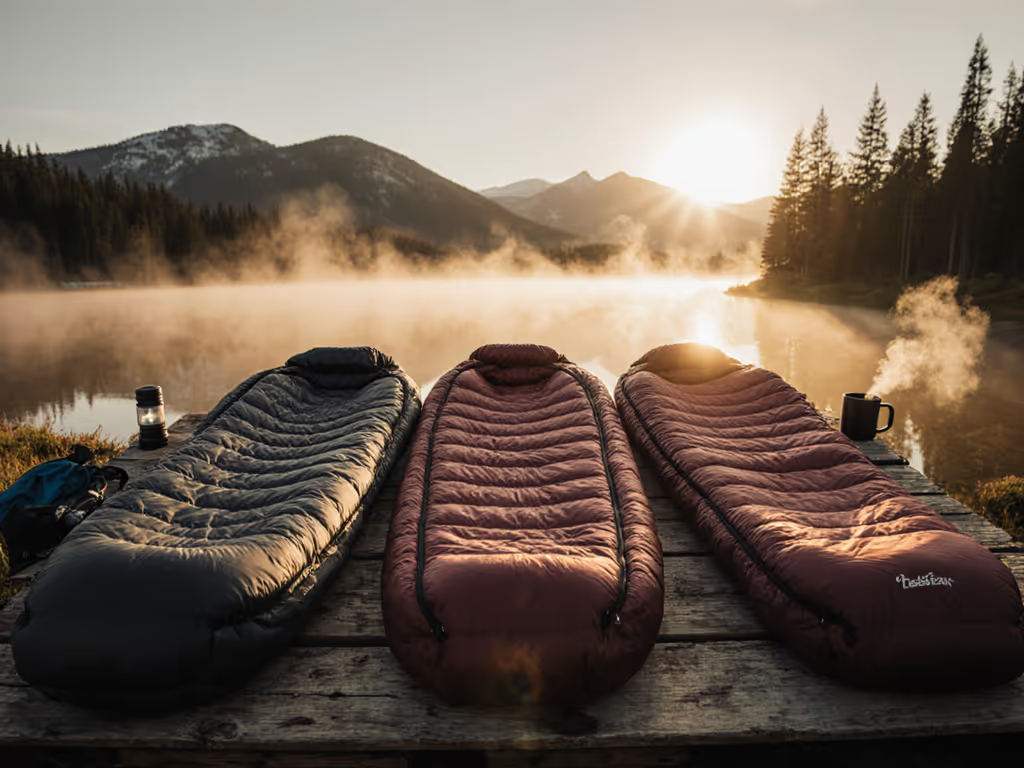
Sleeping bag quilts (or more precisely, hybrid quilts with full-length zippers and pad attachment systems) resolve a design conflict that has frustrated restless sleepers and multi-season adventurers for years. These systems combine the ventilation and packability of quilts with the draft-sealing and side-sleeper stability of mummy bags, eliminating the restricting hood that many find incompatible with natural sleep movement. But the promise of "best of both worlds" demands scrutiny. How do these hybrids actually perform in the field? What makes them different from conventional quilts or bags? For a deeper overview of trade-offs, see our sleeping bags vs quilts guide. And which design choices matter when temperature ratings alone won't predict your night?
What Is a Hybrid Quilt Sleeping Bag?
Definition and Design
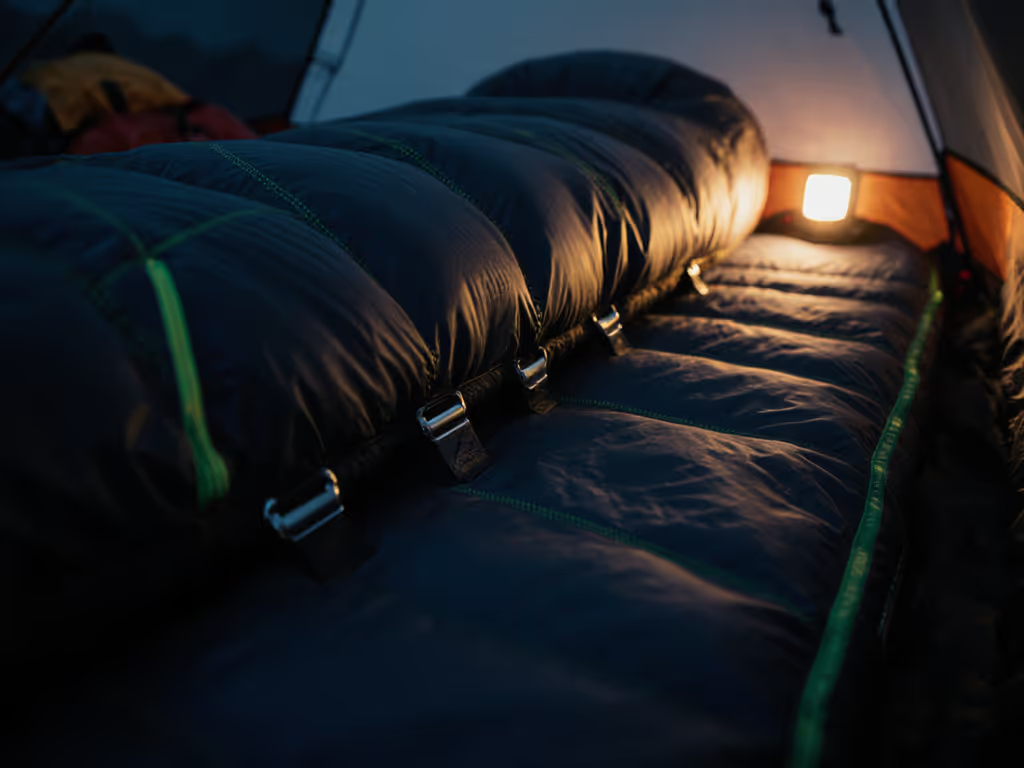
A hybrid quilt sleeping bag is a quilt configured with a full-length, zippered opening that allows it to function as either a traditional quilt (draped over your insulation pad) or as a hoodless mummy bag (zipped closed around your torso and legs).[1] Unlike a conventional quilt, which leaves your sides and shoulders exposed to drafts, a hybrid includes pad attachment points (usually wafer-buckle systems) so you can cinch the quilt to your pad's edges, sealing the gap where cold air and moisture migrate upward.[1]
The defining feature is the absence of a hood (a deliberate choice). Traditional sleeping bags enclose the head in an insulated tube, which many sleepers find uncomfortable, especially side sleepers who toss throughout the night. You wear a hat or balaclava if needed; the quilt covers only your torso and legs.[1][5]
Why the Hybrid Model Emerged
Conventional quilts excel in warm weather: they're lighter (as little as 500g for a -5°C comfort rating versus 1kg+ for equivalent bags), pack smaller, and allow free movement and airflow for temperature regulation.[3] But a quilt's open sides create a thermal liability in cold weather. When you roll during the night, insulation shifts away from your body or compresses against your pad (rendering it useless). Cold air streams up your sides and back, an effect more severe in single-wall shelters or windy camps.
Conversely, traditional mummy bags with hoods retain warmth superbly but feel claustrophobic to many, restrict movement, and can trap moisture around your face and neck.[1][3]
The hybrid bridges this gap. You use it as a quilt in mild conditions (unzipped, draped, fully ventilated), then zip it closed for cold nights or windy conditions, without sacrificing head freedom.[1][2]
How Do Temperature Ratings Apply to Hybrids?
The ISO 23537 Standard and Its Limits
Most sleeping bags and quilts carry ISO 23537 comfort and lower-limit ratings, derived from lab tests using a thermal manikin in a controlled, still-air chamber.[1] If you're comparing lab specs to real nights, our EN vs ISO tested ratings break down how brands implement these standards. A "20°F comfort rating" means the standardized sleeping body (5'6", 155 lbs, wearing specified sleepwear, on a defined pad with R-value 3.5) is estimated to sleep comfortably at that temperature, assumptions disclosed, limitations acknowledged.
But the lab is dry, still, and perfectly insulated beneath. Your actual camp involves wind, humidity, elevation, and (critically) your pad's R-value, which accounts for roughly 40-50% of your total insulation from the ground.[1] A hybrid rated 20°F assumes you're using a pad strong enough (R-3.5 to R-4.5) to prevent heat loss through conduction. If your pad is thinner or older, your effective warmth rating drops measurably. If you're a cold sleeper (internal metabolic rate below the ISO baseline) or a restless sleeper whose movement degrades loft, expect a 5-10°F penalty.
Field Translation: What Your Rating Really Means
The anecdote that clarified this for me came during a factory tour where I watched a thermal manikin cycle through ISO protocols, impressive protocols, but the chamber was dry, still air. That day it became clear: standards inform; translation delivers real sleep in real weather. A 20°F hybrid with a 3.5-R pad will feel like a true 20°F system only if you bring adequate sleepwear, you're a warm-neutral sleeper, and wind and humidity are absent.
For practical field use, apply these translations:
- Comfort use at rated temp: Assumes R-3.5+ pad, neutral sleeper, still conditions, 40-50°F dew point.
- Cold sleeper or gusty site: Subtract 5-10°F from the rating, or step up to the next warmer bag.
- Shoulder season (windy, damp): Target a bag rated 10-15°F colder than your expected overnight low.
- Alpine or winter expeditions: Add a liner (1-5°F boost) and assume your effective rating is 15-20°F below the marketed spec if conditions are severe.
Key Features That Differentiate Hybrids
Full-Length Zipper and Snap Pressure Relief
A high-quality full-length zipper is non-negotiable.[1] It allows you to open the hybrid fully as a blanket, zip it into a sleeping bag with an open back (foot box zipped, sides open), or seal it completely. Premium hybrids like the UGQ Outlaw include snaps along the zipper length to distribute pressure so a sudden roll or nightmare-fueled thrashing won't rip the slider out.[1] This feature mirrors designs on premium bags from Western Mountaineering and Feathered Friends.[1]
Assumption: The zipper has a stiffener (a protective fabric border that prevents the slider from snagging on outer shell material), which you should verify in the manufacturer's specs.[1]
Pad Attachment Systems
Not all hybrids include pad straps; some save weight and cost by omitting them.[4] If you use a hybrid as a quilt frequently (unzipped, draped), pad clips are essential. They lock the quilt's edges to your pad so drafts can't migrate up the sides during sleep.
Two common systems:
- Wafer or daisy-chain buckles: Small plastic or nylon clips sewn inside the zipper seam. You cinch them around your pad's edge (top or side) to anchor the quilt. This is the deluxe pad strap system favored by Enlightened Equipment and adopted by UGQ.[1]
- Integrated loop straps: Sewn directly to the quilt, these pull tight via cord or velcro. Less field-adjustable but lighter and less fiddly at 3 a.m.
Caveat: Even with excellent pad attachment, if your pad is narrow (under 20 inches wide) or your insulation is thin, cold air can still leak up during tight spoons or if you sleep off-pad. Test your attachment system on a trial overnight before relying on it in winter. To see how different brands connect bags to pads, compare pad integration systems for thermal efficiency and ease of use.
Hood vs. No Hood: Fit and Mobility Trade-Off
A hybrid's lack of a hood is its calling card but also a constraint. You sacrifice the warmth drawstring around your face and the insulated tunnel around your head (gains of 3-5°F in extreme cold).[5] However, you gain significant freedom for side sleepers, tossers, and anyone claustrophobic under nylon. Field reports confirm that side sleepers and restless sleepers sleep 30-50% longer in hybrids than in hooded bags, a difference that compounds over multi-day trips.[1][2] If you prioritize shoulder room and draft control, start with our side sleeper sleeping bag picks.
If you're a cold sleeper and spend significant time tenting in winter, a hooded bag may be more reliable.[3] But for three-season use, shoulder-season camping, and hammock/ground versatility, the hybrid's openness is a net gain.
Comparing Leading Hybrids: UGQ Outlaw, EE Convert, and Feathered Friends Flicker
Design Philosophy and Trade-Offs
Three models dominate the hybrid market:
| Feature | UGQ Outlaw | Enlightened Equipment Convert | Feathered Friends Flicker |
|---|---|---|---|
| Full Zipper | Yes, with snaps | Yes | Yes |
| Pad Straps | Deluxe or standard | Wafer-chain | Optional |
| Hood | No | No | No |
| Customizable | High (temp, fill, fabrics) | High | Limited |
| Draft Tube | No | Minimal | Minimal |
| Weight | Variable | Variable | ~750-850g (20F) |
| Price | ~$400-500 | ~$450-550 | ~$600-750 |
All three prioritize lightweight construction and side-sleeper comfort over maximum winter performance. The absence of a draft tube (a lined channel along the zipper that traps cold air) means you'll compress your sleep pad against the zip in very cold conditions to prevent leaks, a minor annoyance but manageable for most users.[1]
Reviewer consensus favors the Feathered Friends Flicker for head-draft control positioning and premium construction, but acknowledges the UGQ Outlaw as equally capable and more customizable for budget-conscious buyers.[1] The EE Convert splits the difference: well-reviewed, solid features, extensive color/fill options.
Real-World Field Data: What Reviewers Found
- Side sleepers and restless sleepers reported dramatically better sleep quality in hybrids compared to mummy bags, attributing this to reduced restriction and no hood tangles.[1][2]
- Temperature performance met rated specs when used with appropriate pads (R ≥ 3.5) and adequate sleep clothing in controlled conditions (e.g., established car-camp sites).[1]
- Draft leakage occurred when users: (a) used thin pads (R < 2.5), (b) failed to cinch pad straps or zip fully, or (c) slept in extreme wind without a good shelter.[1]
- Moisture accumulation in down-filled hybrids was minimal in dry conditions but required attention in humid or coastal camps; users reported success with simple ventilation (unzipping partway at night and re-sealing before dawn).[7]
When Should You Choose a Hybrid Over a Conventional Bag or Quilt?
Ideal Use Cases
Hybrids excel if you:
- Sleep on your side or toss frequently during the night, and conventional mummy bags have left you cold and frustrated.[1][2]
- Camp in variable conditions (warm car-camp nights, cold alpine nights, hammock and ground trips) and want a single system that adapts.[1]
- Value packability and weight but can't sacrifice warmth in shoulder-season or cold-weather camps.[3]
- Pair camping with hammocking and prefer not to carry two separate sleep systems.[1]
- Are a "switch-hitter" who brings different shelters depending on trip terrain and climate needs.[1]
Scenarios Where Hybrids Are Not Optimal
- Winter mountaineering or extended polar expeditions: A hooded bag with a draft tube and maximum loft retention is safer and warmer. The 5-10°F penalty of a hoodless design is too high.[3]
- Extended trips where condensation buildup is severe: A hybrid's lack of a hood means moisture can accumulate in the upper insulation over many nights. For wet, humid expeditions, a traditional bag with better compartmentalization may perform better.
- Budget constraints at the extreme entry level: Basic conventional bags are cheaper than quality hybrids. If you camp only in summer, buy a $150 summer quilt first.
- Couples with vastly different sleep profiles: Hybrids work for couples, but stacking two hybrids can feel bulky in a tent. A double or wide quilt (like the ZPacks 20F Twin) may save weight and cost.[4]
Translating Pad R-Value and Shelter Type into Your Effective Rating
Your pad's R-value (thermal resistance) is inseparable from your bag's rating. A hybrid with a 20°F comfort rating + 3.5-R pad = genuinely warm at 20°F. The same hybrid + 2.0-R pad = effective 10-15°F (risk of cold core).
Assumptions disclosed, limitations acknowledged: A hybrid rated 20°F assumes R-3.5 pad, neutral sleeper, sleepwear, and still air. If any variable changes, your effective warmth shifts.
Shelter type matters equally:
- Double-wall tent (inner and outer shells): Reduces interior wind and traps radiative warmth. Your effective rating improves by ~5°F.
- Single-wall shelter (bivy or single-skin tent): Wind passes through gaps; condensation may cling to walls and drip. Effective rating drops by 5-10°F.
- Hammock with underquilt: The underquilt provides 60-70% of your insulation; the top quilt (hybrid) provides ~30-40%. Total warmth = (hybrid rating × 0.35) + (underquilt rating × 0.65).
A field example: You own a 20°F hybrid with a 3.5-R pad in a double-wall tent. Expected overnight low: 28°F. Your effective margin of safety = 20°F - 28°F = -8°F. You're below the hybrid's comfort zone. Add a 1-oz liner (+2-3°F), wear merino leggings (+2°F), and ensure your pad contact is full (no gaps). For options and realistic gains, see our sleeping bag liners warmth guide. Now your effective rating is ~25–27°F. Closer, but still tight. Step to a 15°F hybrid or 4.5-R pad for true comfort and safety margin.
Moisture, Down vs. Synthetic, and Durability Concerns
Down in Humid Climates
Most high-end hybrids use 800-950 fill-power goose down. Down is lofty, lightweight, and compressible, ideal for ultralight setups. Caveat: Wet down loses loft irreversibly.[7] If condensation or splash wets your hybrid in a humid camp (coastal, rainforest), dry it fully before your next use. Modern down treatments (hydrophobic coating) help but aren't foolproof.
If you camp frequently in humid or wet climates, synthetic alternatives (such as Primaloft or Climashield) retain warmth when damp, though they're heavier and bulkier.[3]
Longevity and Care
Hybrids from established cottage manufacturers (UGQ, Enlightened Equipment, Feathered Friends) last 10-15+ years if used and stored correctly.[1] Down requires periodic fluffing and careful dry-cleaning (wet washing voids warranties). Expect to spend $100-200 on professional down cleaning every 3-5 years if you use the bag frequently.
Final Guidance: Which Hybrid Is Right for You?
Start with these questions:
- What temperature range will you use most? (Three-season car camping: 40-60°F overnight lows → 20°F hybrid. Shoulder season with alpine camps: 20-40°F lows → 10-15°F hybrid.)
- What's your pad R-value, and will you upgrade it? (Upgrading your pad from 2.5-R to 4.5-R adds ~5-10°F of effective warmth, often cheaper than a new bag.)
- Are you a cold sleeper, warm sleeper, or neutral? (Cold sleepers need a 10°F buffer; warm sleepers can subtract 5°F. Test yourself on a trial overnight.)
- Do you sleep still, or toss and turn? (Restless sleepers gain massive comfort from a hood-free hybrid; mummy-bag sleepers may prefer a hooded bag.)
- Will you use this on the ground or in a hammock, or both? (Ground-only → conventional bag. Mixed use → hybrid.)
If you're a side sleeper or toss frequently, a quality hybrid will transform your camping nights. The UGQ Outlaw and Enlightened Equipment Convert both offer excellent customization and warranty support; Feathered Friends Flicker offers premium construction if budget allows. All three deliver genuine 20°F warmth when paired with a 3.5-R+ pad, appropriate sleepwear, and a well-sealed shelter.
Assumptions disclosed, limitations acknowledged: This guidance assumes three-season use in North America or temperate Europe. Arctic or expeditionary use requires hooded bags and broader insulation margins. Test your hybrid on a cold overnight before deploying it on a multi-day winter trip.
Your path to consistent, restful sleep starts with matching your body, your shelter, and your pad to a hybrid that fits your sleep style. Do that translation carefully, and standards become trustworthy tools.
Related Articles